
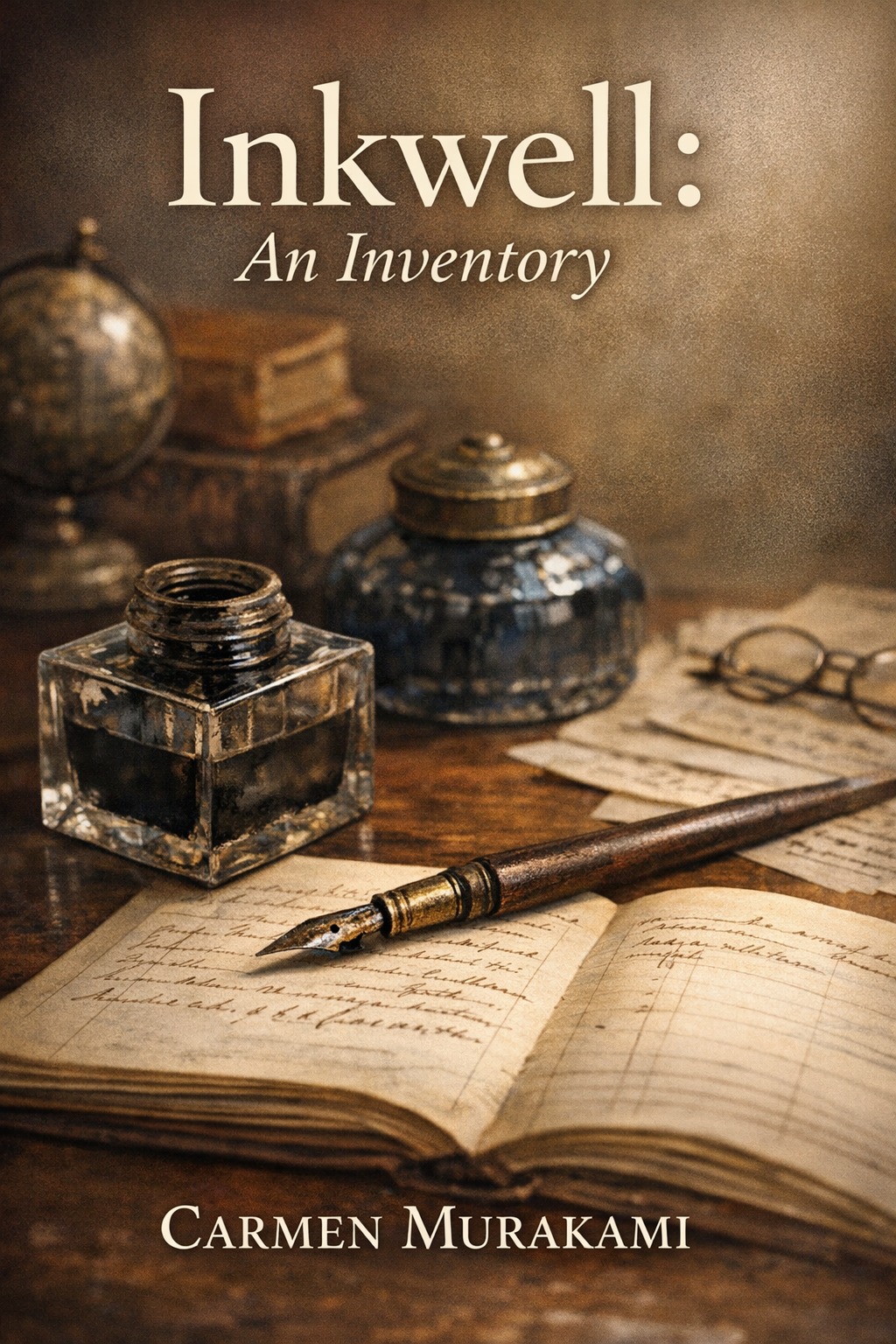
Cover of Inkwell: An Inventory

Inkwell: An Inventory

History · 304 pages · Published 2024-12-10 · Avg 2.8★ (6 reviews)

Part microhistory, part field guide, Inkwell: An Inventory traces how ink and the humble vessels that held it built the modern record. Carmen Murakami follows carbon black, iron-gall, and aniline dyes from Osaka's Kyomachibori ink shops to the Alameda Corridor, and from Veracruz customs ledgers to a Tacoma roundhouse desk. Through 52 annotated objects—porcelain wells, blotters, nib tins, and stationmaster stamp boxes—she reveals how infrastructure became legible, line by black line.

Drawing on archives in Los Angeles, Barstow, Seattle, and Oaxaca, Murakami pairs material analysis with interviews from clerks, map librarians, and restorers. She reads smudged timetables and salt-stained port books as engineered systems, decoding what was preserved and what was erased. Illustrated with diagrams and route maps, this history argues that ink is a technology of power and memory, and proposes an ethics for the marks we leave behind.

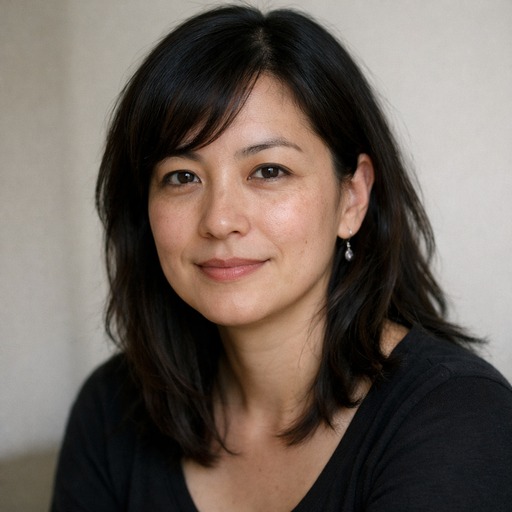
Photo of Carmen Murakami

Carmen Murakami is a Japanese Mexican American writer and former transit data analyst whose work braids infrastructure, memory, and the uncanny across speculative fiction, literary fiction, and narrative history. Raised in Southern California within earshot of the Alameda Corridor, she studied civil engineering and urban design at UC Berkeley, a training that informs her habit of treating maps as instruments, stories as timetables, and archives as switchyards.

Her short fiction and essays have appeared in Strange Horizons, The Magazine of Fantasy & Science Fiction, and Nature Futures. She is the author of the novella Switchyard and the story collection Signal Lost, with the science fiction novel Where the Tracks End (forthcoming, 2025) and the literary novel Lake Vättern (forthcoming, 2026). In recent years she has expanded into literary nonfiction and history, writing about the material cultures that make systems legible—tickets, inks, ledgers, and the hands that use them. Carmen lives in Seattle, volunteers with rail preservation groups, collects obsolete transit tokens, and spends weekends walking decommissioned rights of way and shoreline easements. There's a map case by her door and a brass conductor's whistle on her desk, a reminder that every line is also a journey.

Ratings & Reviews

Simon Ettridge
2026-04-28

For readers who study archives, transportation history, and material culture, this is a treasure of method and example. The pairing of lab-style analysis with practitioner interviews will land well with map librarians, records managers, and conservation students.

Content notes: mentions of iron-gall corrosion, light discussion of workplace risk, no graphic material. Suitable for advanced high school and up, and a strong pick for collections focused on infrastructure, book history, and public memory.

Priya Nandale
2026-02-14

Murakami keeps returning to the claim that ink is "a technology of power and memory," and she largely proves it by pointing to what bureaucracy preserved and what it quietly salted away. The Veracruz customs books and the smudged timetables become evidence not of nostalgia but of engineered forgetting.

That argument is compelling, though the ethical chapter feels prescriptive compared to the rest. I admired the ambition while wishing the throughline held tighter between certain objects.

Tomas Gutiérrez
2025-10-02
  • Evocative object photos and captions
  • Interview voices blur together
  • Heavy citations break the flow
  • Little sense of daily grind behind the stamps
Mei-Lin Carter
2025-06-09

Viewed through ports, depots, and rail yards, this microhistory reframes power as something tracked in ledgers and stains. The Alameda Corridor, Veracruz customs, and a Tacoma roundhouse appear not as backdrops but as reading rooms where infrastructure learned to write itself.

The angle is bracing, yet the atmosphere sometimes feels museum-dry. I wanted more noise of the shed and the smell of oil, as the diagrams do the telling and the cities recede.

Roy McKinnon
2025-03-22

Murakami's sentences are most persuasive when she lets materials speak through lab notes and blotter tests. The 52-object structure promises a portable museum; the cross-referenced notes often feel footnoted to a fault. Diagrams and route maps clarify supply chains, but the thread between chapters loosens whenever interview excerpts crowd out analysis.

Alina Duarte
2025-01-15

Meticulously sourced but more catalog than narrative, the journey from Osaka ink shops to the Alameda Corridor seldom musters momentum.

Generated on 2026-08-01 12:01 UTC