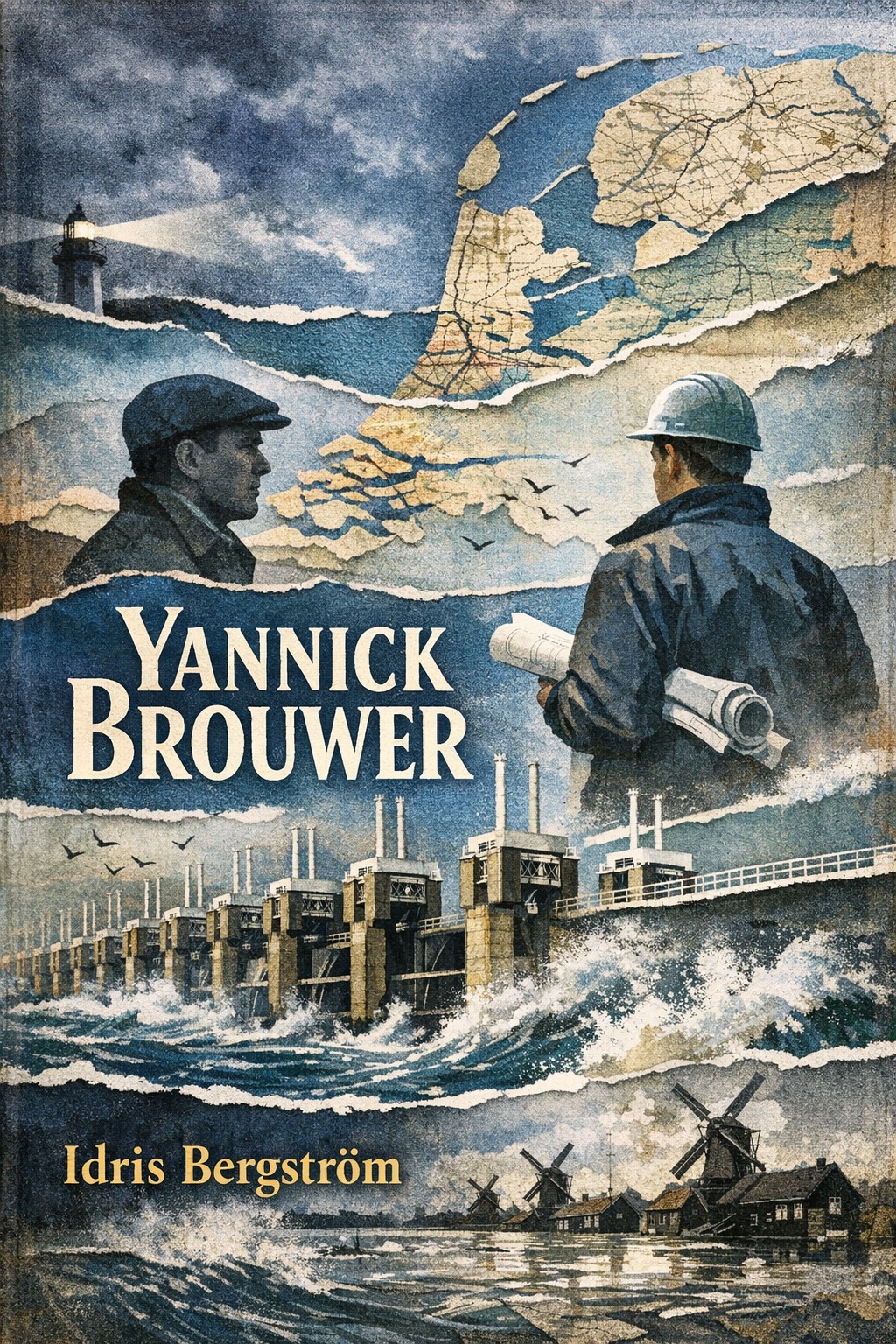
Think John McPhee meets Ian Urbina: meticulous engineering casework colliding with maritime hustles, lucid when grounding the Oosterscheldekering's mechanics and insurance angles but prone to sagging where the alternating structure pads scenes that should snap.
Idris Bergström imbues the storm-lashed saga of the Netherlands Delta Works with such urgency and texture that readers may find themselves double-checking the spine to confirm that Yannick Brouwer is not an ingeniously plotted novel. Bergström follows two figures whose trajectories crisscross the Scheldt and the North Sea: Yannick Brouwer, a meticulous civil engineer from Leeuwarden charged with shepherding the sliding gates at the Oosterscheldekering from blueprint to roaring reality, and Elise Verbeeck, a magnetic shipping broker who builds a shadow empire on the tides of salvage and illicit dumping between Rotterdam and Vlissingen. Brouwer's challenge is colossal. In a handful of years he must navigate the sudden death of his mentor Pieter van den Noort, the winter storms of 1976 that capsize a test caisson off Neeltje Jans, a steelworkers' strike in IJmuiden that halts fabrication of the gate trusses, and rancorous budget battles in The Hague. Through site meetings in prefabs rattling on jack-up platforms, dawn inspections beside the massive Matador 3 crane, and late-night calculations scribbled over coffee in Middelburg, his team drags concrete islands across a seabed that resists every bolt and prayer. Cameos by Queen Beatrix at the 1986 opening, Transport Minister Tjerk Westerterp, and an aging Johan van Veen, the prophet of the post-flood future, give the tale a civic grandeur.
Elise Verbeeck's empire is darker and just as riveting. Operating the Helena-M and a pair of rusted barges out of the Lloydkade, she launders hazardous sludge as dredge spoil, forges manifests with a one-handed clerk in Antwerp, and turns maritime insurance clauses into weapons. Her offices smell of diesel and printer's ink, her ledgers are immaculate, and her charisma lowers the guard of aldermen from Zeeland towns eager for cheap solutions. Bergström's alternating chapters reveal how a country wrestled salvation from the sea while a lucrative undercurrent bucked the law beneath its surface. The briny light of Zeeland, the clang of shipyards, the cold logic of hydraulics, and the hush of a bribed harbormaster's office combine into a portrait of national will and opportunistic drift that feels both inevitable and astonishing.