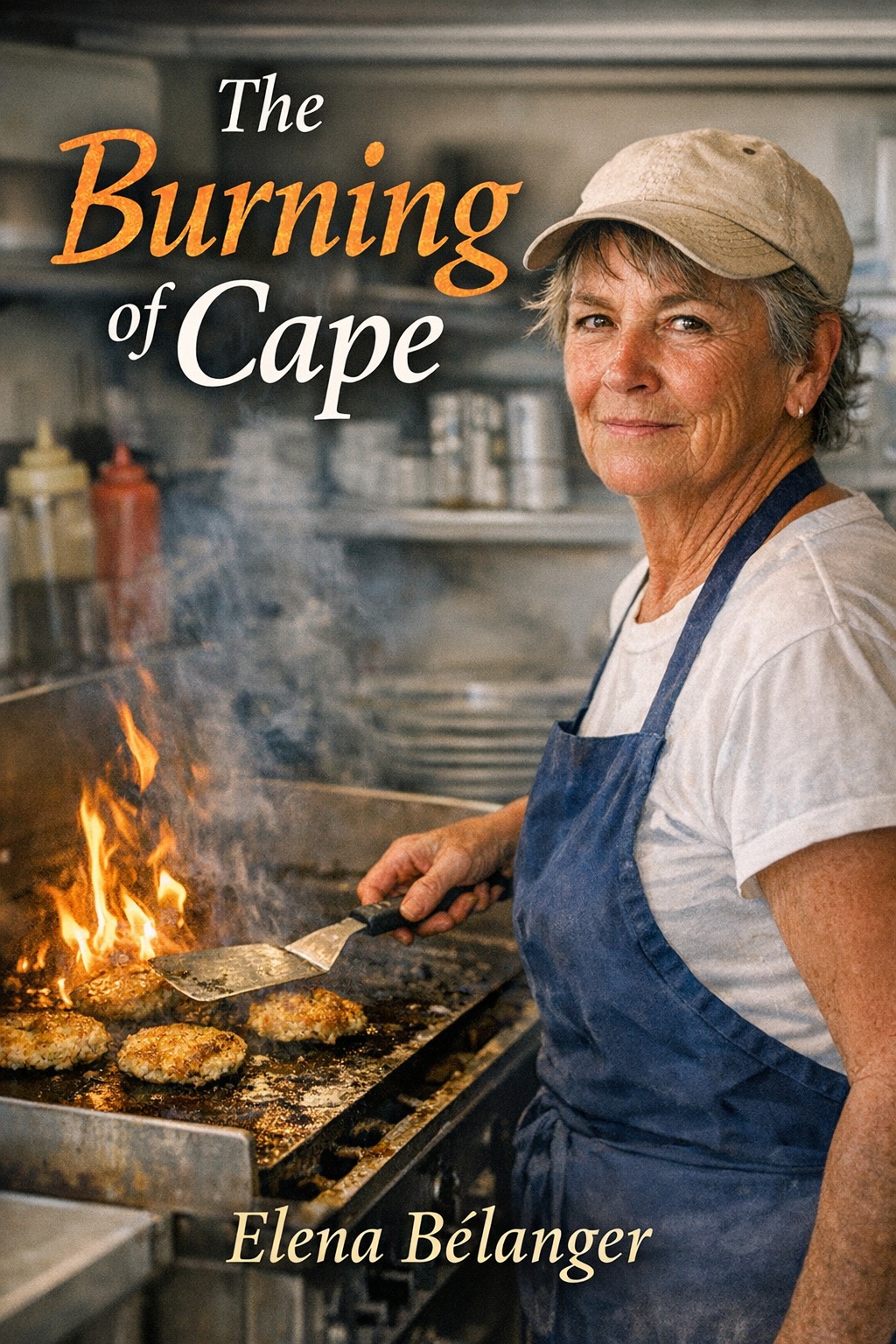
I am floored by this book, and I do not say that lightly! Hap Doyle in a soot-streaked Nomex jacket and a diner apron is the icon I did not know I needed. The energy is all salt and ember, and I felt the wind off both bay and ocean with every page.
The details sing. The radio tagged "Harpooner," the drip torch held like a mixing bowl, the thermos surrendering to a dented canteen while Ranger Margo Sutter checks humidity with a sling psychrometer. That is choreography, and Bélanger catches it without fuss.
And the kitchen! Luis Peña and Iris Gonsalves moving like a practiced trio with Hap, tickets curling, grease popping, pie deliveries stacked like driftwood. The humor is sharp, the timing sharper, and beneath it all is a stubborn tenderness for a coast trying to save itself.
June Carver's contact sheets, Karim Haddad's observations, Ed Ippolito's crew talk, the smoke-stained notebooks that smell like long nights and pine resin. This is archival gold turned storytelling, and it honors working knowledge the way it deserves. I cheered at the competence on every page!
By the end I wanted to lace up boots, buy every regular at the corner stool a chowder, and volunteer for the next burn window. Five stars for courage, craft, and community, and for a biography that proves careful fire can be love.