
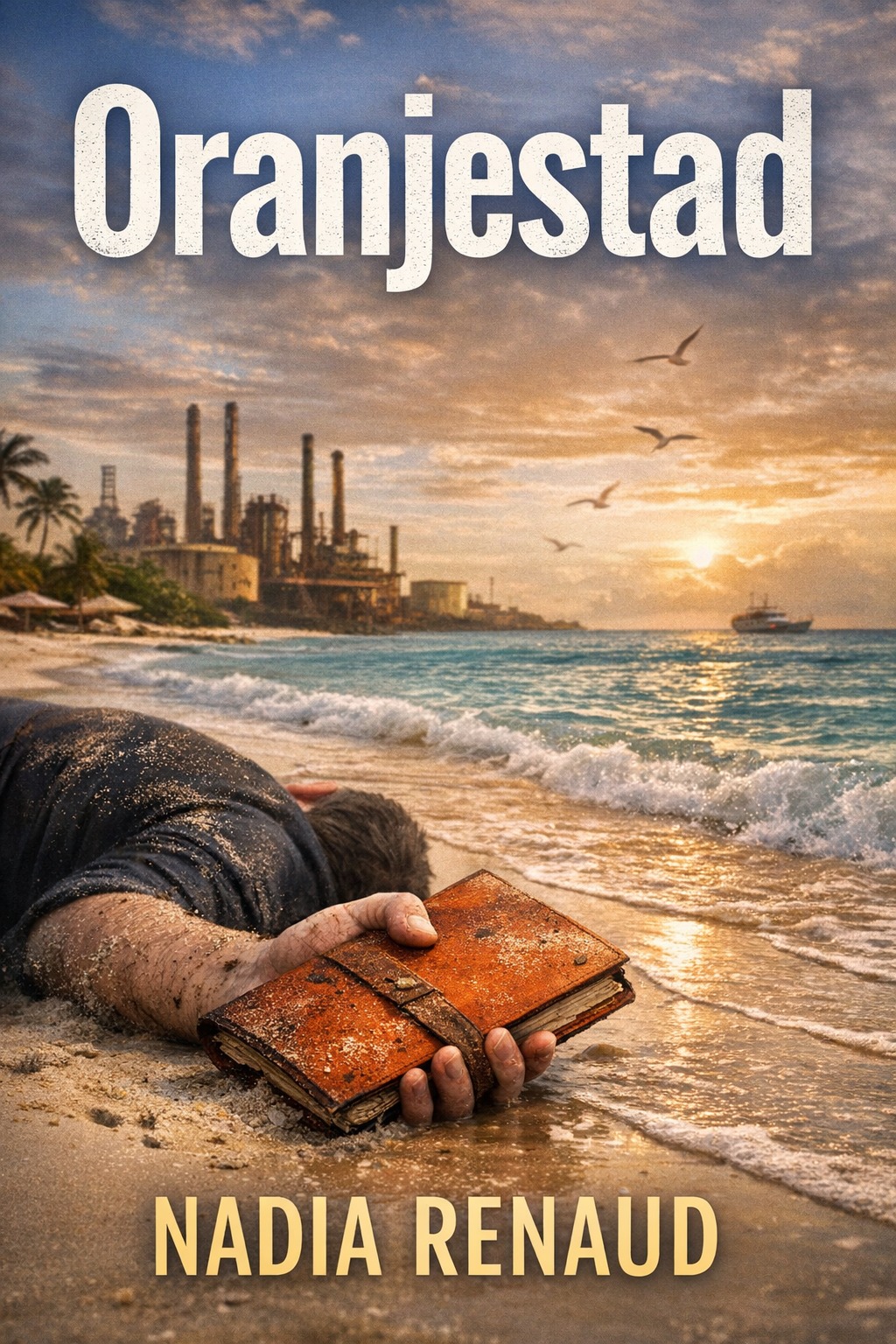

Cover of Oranjestad

Oranjestad

Mystery · 312 pages · Published 2023-09-12 · Avg 2.4★ (5 reviews)

In Oranjestad, Aruba, detective Lila Croes finds an antiques dealer washed ashore at Surfside Beach, a sand-stained ledger bound in orange leather clutched in his hand. The ledger lists mothballed shipping routes and coded initials dating to the 1928 refinery boom. The case draws Lila through the pastel arcades of the Royal Plaza and into the cooled archives of Fort Zoutman, where visiting Dutch archivist Bram Vermeer guards a cache of confiscated maps.

As carnival drums rehearse and trade winds bend the divi-divi trees, clues surface in Papiamento proverbs tucked inside tourist postcards and a coral necklace missing three beads. Lila follows a trail from the aloe fields to the shuttered pier at Lago Colony, untangling a smuggling ring reborn from colonial-era debts. When Bram vanishes and her only ally is Sanaa, a coconut-ice vendor on Caya G. F. Betico Croes, Lila must choose between exposing a beloved philanthropist and saving a child caught in the crosscurrent. The final revelation turns the orange ledger into a mirror, forcing the city to reckon with the cost of its bright facade.

Photo of Nadia Renaud

Nadia Renaud is a Montreal-born journalist and translator who spent a decade covering maritime economies and island communities across the Lesser Antilles. After earning an M.A. in communications from Université Laval, she relocated to Aruba in 2018 and divides her time between Oranjestad and Quebec City. Her reportage has appeared in regional magazines and francophone cultural journals, noted for its close attention to shoreline ecologies and working harbors.

Renaud began publishing fiction with the short story collection Harbor Lights in 2020, which was shortlisted for the Portside Fiction Prize. She writes in both English and French, blending sunlit noir atmospheres with investigative detail. When away from the desk, she volunteers with a sea turtle rescue group and teaches community workshops on narrative journalism.

Ratings & Reviews

Noor de Bruin
2025-11-22

De setting is overtuigend; Aruba ademt hier zout, zon en archiefstof. Van de pastelgalerijen bij Royal Plaza tot Fort Zoutman en de afgesloten pier bij Lago Colony, elk decor voelt bewoond. De Papiaments-getinte ansichtkaarten en het koraalsnoer geven sfeer, al duwen ze het plot niet altijd vooruit. Voor lezers die willen reizen via een misdaadroman is dit prima, maar wie scherpe spanning zoekt, zal de passaat iets te loom vinden.

Diego Valdez
2025-07-01

Lila Croes is most alive when she stops narrating the island and starts sparring in conversation. Her guarded exchanges with Bram Vermeer carry a brittle humor that hints at shared stubbornness, while Sanaa's grounded warmth steadies the case whenever the archives go cold. Motives are legible if not surprising; Lila's loyalty to place and to the child in peril rings true, but Bram's vanishing act feels more like a device than a decision. I liked being in their company even when the investigation stalled.

Tania B. Kerr
2024-02-10

I kept waiting for the book's colors to deepen beyond postcard pretty.

The orange leather, the divi-divi silhouettes, the carnival drums—all the right motifs are here, yet they circle instead of strike. Honestly, every time the drums showed up it felt like background noise instead of pressure.

The message seems to be "the ledger becomes a mirror," but the reflection stays foggy. The theme of debts rolling from colonial trade into present-day charity should sting harder than it does.

Lila's dilemma between outing a sainted donor and protecting a child ought to blister. Instead, it lands with paperwork neatness, and the city's bright facade remains largely unscuffed.

I wanted consequence, not a tasteful shrug. The book gestures toward reckoning; it never truly looks.

Roland Picard
2023-12-15

The novel leans on a braided structure: Lila's present-tense steps alternate with clippings from the 1928 refinery boom, but the pattern saps urgency. The orange ledger is a potent object, yet the recurring Papiamento proverbs read like marginalia, not propulsion. Chapters often end in cool atmospherics rather than turns, leaving the smuggling thread to idle for pages. I admired the archival texture at Fort Zoutman and the coded initials conceit, but the pacing never tightens enough to make the reveal land.

Keisha Mora
2023-10-02

From Surfside Beach to Fort Zoutman the ambiance sings, but the hunt through orange ledgers and postcards drifts and the mystery thins.

Generated on 2026-05-21 12:03 UTC