
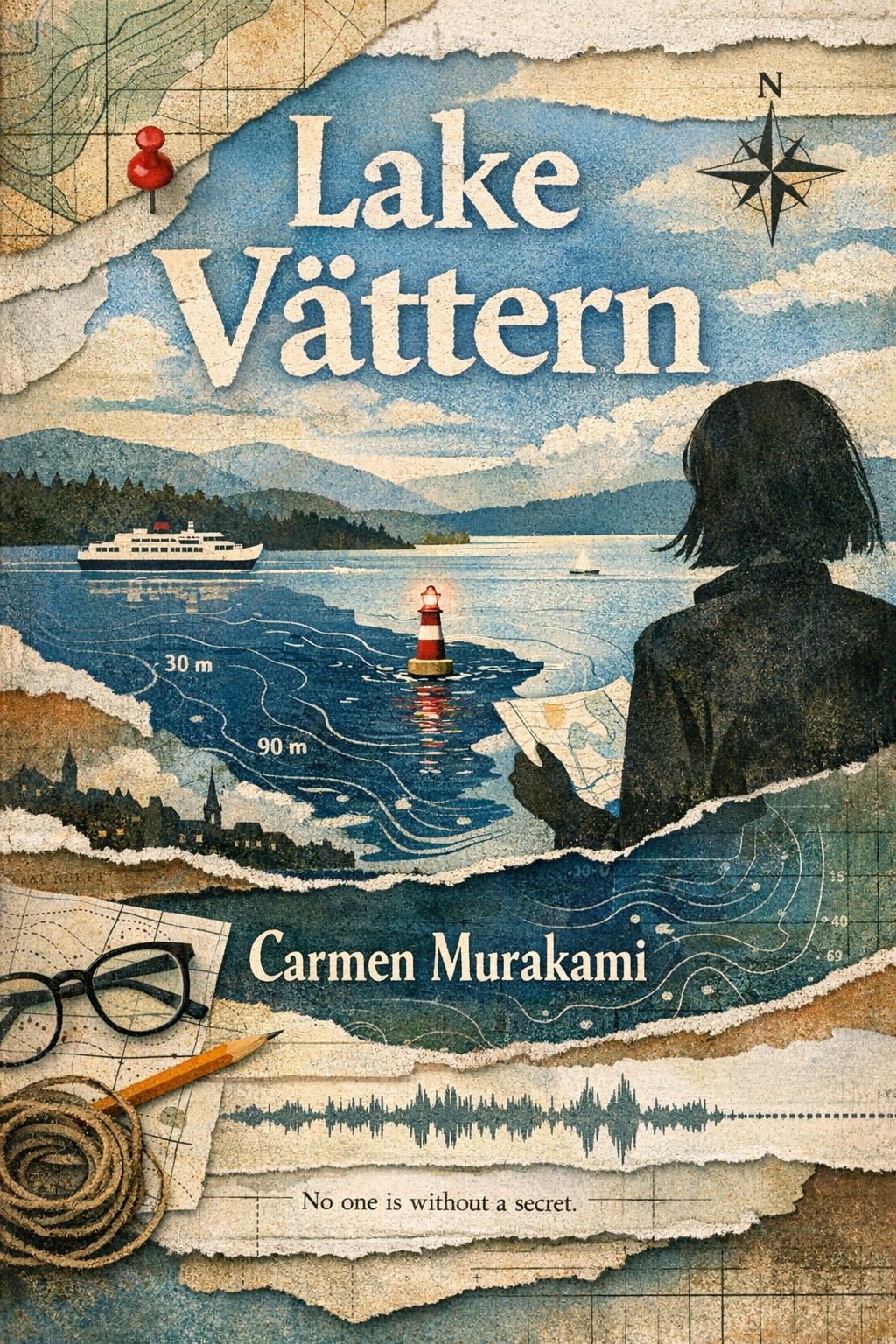
Cover of Lake Vättern

Lake Vättern

Fiction · 304 pages · Published 2026-04-07 · Avg 3.7★ (6 reviews)

No one is without a secret. Cartographer and former transit analyst Lina Okada makes beautiful things out of cold facts—bathymetry charts, buoy routes, the blue geometry of Lake Vättern pinned above her rented desk in Jönköping. On her quiet channel, Tideglass, she explains thermoclines, ferry schedules to Visingsö, why sonar throws back a shadow where you least expect it. But if you follow her off-screen, into the long Swedish dusk and the echo of gulls over the railway embankment, you'll start to learn coordinates she refuses to publish.

Like where her sixteen-year-old son, Kaito, rides at 2:14 a.m. when the route 1 buses stop for the night—past the Huskvarna factory museum to a locked boathouse with a green tin roof. Or what she exchanges with local football coach Erik Nyström in the steamed-up interior of a silver Saab idling on Västra Storgatan: a zip-top bag holding a rusted heart-shaped locket and a SIM the size of a fingernail. And what sinks below the weathered pier near the Visingsö ferry ramp, tied with orange nylon line to a metal case stamped SJ and flecked with zebra mussels.

Currents run through everyone, but some pull deeper than others. Lina's are enough to drag her under. I've got the depth sounder, and I'm the one charting her to the bottom.

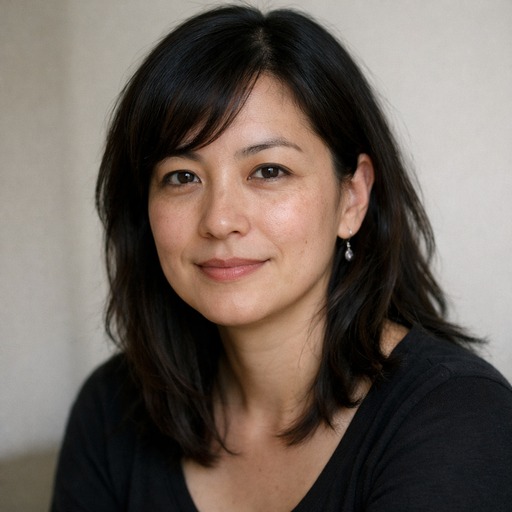
Photo of Carmen Murakami

Carmen Murakami is a Japanese Mexican American writer and former transit data analyst whose work braids infrastructure, memory, and the uncanny across both speculative and literary terrain. Raised in Southern California within earshot of the Alameda Corridor, she studied civil engineering and urban design at UC Berkeley before pivoting to fiction that treats maps as instruments and stories as timetables. Her prose often traces how people move through systems—rail lines, shorelines, family lines—and what those systems move through us in return.

Her short fiction and essays have appeared in Strange Horizons, The Magazine of Fantasy and Science Fiction, and Nature Futures. She is the author of the novella Switchyard, the story collection Signal Lost, and the science fiction novel Where the Tracks End. In recent years, Carmen's work has expanded into literary and psychological fiction, applying the same cartographic curiosity to lakes, neighborhoods, and domestic spaces, mapping the quiet topographies of secrecy and return.

Carmen Murakami lives in Seattle, where she volunteers with rail preservation groups, collects obsolete transit tokens, and hikes decommissioned rights of way and shoreline easements across the West. She keeps a map case by the door and an old brass conductor whistle on her desk as a reminder that every journey begins with a sound—and sometimes with silence.

Ratings & Reviews

Graham Toller
2026-05-02

I kept thinking of two very different books.

If the quiet, waterlogged unease of Birgitta Jonsson's Shorelines meets the meticulous transit-nerd intimacy of Marek Havel's Transit Figures sounds appealing, this will hit that niche. The lake setting and the Tideglass channel lend mood and texture, though the mystery moves at a measured pace and the emotional reveals feel calibrated rather than explosive. A good fit for readers who like their crime fiction contemplative and a bit briny.

Carmen Ochoa
2026-04-27

I'm glowing about these people. Lina isn't a puzzle to be solved; she's a topography of grief and duty, someone who makes maps because the terrain inside her won't sit still. Every time she explains a ferry schedule or a thermocline, you hear the heartbeat she won't admit to.

Kaito is all motion—night bike rides, flickers of courage, the kind of teenage secrecy that can be both rebellion and rescue. His scenes near the factory museum feel bright and precarious at once.

Kaito on that night bike ride broke me.

And Erik in that steamed-up silver Saab? What a study in temptation and care. The exchange of the locket and the thumbnail SIM is so small you could miss it, yet it thunders through their next choices.

By the time we reach the weathered pier near the Visingsö ramp, I wasn't just invested—I was protective. This is character work with pulse and pressure, tender and fierce all at once. Five stars, gladly.

Prakash Veer
2026-04-23
  • Pacing drifts in the middle stretches around bus routes
  • Hydrology explainers repeat and blunt tension
  • Lina's off-screen moves feel coy rather than mysterious
  • The narrator's hinted vantage blurs stakes without payoff
Sara-Li Pettersson
2026-04-18

Stillsam spänning över Vätterns blå geometri och sonarens skuggor: precis min smak. Kartor, färjeläget vid Visingsö och en mamma med hemligheter ger en tät, sval stämning.

Elliot Norberg
2026-04-15

The precision of the prose is a draw, especially when it leans into bathymetry and transit minutiae; yet the structure can feel over-engineered. Chapters ripple outward from small details, sometimes circling the same inlet too many times before advancing.

I admired the restraint around the central mystery and the clean, working-language of maps, but a few expository Tideglass passages flatten the drama. Solid craft with occasional drag.

Mara Dev Singh
2026-04-10

I love how the novel takes the cartographer's urge to measure and makes it human; "no one lacks a secret" becomes the legend on every page. The lines on Lina's charts are beautiful and merciless, a geometry of longing.

The science is not just set dressing: thermoclines feel like the emotional layers people refuse to mix, and Tideglass becomes a quiet confessional watched by strangers and ghosts. Jönköping's dusk softens nothing; it just makes edges gleam.

The narrator with a depth sounder steadies the voice, intimate and slightly haunted, promising a map while warning us about sonar shadows. I was electrified by how presence and absence keep trading places.

The boathouse at 2:14 a.m., the silver Saab, the locket, the SIM, the SJ case flecked with mussels: each object a coordinate that refuses to sit still on paper. Secrets don't flood here; they seep, colder than the lake.

I finished with chills, grateful for a book that lets knowledge be both lighthouse and fog. Five stars, no doubt.

Generated on 2026-05-07 12:03 UTC