Cover of Telescope: A Story of Maps and Loss

Telescope: A Story of Maps and Loss

Suspense · 336 pages · Published 2025-05-20 · Avg 2.6★ (5 reviews)

Every night I polish the brass rails of the Kingsbury Observatory above Muizenberg, scrub dew from the telescope's black barrel, and repair the fraying edges of the old star charts that peel from the dome. I collect Ben Larkin from Rondebosch Primary, wait in the queue by the jacarandas, then carry his violin case because Verity hates the sound of it bumping her leather seats. I cook a careful dinner in their Clifton kitchen and slip upstairs to eat alone on a crate labeled 1973 COASTAL SURVEY, folding Cape Town street maps along their soft, broken spines until my fingers smell of ink and dust.

I try to ignore how Verity sprinkles sugar on the floor just to watch me chase the ants. How she tells teachers that Ben is allergic to everything so she can keep him close. And how her husband, Elias—the Director—grows more hollow beneath the dome lights each evening, a handsome silhouette with eyes that never settle. When I catch his gaze, glassy and brown through the finder-scope's reflection, it's hard not to imagine living Verity's life. The glass-roofed conservatory on Loader Street, the sand-colored Jaguar idling at the curb, the perfect quiet of a house where no one asks questions.

I only try on one of Verity's navy silk jumpsuits once, under the red glow of the darkroom, to see how it falls on someone who reads the sky for a living. But she notices the faint perfume on my skin… and by the time I realize the maintenance loft at the back of the dome locks from the outside, it's already too late. Still, I steady myself with the atlas of what I've lost and what I've learned to find: the Larkins don't know who I really am. They don't know why my maps always lead back to them. They don't know what I'm capable of…

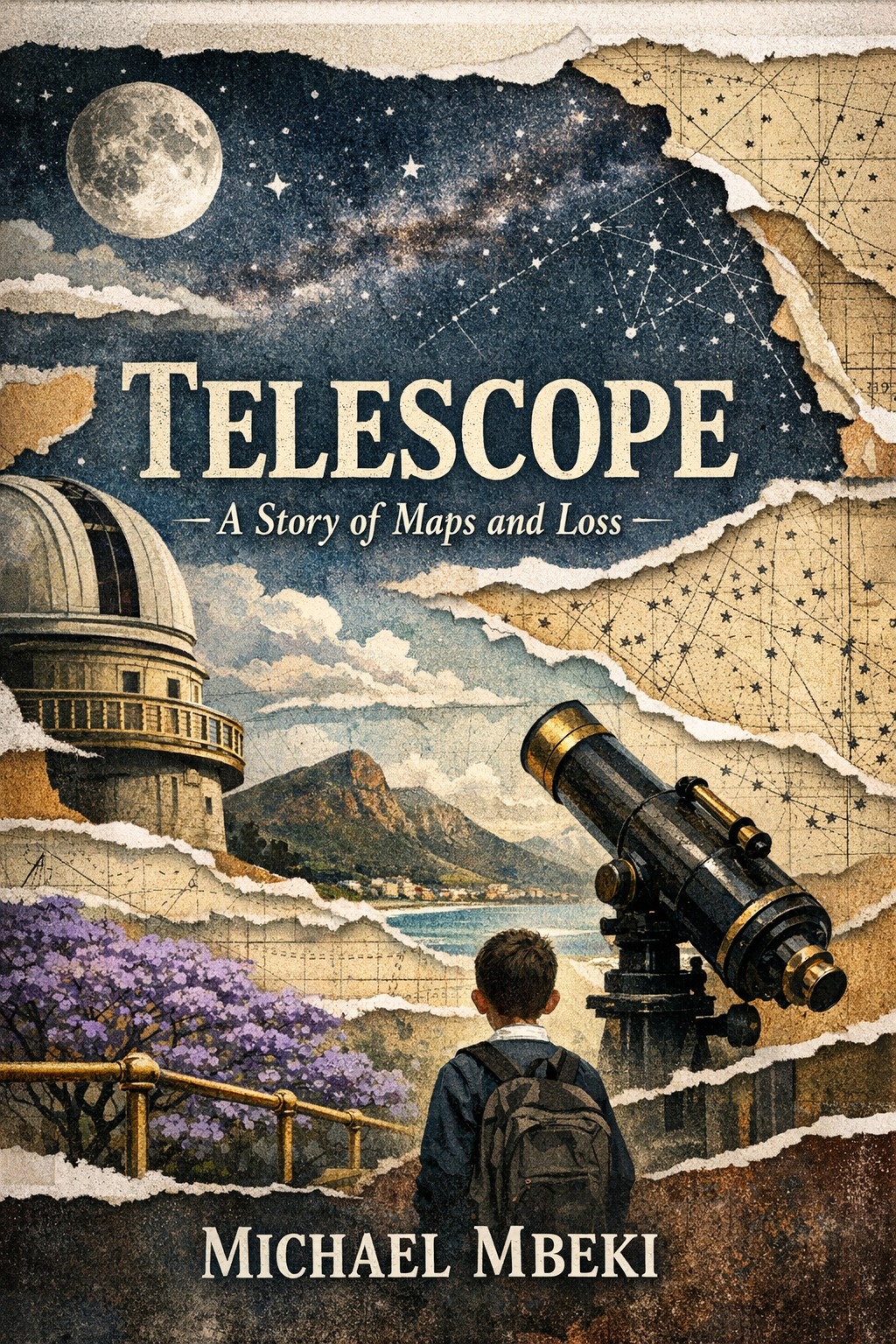
Photo of Michael Mbeki

Michael Mbeki is a South African novelist and former cartographic technician whose work explores the intersections of geography, memory, and moral peril. Raised in Durban and educated in Cape Town, he spent a decade digitizing historical survey maps and working night shifts at a small observatory, experiences that inform the atmospheric settings of his fiction. His short stories have appeared in regional journals, and his debut novel, The Cartographer's Silence, was praised for its taut pacing and lyrical detail.

Mbeki lives in Cape Town, where he volunteers with an urban search-and-rescue mapping group and teaches introductory GIS workshops. When he isn't writing, he hikes the Table Mountain contour paths, fills notebooks with street plans, and collects obsolete compasses. His influences include Patricia Highsmith and Henning Mankell, and he often blends procedural precision with intimate psychological suspense.

Ratings & Reviews

Jesse Whitford
★ ★ ★ ☆ ☆
2026-10-05

Themes of custody, class, and control anchor this novel: maps promise order while people invent new borders to cage each other. The repeated folding of street charts mirrors the narrator trying to crease a life into shape.

I kept hearing the echo of "the atlas of what I've lost and what I've learned to find" as scenes toggled between ants on tile and stars in the finder, and I appreciated how surveillance becomes a kind of love and a kind of lie, even if the resolution feels intentionally narrow.

Carla Mendonça
★ ★ ☆ ☆ ☆
2026-05-23

Beautiful place, thin pulse.

  • Salty Muizenberg nights under the dome
  • Ants, sugar, ink, strong sensory notes
  • Stakes stay small despite the secrets
  • Late lock-in turn arrives after too much circling
Sibusiso Moyo
★ ★ ★ ☆ ☆
2026-01-10

Through the telescope's reflected gaze, the narrator reads Verity, Elias, and Ben like coordinates, and the book works best when it lets their small gestures, sprinkling sugar, clutching the violin case, eyes that never settle, sketch the triangulation of longing and control.

Aaron Pike
★ ★ ★ ☆ ☆
2025-08-15

The prose shines like the brass rails the narrator polishes, heavy on tactile detail and workmanlike rhythms. I liked the meticulous inventory of ink, sugar, and dust, and the way the telescope becomes both tool and confession booth.

Structurally, the book narrows our view to two chambers, the dome and the Larkins' home, and the tightness helps tone but slows momentum in the middle. The menace lands when the maintenance loft locks from the outside, yet several scenes before that feel like the same night rewritten with new tasks.

Naledi Gouws
★ ★ ☆ ☆ ☆
2025-06-02

Salt wind rattles the Kingsbury dome; the story keeps circling the same routines and map-folds until the suspense goes slack. I wanted more movement between the observatory and Clifton.

Generated on 2026-11-24 12:01 UTC