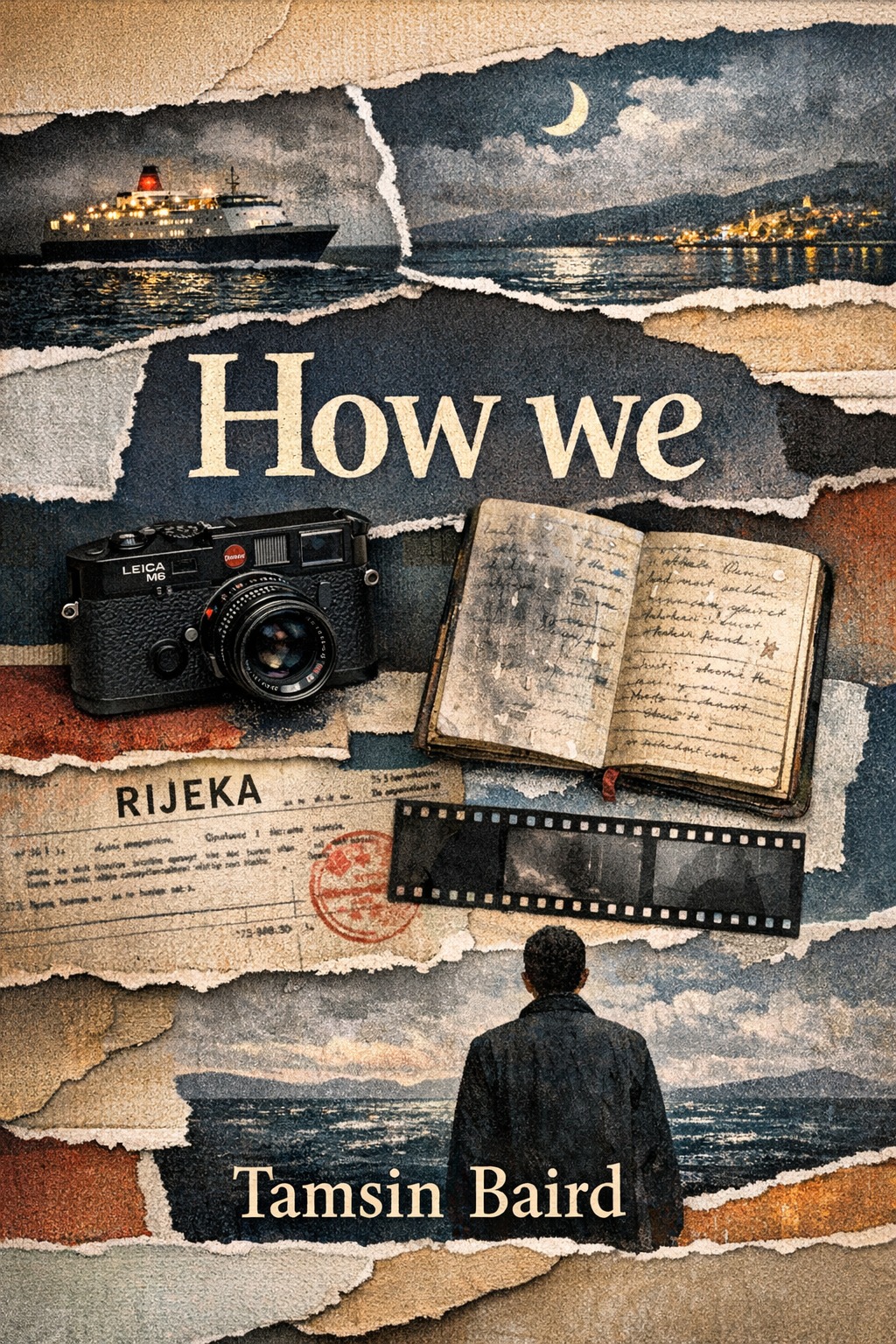
Cover of How we

How we

384 pages · Published 2022-11-08 · Avg 4.2★ (6 reviews)

Leonie Marchand, a Marseille-born documentary photographer, vanished from an overnight ferry to Ajaccio, leaving a Leica M6, a rain-blurred notebook, and a strip of undeveloped Tri-X. Years later, her reserved ex-partner, Idril Kovac, an archivist in Rijeka, stumbles onto corrupted shipping manifests tied to Leonie's last job. He teams with Jamila Rauf, a cobalt-buzzed pen tester stacked with silver rings. From La Joliette to Lagos they follow ghosted AIS pings through shell firms, dead harbors, and a philanthropic dynasty hiding guilt like bullion. What they surface is colder than seawater and priced higher than diesel.

Salt-scarred and electric, How we braids disappearance, kinship, and maritime finance into a satisfyingly complex, atmospherically charged thriller of family secrets, human cargo, and the cost of telling the truth.

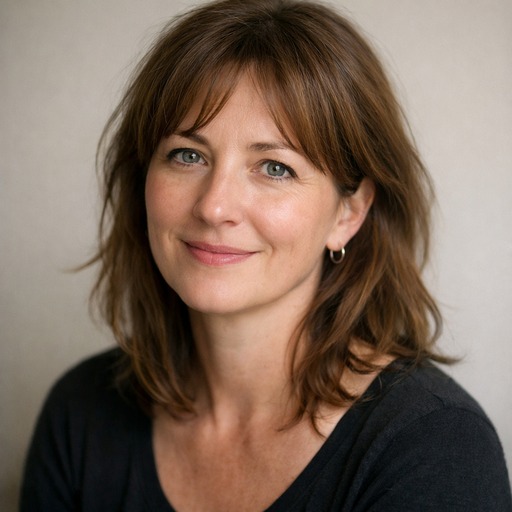
Photo of Tamsin Baird

Tamsin Baird is a British writer and former photo researcher from Cornwall. She studied visual anthropology at Goldsmiths, University of London, and spent much of her twenties cataloging maritime ephemera in archives across Falmouth and Rotterdam. Her essays and reportage have appeared in Port Magazine, The Quietus, and various small-press zines.

Baird is the author of the novels Salt Index and Gull Engine, and the story collection Tide Tables. Her work has been shortlisted for the Portico Prize and the CWA John Creasey (New Blood) Dagger. She lives in Glasgow, where she teaches part-time in narrative nonfiction and volunteers with a migrant-support charity.

Ratings & Reviews

Diego Salazar
★ ★ ★ ☆ ☆
2026-03-28

For readers who like investigative fiction with technical scaffolding — shipping data, archives, corporate veils — this scratches the itch. It sits between literary noir and procedural, with a mood that leans brackish and blue.

Content notes for book groups and classrooms: disappearance, references to human trafficking and corporate complicity, scenes of surveillance, and a persistent undertone of financial coercion. Best for mature teens and adults who can navigate acronyms and are comfortable living with ambiguity.

Priya Venkatesh
★ ★ ★ ★ ☆
2025-05-06

Form-wise, the novel is confident. Chapters interleave corrupted manifests, field notes, and present-tense pursuit, and the clipped prose keeps the scenes taut without turning mannered; when the voice slows, it earns the moment. A few temporal pivots arrive abruptly, yet the architecture holds.

The investigative throughline keeps returning to material artifacts — film stock, paper trails, antenna pings — which gives the structure both ballast and texture. If the Lagos sequence runs a touch long, it's because the book trusts its research, and mostly that trust pays off.

Nora Whitcomb
★ ★ ★ ★ ☆
2024-11-19

My skeptic's ledger after finishing:

  • Maritime detail that feels earned, not flashy
  • Idril and Jamila's dynamic stays surprising
  • A midsection lingers a beat too long in one port
  • Final movement lands with moral clarity
Tomislav Rako
★ ★ ★ ★ ★
2024-02-11

Ports, breakwaters, neon cranes at night — the geography here hums. I could feel the bite of wind off La Joliette, the sour warmth of diesel in Lagos, the cold fluorescent hush of an archive in Rijeka. The world is nautical without becoming nautical cosplay.

The logistics puzzle is deliciously bleak. Ghosted AIS tracks, dead harbors with names that feel like aliases, shell firms nesting inside shell firms until even the accountant in me got seasick. When a philanthropic dynasty smiles, the water gets colder.

I loved how the book handles tools and textures. The Leica M6 isn't a fetish object so much as a reliquary; Tri-X isn't nostalgia, it's evidence. Screens glow, but paper cuts. The rain-blurred notebook becomes a map of pressure points.

Travel isn't treated as montage. From Marseille to Ajaccio to Lagos, movement carries cost and consequence, and each stop changes the question they're asking. The sea isn't a backdrop; it's a solvent.

By the end I believed the stakes down to the last torn bill of lading. This is maritime noir that tastes of salt and iron, and it sings.

Étienne Lowell
★ ★ ★ ★ ☆
2023-07-30

Leonie is a presence defined by absence, and the novel lets that negative space shape everyone else. Two centers of gravity emerge: Idril's quiet grief and Jamila's kinetic curiosity, a pairing that refracts the same mystery through patience and spark.

Dialogues have bite without grandstanding. Idril measures words like archival boxes, precise and labeled; Jamila's silver rings click against tablet glass as if punctuating the air. Their scenes together make the ethical questions feel lived-in, not abstract.

Aisha Belcourt
★ ★ ★ ★ ★
2023-01-15

This novel felt like a lighthouse cutting through fog.

What begins with a Leica M6 on an empty ferry deck grows into a meditation on disappearance, debt, and the strange tenderness of people who hunt for truths that bruise. The book keeps returning to value: what a life costs against a ledger, what loyalty costs against sleep. It is tender without softening what it sees.

Leonie's absence is tactile, the kind you can almost photograph. Her rain-blurred notebook and that strip of Tri-X feel like residue from a darkroom where someone left the light on. Every page carries the ache of a picture that never fully developed.

Idril's archival patience and Jamila's kinetic tactility make a partnership I couldn't stop thinking about. Their search through ghosted AIS pings and philanthropic PR lacquer shows how modern commerce launders both money and memory, until the only solid thing left is a name on a manifest that has been edited one time too many.

Again and again, the book narrows to a razor line: what they surface is "colder than brine and dearer than fuel." That sentence rang in my chest for hours. The moral arithmetic here is terrible and precise.

I came away salt-stung and grateful. The last image is not closure; it's an oath.

Generated on 2026-11-05 07:20 UTC