Cover of Typewriter: A Memoir in Parts

Typewriter: A Memoir in Parts

Young Adult · 352 pages · Published 2025-03-18 · Avg 4.3★ (6 reviews)

Seventeen-year-old Nell Vance is piecing herself together on an olive-green Olivetti Lettera 32, the kind of machine that smudges every secret. In Kettle's End, a wind-worried town on Minnesota's Iron Range, there are quiet rules everyone accepts without saying aloud. The counselors speak in tracks. The mills speak in layoffs. The buses speak in routes that never come back. Nell has a sister who hoards overdue library cards like talismans, a grandfather who keeps bait in old film canisters, and a mother-shaped absence that sits at the table long after dishes are done.

The Winter Jury is coming: a fluorescent-lit trial in the school gym where every senior must read a "personal narrative" to a panel and be told who they are. Speak and move forward, or stumble and repeat the year. Nell has never told the real story of the night the river glazed to glass and her mother's sedan vanished into the fog, never named the teachers who pretend not to see the bruises discipline leaves behind. By dawn, whatever she types will be permanent—filed, stamped, added to the box of her life.

Then Mr. Pasko, the janitor nobody notices, slips Nell a rusted lighthouse key and a warning about Superintendent Ephram Kline. Up in the lantern room at Deadman's Point, under a lens the town forgot to polish, she finds a water-warped crate: carbon copies of letters her mother typed, receipts for "lost" books the library never replaced, and a Northbus map stamped CONFISCATED. The papers lay out a quiet plan to "reassign" students with fines and attendance flags to work-study camps along the ore line. Mira—Nell's little sister with the nightlight shaped like a moon—is on the list.

Rowan El-Hashimi, Harborview Tech's paint-freckled robotics exile, is the last person Nell expects to help. He's rumored to have hacked the bell schedule, to have kissed three people and regretted two, to use his skateboard as both vehicle and weapon. Over coffee that tastes like pennies at Magda's Diner and beneath the lighthouse's slow, patient eye, they feed the Olivetti ribbon with names and dates, paste their vignettes to bus shelters, slip them into faculty mail slots, and tape them to the superintendent's office door. As grief and adrenaline braid into something Nell refuses to label, the town's story begins to fray, one typed page at a time.

On the night of the Winter Jury, Nell stands under buzzing lights with her stack of pages and a choice that stings the tongue: the safe version that wins scholarships and leaves Mira to a bus she can't outrun, or the whole truth—names, routes, receipts—that could get her barred from graduation and force Kettle's End to look straight into its lighthouse glare. Family or future. Silence or siren. A story as shield, or as flare.

A contemporary YA told in typewritten fragments, perfect for fans of Eliza and Her Monsters and The Serpent King.

Praise for Typewriter:
"A raw, sea-salted anthem to messy sisters, municipal secrets, and the dangerous magic of telling the whole truth."—Marisol Vega, author of Salt Town
"Every page hums with ribbon-ink urgency. I dog-eared until I ran out of corners."—The Lantern Review
"Tender, furious, unforgettable."—Jae Park, editor, Skipping Stone Magazine

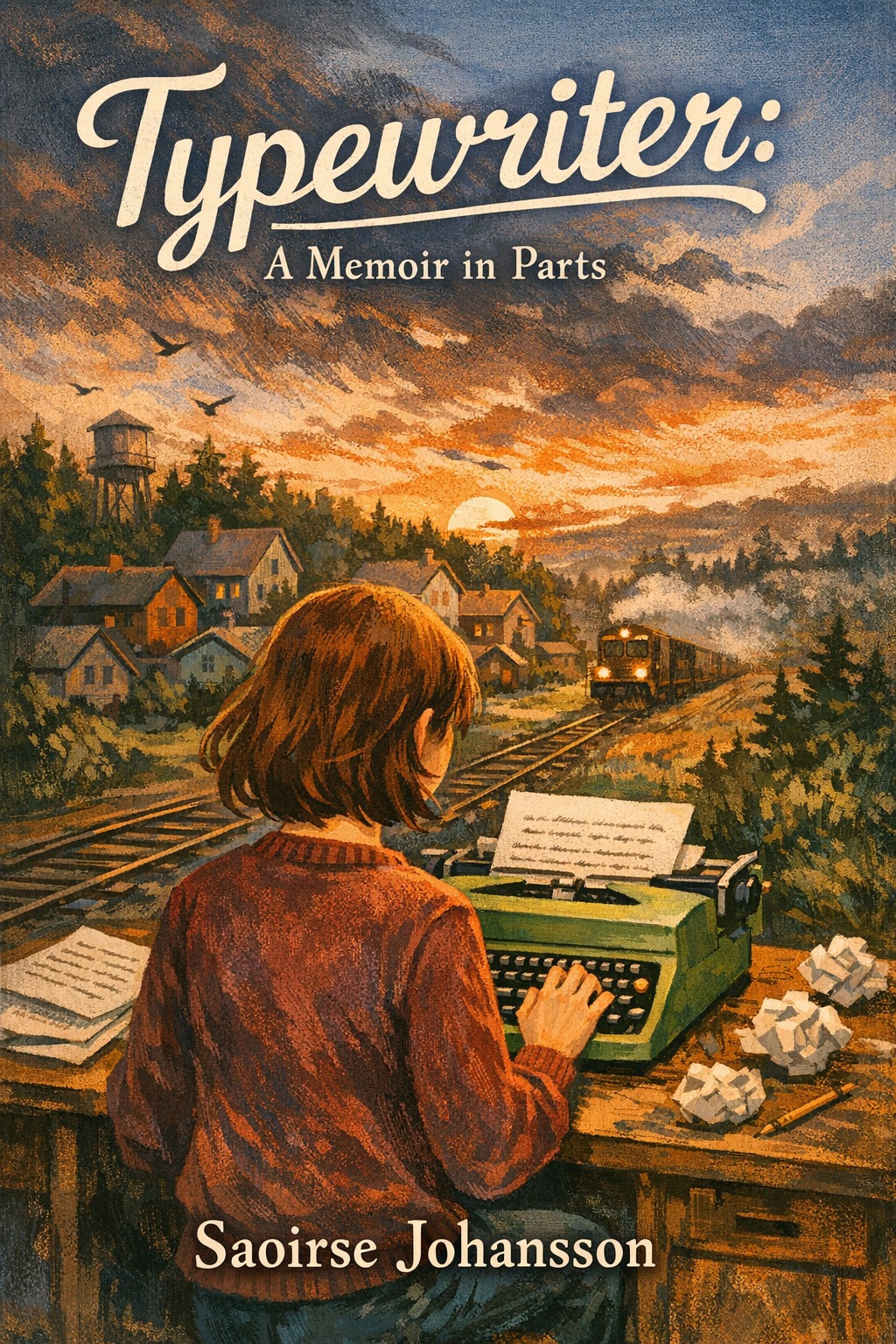
Photo of Saoirse Johansson

Saoirse Johansson grew up amid lake-effect snow and kitchen-table folklore in Duluth, Minnesota. A first-generation Irish–Swedish American, she studied creative writing at the University of Minnesota and later coordinated youth literacy programs along the North Shore. Her essays and short fiction have appeared in regional journals and arts zines, and she has been shortlisted for the Northwoods Young Writer Award and the Arrowhead Arts Fellowship.

Saoirse mentors teen writers through the Superior Public Library and co-runs a monthly community type-in for analog enthusiasts. When she isn't drafting at an old Olivetti, she hikes the Superior Hiking Trail with her rescue mutt, Larkin, and collects postcards from lighthouses she's never climbed. She lives in Two Harbors, Minnesota.

Ratings & Reviews

Theo Ng
★ ★ ★ ☆ ☆
2026-01-14

The mystery and whistleblowing spark, but the momentum dips in the middle as lighthouse scenes easily eclipse the school tribunal threads.

Ruthie Glass
★ ★ ★ ★ ☆
2025-09-25

For grades 9 and up, especially readers who connect with contemporary YA about art-as-survival and community activism. Content notes for classroom and library shelves: parental loss, institutional neglect, references to bruises from discipline, economic precarity, and anxiety around public testimony. Strong tie-ins for units on narrative voice and local government; expect discussion about accountability, student rights, and what schools owe their most vulnerable.

Cale Morton
★ ★ ★ ★ ★
2025-08-12

I love books that understand how a town can script you before you ever open your mouth. This one lets Nell drag the script back to the typewriter and retype it, key by stubborn key, until the letters bite deep enough to hold.

What hit me hardest was how ordinary the harm looks. Receipts, fines, attendance flags, a schedule that never stops to ask who is missing. The villain here is not a cape and monologue but a file cabinet.

And then there is grief, the river, the fog, all of it pressed thin between carbon paper. When Rowan rolls in with paint-flecked patience and a chipped sense of right, it is not a rescue so much as a companionable shove toward courage. I breathed easier every time they took another page to the bulletin board.

By the time the Winter Jury gathers, the gym hums with fluorescent dread. Nell faces "a choice that stings your tongue" and the book refuses to sweeten it. No magic fix, no neat erasure, just the boldness to say the thing and accept the light it brings.

This is a siren for the kid who thinks their truth is too messy to be shared. It is tender and furious and so very alive.

Priya Dutta
★ ★ ★ ★ ★
2025-06-30

Kettle's End feels lived-in, not staged. The mills mutter, the buses keep their own cruel timetable, and the lighthouse at Deadman's Point watches like an old witness. Even the Olivetti becomes part of the town's machinery, smudging truths the way salt air smudges windows.

The Winter Jury is small-town myth turned institution, fluorescent and petty and terrifying. When the map marked CONFISCATED surfaces, the stakes widen beyond one family to a whole route of kids who have been labeled and rerouted, and that broader system pressure makes the final choice ring louder.

Omar Velasquez
★ ★ ★ ★ ★
2025-05-19

Nell's interior voice is both flinty and tender, a kid building a spine out of ribbon ink. Mira glows in the margins with small survivals, and Rowan's jagged charm softens into something like loyalty without ever getting sainted. Mr. Pasko's quiet is the kind that makes you lean closer.

Their conversations sound like late bus rides, tired and brave.

Nina Kellem
★ ★ ★ ★ ☆
2025-04-02

Built from typewritten fragments, the book leans into white space, carbon-copy echoes, and breadcrumb headers that frame each vignette like a file tab; it makes the Olivetti feel like a heartbeat. A few transitions between lighthouse discoveries and school scenes feel abrupt, but the cadence of keys striking carries through, and the final assembly clicks into place with a satisfying, ink-smudged inevitability.

Generated on 2026-10-06 12:07 UTC