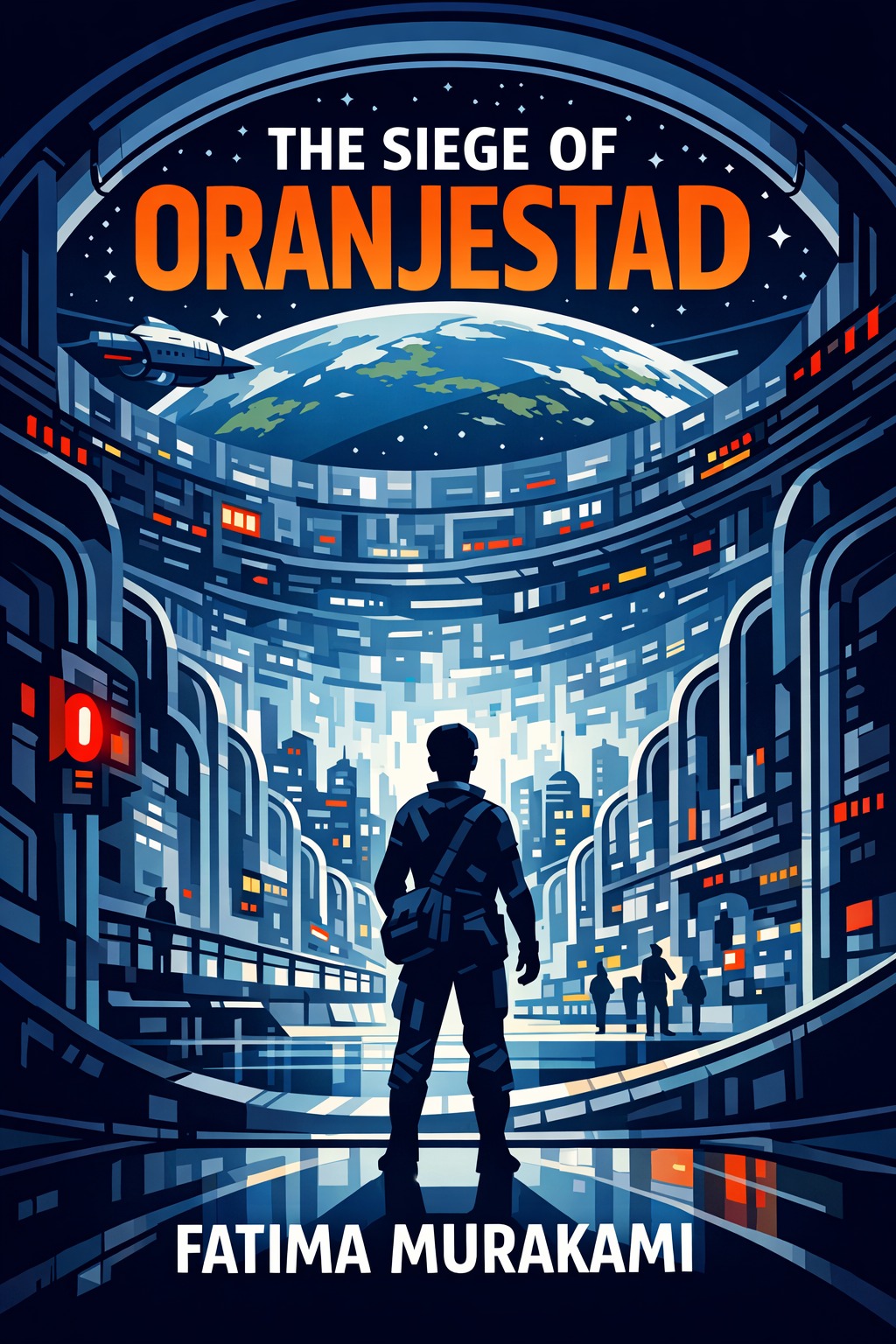
Cover of The Siege of Oranjestad

The Siege of Oranjestad

Science Fiction · 312 pages · Published 2025-03-04 · Avg 4.2★ (6 reviews)

From the Nebula-nominated architect-turned-novelist of The Salt Roads of Mons Olympus, a claustrophobic science-fiction siege told as a station-loop thriller set above the Caribbean.

A city with no sky, a horizon made of doors.

When private maintenance inspector Marin Croes wakes to alarms inside Section C-12 of the Oranjestad Orbital Spine, the colony below is already under blockade by the Atlas Syndicate. Every time Marin sets off toward Dock Ring North, they pass the same vending unit humming with warm pastechi, the same flickering Aruba Aloe ad, the same child towing a neon kite past Bulkhead 23—and no matter how far they go, they emerge again beside a scuffed orange line that reads C-12. A battered emergency placard offers the only hint scrawled in oil pencil: If something is wrong, turn back. If nothing is wrong, proceed. Make eight clean segments to reach "Gate 8". Misjudge, and you wake at C-12.

With pressure doors groaning and thruster fire strobing the viewport, Marin learns to listen for the Spine's quiet betrayals: condensation that falls upward, a clock that blinks 61, a customs drone (SELA-4) rewriting its own checks in Papiamento. Each anomaly is a decision they refused to make; each reset, a life postponed. As Marin maps the corridor's fever logic—and the lives of the people trapped within it, including Yara Tromp with her cracked violin case and Dr. Jaap Oduber guarding a smuggled seed vault—the siege outside becomes less terrifying than the order inside. Perhaps the breach is not a threat but a bridge. Perhaps the only passage out is through.

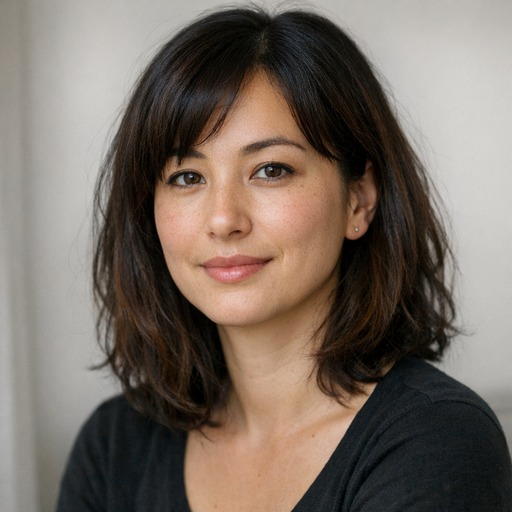
Photo of Fatima Murakami

Fatima Murakami is a Japanese–Moroccan science fiction writer and urbanist based in Rotterdam. Born in 1986 in Casablanca to a Nagasaki-born structural engineer and a linguist from Agadir, she studied architecture at TU Delft and worked on sustainable port redevelopments in the Dutch Caribbean before turning to fiction. Her debut, The Paper Elevator, was followed by Tide Maps for a Drowned Port and The Salt Roads of Mons Olympus, and her work has been shortlisted for the BSFA Award and the Kitschies.

Murakami's fiction explores infrastructure as destiny, multilingual cities, and how small errors ripple through vast systems. She has held research residencies with ESA's Advanced Concepts Team and at the Jan van Eyck Academie, and has spent extended periods on Aruba and Curaçao studying colonial-era harbors and modern logistics. She writes in English and Dutch, reads Japanese and Arabic, and occasionally lectures on speculative design at Delft and the Willem de Kooning Academy.

Ratings & Reviews

Akua Mensah
2026-02-11

Hand this to readers who like claustrophobic SF puzzles, linguistic texture (bits of Papiamento), and moral dilemmas nested inside machinery. The corridor repeats, but the lives inside it do not; that distinction is where the book shines for thoughtful teens and adults.

Content notes: siege backdrop with brief mentions of violence and ship fire, anxiety loops and disorientation, food scarcity, no graphic gore. Great for book clubs that enjoy mapping patterns, debating choice vs. order, and savoring small, specific clues like a hum from a vending unit or a line of paint that means more than it should.

Jacob F. Reid
2025-09-03
  • Elegant loop logic with clear "eight segments" stakes
  • Middle stretch repeats a few corridor beats once too often
  • Siege outside feels distant compared to the hall's puzzle
  • Final choices land, though momentum wobbles on the way
Tomás Villalba
2025-06-15

Una estación que se dobla sobre sí misma, el zumbido de un dispensador de pastechi y un reloj que marca 61 hacen de este mundo orbital algo hipnótico.

Mira Lozano
2025-05-09

What kept me tethered wasn't the mystery of the loop so much as Marin Croes learning to hear themselves inside it. The narration lets small reactions breathe — a pause before trusting an emergency placard, the way their attention shifts when the child's neon kite cuts by — and those interior beats make the resets feel like choices, not tricks.

The side cast sharpens Marin rather than upstaging them. Yara Tromp's violin case holds damage and dignity; Dr. Jaap Oduber's careful custody of a seed vault radiates a tenderness that complicates the siege ethos; and SELA-4's Papiamento self-checks are both funny and quietly rebellious. Dialogue is spare, almost transactional at first, then loosens in cadence as trust accrues. By the end, I believed in the connections forged in that stubborn corridor.

Daan Vermeer
2025-04-02

As a piece of narrative engineering, this excels. The station-loop conceit is cleanly articulated, then iterated with just enough variance to reward attention without drowning the reader in schematics. Croes's eight-segment mandate functions like a structural spine, and the resets accrue texture as motifs (pastechi hum, Aruba Aloe glow, neon kite) turn from set dressing into diagnostic tools.

The prose is purposeful rather than florid, precise when it must be and brisk when the loop tightens. Croes's journey becomes a metronome for the prose: clipped when choices narrow, sinuous when possibilities fan out. A few midbook passes lean repetitive, but the book mostly avoids wheel-spinning by threading in new tells — condensation, a corrupted timestamp, a bureaucratic drone revising itself — that signal progress even when the hallway remains the same.

Keisha A. Roop
2025-03-18

I am dazzled. This is a siege novel that refuses the easy drumbeat of cannons and instead tunes your ear to condensation that falls upward, to a clock that blinks 61 like a held breath, to a scuffed orange line that becomes a kind of prayer. I kept rereading the emergency placard because it reads like a catechism for choice.

Marin Croes is caught in a corridor that argues with time, yet the book never cheats. Each reset lands with the ache of a decision not yet taken. The vending unit humming with warm pastechi, the flickering Aruba Aloe ad, the child and the neon kite — these refrains stop feeling like props and start feeling like witnesses.

What moved me most was the way the novel turns siege into philosophy. The Atlas Syndicate's blockade is terrifying, but the order inside the Spine is the sharper blade. The text keeps whispering that the breach might be a bridge, and by the time "a horizon built of doors" arrives as an image, I believed it with my whole chest.

The supporting lives widen the corridor instead of cluttering it. Yara's cracked violin case sounds even when she is silent; Dr. Jaap's seed vault feels like a pocket-sized planet; SELA-4's checks rewriting themselves in Papiamento made me grin and shiver at once. Agency ripples outward from the smallest choices.

Form mirrors meaning. Eight clean segments to Gate 8 becomes a ritual, and misjudgment returns us to C-12 with real cost. The loop is not a gimmick but a moral instrument, tuned to mercy and consequence in equal measure.

I finished with my pulse up and my mind quiet. The station is claustrophobic; the book is generous. It gave me a way to think about stalled lives and stuck systems, and it did it with style, intelligence, and heat.

Generated on 2026-09-22 12:02 UTC