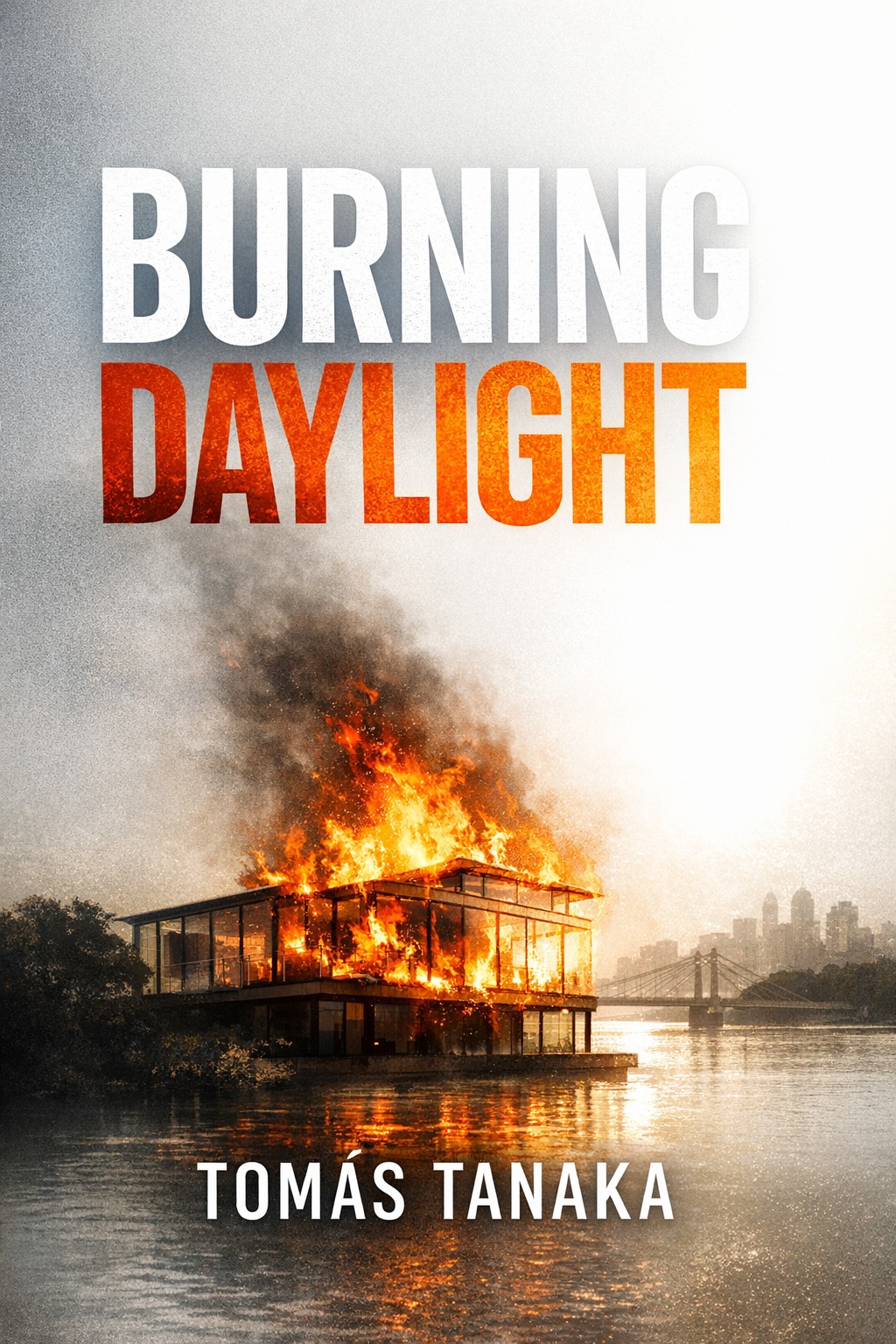
At noon on the hottest day of the year, a glass penthouse on the river goes white with heat and then blossoms into fire, visible to joggers in Battersea Park and office workers across Chelsea Bridge. Inside, property baron Lionel Kestrel is found fused to his designer table, a scorched phrase—"daylight burns clean"—fingered into soot on the wall. The Met names it calculated arson. London calls the culprit the Daylighter, because the attacks keep arriving in places meant for sun: a canal boat conservatory in Little Venice, a rooftop apiary in Shoreditch, a greenhouse at Kew. Only one survivor is pulled out alive: Tomasz Król, a watchmaker whose voice is wrecked by smoke and who begins answering questions by resetting the timepieces that pass through his workbench, each adjustment a cryptic message.
Eden Vale, a tenacious fire investigator exiled to a council risk desk after a disastrous warehouse call, sees what the headlines miss. Insurance records, decommission notices, and old council minutes point to a defunct solar start-up and a tangle of quiet payoffs that once promised to flood the city with light. Tracking the Daylighter drags Eden through shuttered glassworks in Rotherhithe, the archives of the London Fire Brigade, and the brittle glamour of developers' parties where everyone trades favors and secrets. Watching the city glare and burn, Eden becomes convinced the fires aren't meant to erase people—they're erasing evidence.
But the pattern hooks deeper than Eden admits, back to a care-home blaze that took Eden's mother and to the mentor who walked away. As Eden closes in on a culprit who weaponizes reflection and heat, the investigation threatens to scorch what's left of Eden's life—sleep, sobriety, and the fragile trust of Tomasz, the only witness who refuses to speak straight. To stop a killer who strikes in perfect midday clarity, Eden must decide how much truth can survive in the open.