

Cover of A Compass in the Attic

A Compass in the Attic

Thriller · 336 pages · Published 2026-02-10 · Avg 4.3★ (6 reviews)

When a municipal records analyst, Maya Khoury, inherits the attic keys to a crumbling Fort Greene brownstone, she finds a brass surveyor's compass in a tin box etched with parcel numbers. The needle refuses true north, locking instead onto a chain of obsolete easements scribbled on a 1973 Sanborn map. Tucked beneath the felt is a strip of microfilm and a transit token drilled clean through. As her building's new landlord pushes an emergency demolition permit, Maya follows the compass from basement boiler rooms to the shadowed edge of the Brooklyn waterfront.

With a bike-messenger archivist, Evan Saito, and a retired tunnel inspector, Ralph Colón, she traces the signal through Hoyt–Schermerhorn mezzanines, a shuttered Red Hook pumping station, and the whispering galleries under Jay St–MetroTech. The trail exposes Hinterland Index, a real-estate intelligence firm laundering neighborhood surveillance through the city's water-tunnel magnetics. The compass isn't a relic; it's a key that sequences access points mapped in rust, lime, and dead zones. As a king tide and a controlled blast converge, Maya must decide whether to reveal the grid and save a public-housing campus—or pull the pin on a collapse that buries the truth forever.

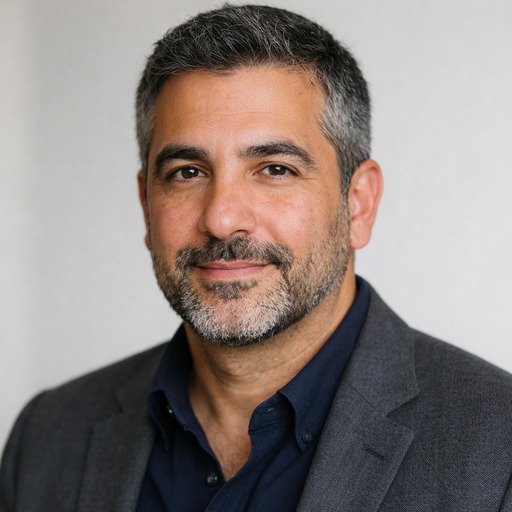
Photo of Michael Al-Rashid

Michael Al-Rashid is a journalist and urban planner whose reporting and fiction chart how infrastructure exposes private lives in public. Raised in Dearborn, he studied engineering at Wayne State, earned a master's in urban planning from Columbia, and completed a journalism degree at NYU. His work on housing, public space, and civic conflict has appeared in City Limits, The Atlantic, and The Guardian, and he consults on community engagement for small cities across the Northeast.

He is the recipient of an Urban Reporting Fellowship from the Metro Policy Lab and a Front Page Award for feature writing. His nonfiction includes Sidewalk Atlas, Metered, and Last Rites for Bleecker; his fiction—most often thrillers like Lantern: An Inventory—turns maps, sensors, and maintenance logs into human pressure cookers. Michael Al-Rashid teaches participatory planning at Pratt Institute and lives in Brooklyn with his partner and an elderly rescue mutt who insists on the long way home.

Ratings & Reviews

Gareth Iqbal
2026-08-07

What lingered for me is the moral geometry. The compass that "refuses true north" becomes a thesis about public memory versus private extraction, about who gets to orient a neighborhood. Maps here are not neutral; they are arguments etched in rust and limestone.

When Maya weighs disclosure against erasure, the theme clicks into place with uncommon grace. It is a thriller that asks what we owe to records, to homes, to the unseen labor that keeps a city breathing.

Marisol Greene
2026-06-30

Skeptic's ledger on plot and pacing

  • Quick attic hook with keys, tin box, and the drilled token
  • Occasional infodumps on tunnel magnetics
  • Chase beats through Hoyt-Schermerhorn and Jay St-MetroTech land clean
  • Finale aligns compass, tide, and ethics with satisfying clarity
Connor Blatch
2026-05-21

If you like Steph Cha's procedural cool and Alex Segura's city-noir conscience, this belongs on your stack. It blends street-level sleuthing with a systems thriller, turning maps and transit ephemera into evidence.

The tone is precise without being clinical, and the bike-messenger archivist angle adds a nimble counterpoint to Maya's document-deep patience.

Priya Narayanan
2026-04-12

Yes. This is the kind of urban thriller I crave: not chase scenes, but valves, mezzanines, and a needle that keeps insisting on another truth.

Every site hums. I could smell the boiler rooms, see the lime bloom, and hear the whispering pockets under Jay St-MetroTech. When the compass locks on those obsolete easements, I practically shouted.

The conspiracy hits with a jolt. A real-estate intel front laundering surveillance through water-tunnel magnetics? I was grinning, then swearing, then grinning again.

And the stakes. That choice, whether to reveal the grid to save a campus or bury it under collapse, had me pacing my apartment and muttering at the walls.

By the time the king tide rises and the controlled blast ticks closer, I was buzzing with that rare mix of dread and awe. More of this kind of city storytelling, please!

Jamal Ortega
2026-03-05

Maya reads the city the way some people read diaries, and that habit makes her stubbornness feel earned rather than reckless. Evan brings kinetic warmth, the courier who notices what bureaucrats miss, while Ralph is the conscience that counts bolts and consequences. Their dialogue snaps like clipped site notes, and even when tempers flare the conversations never drift into speechifying.

Their trust feels hard-won.

Lena Morrell
2026-02-18

The narrative is laid out like a map: sections click into place as coordinates, interleaving Maya's analytic voice with spare field notes. The brass compass and Sanborn marginalia recur as a clean motif, and the microfilm breadcrumbs arrive right when curiosity peaks.

A few infrastructural passages over-explain the magnetics, and one detour at the Red Hook station lingers, but the book mostly cuts fast without losing clarity. Smart, methodical, and quietly taut.

Generated on 2026-08-08 12:01 UTC