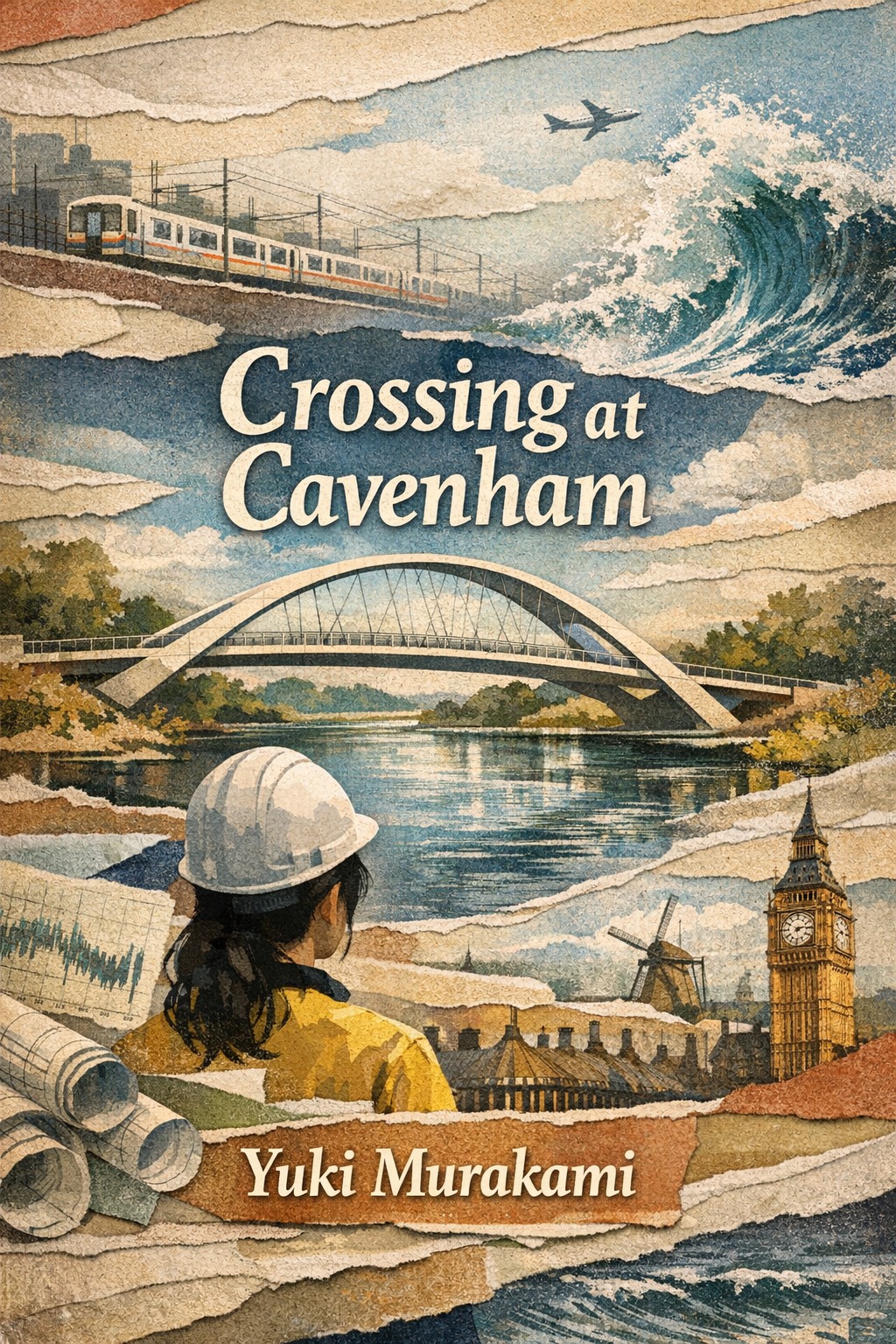
I kept waiting for the craft to match the craft. The promise of tuning a bridge like a luthier is gorgeous, but the prose too often drones in one register, trading rhythm for report.
Whole chapters feel like minutes from those county meetings in Bury St Edmunds, meticulously faithful and numbing. Acronyms pile up. Footnotes swarm. The wind-tunnel passages in Eindhoven repeat their findings without deepening the idea.
Murakami can sketch a scene, yet he rarely lets it resonate. We get the star map of Cavenham Heath, the frost, the hum at 110 Hz, and then we march back to procurement clauses. The cadence stalls.
Comparisons to Brunel, Ove Arup, Peter Rice, and Frei Otto are recited rather than argued. It is as if prestige might be contagious if named often enough. I wanted an essay's tensile curve; I got a dossier.
Even interviews with Kuroda feel compressed into captions. Her ear is everything in this story, but her voice is clipped, interrupted by charts and committee timelines. By the end I was craving cut pages, not added appendices.
There is a fine book inside this one, lighter and more sonorous. This, regrettably, is the heavy mix.