Cover of Noor Essaïdi

Noor Essaïdi

Memoir · 320 pages · Published 2025-02-18 · Avg 4.3★ (6 reviews)

Luca Nakamura didn't mean to make a pilgrimage out of a name. Noor Essaïdi first appeared in a stray email from a shared cousin in Marseille, then again in a battered blue airmail envelope postmarked Tangier with a single photo: a shoreline at dusk, a child's hand tugging a kite string, a penciled note on the back—find me where the water narrows. By the time a voice note arrived months later—from an unlisted Detroit number with the hum of traffic and a laugh like a match striking—Luca understood that Noor wasn't just a person. She was a map of everything he thought he'd learned to live without.

In a secondhand 1998 Toyota Corolla with a misaligned radio that plays AM gospel and rancheras in the same breath, Luca sets out from Portland with an Olympus Stylus, a dented moka pot, and a shoebox of unsent letters. The roads and ferries he follows don't obey a single country: I‑84 to Salt Lake's endless pale, a Pilot Flying J outside Cheyenne where long-haul drivers trade recipes for sleep, Warren Avenue in Dearborn where a hookah lounge shares a wall with Al‑Ameer, a greywater motel in El Paso where border agents drink coffee that tastes like coin. A month later he is on the Tarifa–Tangier ferry with seaspray on his glasses and a customs officer who wants to talk about the price of flour.

What begins as a search entropy-proofed by small rituals—buying gasoline, translating receipts, listening to Noor's scattered messages—turns into a ledger of all the ways people move and are stopped: visas that expire faster than promises; the quiet arithmetic of remittances; language that sharpens into a border when mispronounced. In bakeries on Rue d'Aubagne, in a Hamtramck auto parts store, at the Bardo's sunlit steps, Luca meets strikers, aunties, archivists, truckers who know every weigh station clerk by first name. Their stories tilt the mirror: the world looks different depending on which side of the desk you stand, which name you're called at 3 a.m., which tail light is cracked.

With mordant humor and a stubborn tenderness for people and places that refuse neat conclusions, Noor Essaïdi is a memoir stitched from ferry tickets, café napkins, voice notes, and margins. It's a love story, a border-crossing field guide, and a reckoning with inheritance, asking who gets to arrive and what it costs to keep going when the road narrows and the map runs out.

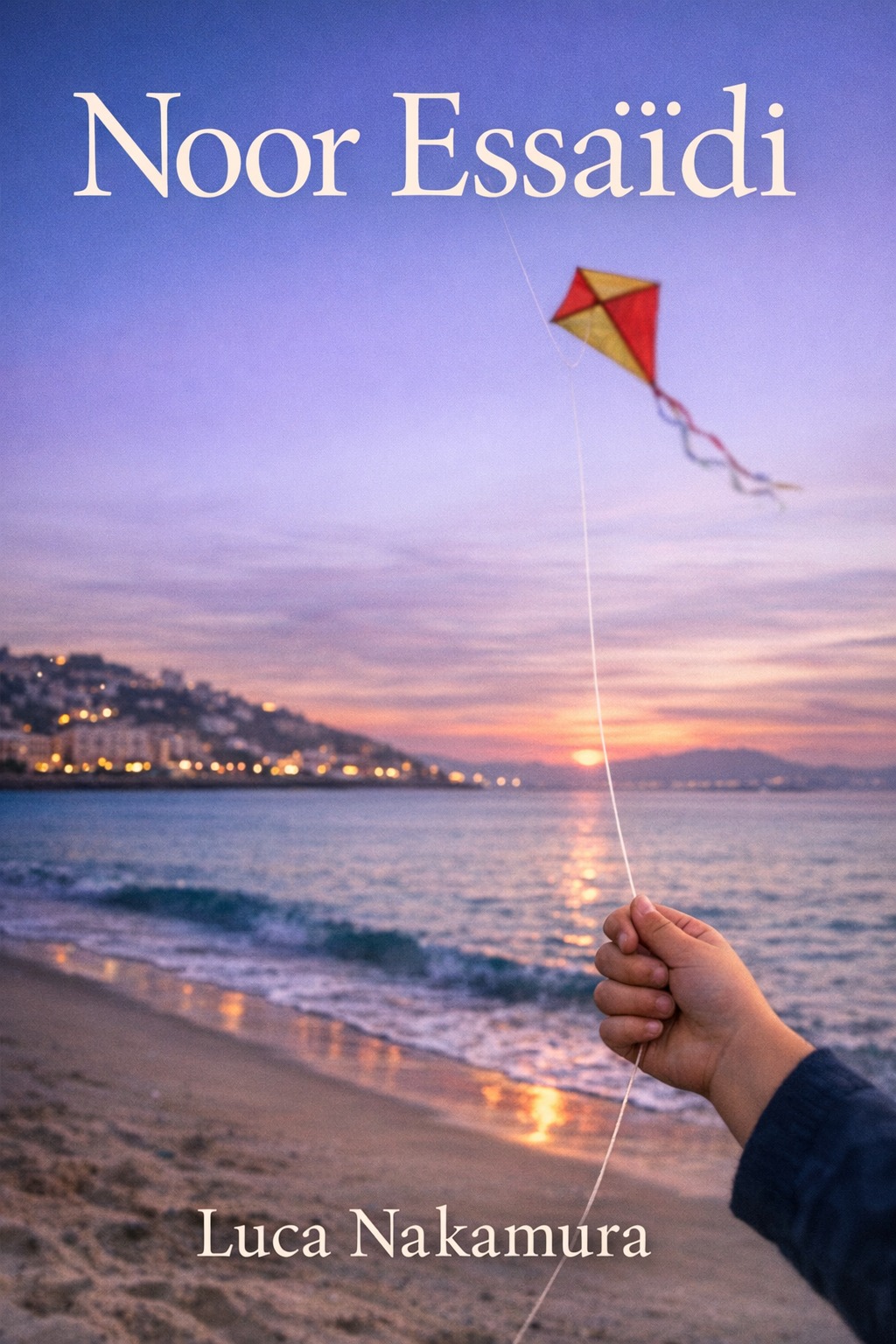
Photo of Luca Nakamura

Luca Nakamura is a memoirist and translator whose work traces the fault lines between language, labor, and belonging. Raised between San Pedro, California, and Cuneo, Italy, by a shipyard electrician and a seamstress, Luca worked as a barback, copy-shop tech, and union organizer before earning an MFA in creative nonfiction from Portland State University. His essays have appeared in The Believer, Guernica, Orion, and Electric Literature, and his reporting on diaspora communities along the Great Lakes corridor has been taught in community journalism workshops. He is the recipient of the Cascadia Nonfiction Prize and a Detroit Arts fellowship.

Luca's first book, Liminal Hours (2021), explored night-shift economies and the poetics of maintenance. He has translated contemporary Japanese and Italian small-press zines into English and consults on bilingual oral-history projects. When not on the road, he splits his time between Detroit's Banglatown and Tangier, where he volunteers as a court interpreter and leads a narrative nonfiction lab at the Cinémathèque de Tanger. He lives with a rotating collection of found maps and a stubborn moka pot.

Ratings & Reviews

Devon Arakawa
2026-06-30

If Teju Cole met Valeria Luiselli on the Tarifa ferry and they traded notebooks, the result might sound like this, intellectual without froideur, tender without sentimentality.

Readers who gravitate to border-crossing nonfiction, photo-notes, and quietly political travel writing will find a new touchstone here. The misaligned radio, the shoebox of letters, the kindness of scalehouse clerks—these details stack into something generous and lasting.

Sonya Dlamini
2026-03-27

Mixed feelings, mostly about pacing, with much admiration for the sensibility.

  • Lyrical voice and humane observations
  • Fragmented structure suits the search
  • Mid-journey detours feel samey
  • Closing chapter leans more evocative than conclusive
Mateo Krieger
2026-01-11

The book treats roads and waiting rooms like landscapes you have to learn. I-84's pale distance, a Pilot outside Cheyenne with recipes for sleep, Warren Avenue's mix of hookah haze and takeout, the Tarifa–Tangier deck where customs small talk pivots to flour prices; the geography doubles as bureaucracy, and each counter or weigh station redraws what counts as home.

Aaliyah Ben Sassi
2025-10-02

Luca is observant, funny, and a little wary, the kind of narrator who notices tail lights more than headlines. His hesitations are as revealing as his choices, and his care for strangers starts to read like a way of repairing himself.

Noor, meanwhile, is presence by absence. A voice note, a shoreline, a joke about flour prices—each clue expands her without turning her into a puzzle box. Their not-quite-conversation hums with longing and good humor, and when Luca repeats someone's name just to get it right, you can feel the stakes.

Peter Langford
2025-06-18

As a piece of craft, this is a confident collage. Tickets, café napkins, voice notes, and photos are arranged so scenes click together without needless fuss, and the Olympus Stylus becomes a sly organizing device.

A few sections linger too long on transit minutiae, and one Dearborn sequence loops an image once too often, but the tonal register stays nimble and the chapter breaks land with intention. The final crossings feel earned rather than engineered.

Mara Qureshi
2025-03-05

This memoir found me the way Noor finds Luca, through fragments and stray signals. Ferries thrum, diesel breathes, and the road keeps posing its quiet questions.

What a miraculous ledger of movement and pause.

I keep hearing the misaligned radio blending gospel with rancheras, a soundtrack for paperwork that never quite fits. The hook for me is how a penciled arrow and a laugh from Detroit can reorder a life until "find me where the water thins" feels less like directions than a vow.

The rituals are small and stubborn: buying gas, translating receipts, photographing the ordinary so it can be held. Every stop becomes a classroom where strangers teach Luca the math of scarcity and the grammar of kindness.

And when the book faces the cold mechanics of borders, it does not flinch. It gives us visas that tire faster than bodies, remittances like prayers folded into envelopes, names that change shape at a window, and still it chooses tenderness. I finished with sea salt on my tongue and a map that finally admitted its blank edges.

Generated on 2026-07-24 12:02 UTC