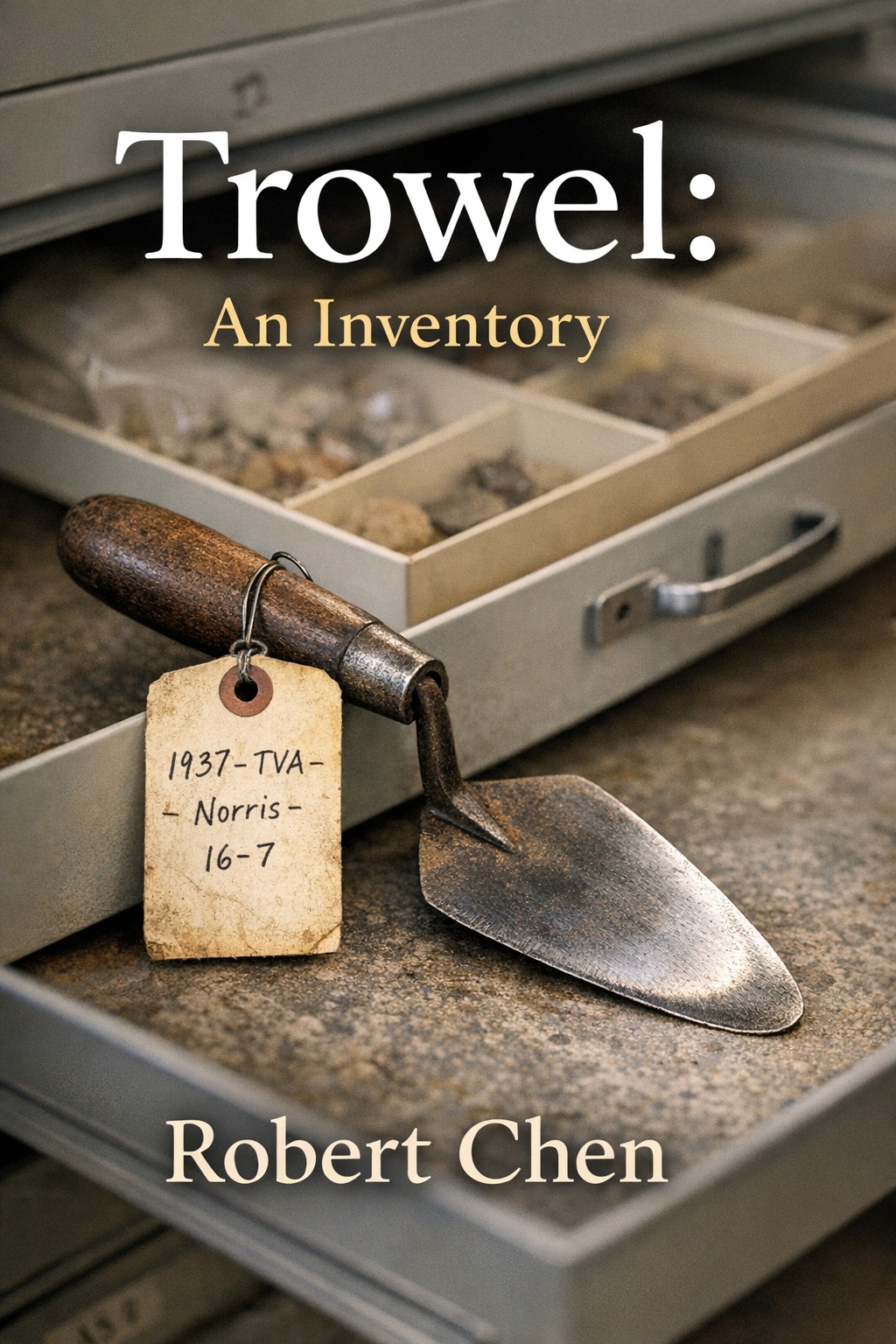
In a climate–controlled drawer at the McClung Museum in Knoxville sits a palm-sized, carbon-steel pointing trowel, its blade burnished to a crescent by years of careful scraping. The paper tag pinned to its handle reads 1937–TVA–Norris–16–7. That tag becomes the hinge of a wider story. From floodplain salvage digs ahead of Tennessee Valley Authority dams to a sunburned field school in Illinois chipping at a Mississippian house floor near Cahokia, this inventory of trowels traces the quiet instruments that have built walls, opened graves, and coaxed language out of dirt. Each object in the catalog is described the way field notes do—dimensions, maker's mark, angle of bevel—then followed across time: a Marshalltown with a rosewood grip used at a Works Progress Administration trench; a WHS with its tip snapped and reprofiled on a glacial erratic; a plasterer's Philadelphia pattern from a Birmingham brickyard where convict-leased labor once stacked kiln-fired blocks for courthouses.
Robert Chen pairs these tools with the places that still hold their edges. At Norris Reservoir he follows William S. Webb's salvage crews racing the waterline, matching ledger entries to submerged cemeteries whose names drowned with their stones. In St. Augustine he handles a corroded margin trowel recovered downstream of Fort Mose and listens as a park ranger recounts the free Black town's relocations under three flags. In western Montana he visits a hillside above Deer Lodge where a garden trowel dug up a cache of porcelain rice bowls, the remains of a workers' camp long gone to sage and rumor. He walks the outwash of the Skagit, where a volunteer turning soil for a community orchard hits clinker from a demolished cannery and, with a hardware-store trowel, exposes a midden layered with mussel shell and bottle glass. Across these scenes, the book keeps returning to a simple question that becomes a difficult one: who is allowed to move earth, and to what end.
Threaded through the catalog are diagrams of stratigraphic profiles, shop invoices, and the ghostly contours of factory stamps—MARSHALLTOWN, WHS, Goldenberg—each a signature of manufacture and of intent. Chen enters storerooms and workshops: a Taipei alley where a bladesmith hammers a cranked neck into a pointing trowel; a Seattle makerspace where a 3D-printed jig helps a field tech re-edge a blade beside a bin of washed sherds. He writes with the precision of a coder and the patience of a mason, assembling an argument sentence by sentence: that the trowel, whether in a mason's hand or an archaeologist's, is a ledger of what a nation buries and what it chooses to uncover. Trowel: An Inventory turns a humble tool into a prism, revealing the textures of labor, the sediments of memory, and the violence and repair braided through American ground.