Cover of Gristle

Gristle

Literary Fiction · 304 pages · Published 2025-03-18 · Avg 2.8★ (6 reviews)

A coming-of-age novel, a love story, and an ode to the stubborn bits that hold everything together, Gristle showcases witty, unsentimental prose and an unseemly knowledge of salumi in a tale set along the fog-softened rivers of Emilia-Romagna. Broke and stalled, twenty-six-year-old Milo Crane takes a job in Parma as the everything-apprentice to Edda Martellini—"Nonna Edge" to the locals—an iron-willed widow whose tiny salumeria, "La Stella Grassa", is famous for culatello and arguments. Trained as a museum registrar, Milo assumes he's been hired to digitize recipe cards and salvage the shop's archive of grease-spotted ledgers... but what, exactly, are his duties? Days are spent coaxing an istrice out of the curing room, hauling a moody prosciutto to the attic to catch the Tramontana, hunting for the antediluvian brining vat buried behind sacks of sea salt, ferrying deliveries on a sputtering Piaggio Ape, charming or surviving an endless procession of guests (a retired Giro d'Italia sprinter, a countess from Colorno, a chorus of Teatro Regio mezzos, and an unnervingly serene cheesemaker named Luca), attending a funeral to liberate a hand-cranked stuffer hidden beneath lilies, and, above all, not derailing Edda's final design—to reconcile with the sister she has not spoken to in fifty years before the first frost.

As summer clouds into the long gold of harvest and the Po exhales its cold breath, La Stella Grassa reveals its secrets: a ledger that rewrites a family, the true weight of a town's appetite, the bright, stubborn tenderness of Agnese Rivani, a health inspector on a green Vespa who notices far too much. In the knots and sinews of obligation and care, Milo learns what must be chewed, what must be spat out, and what, miraculously, can be made tender.

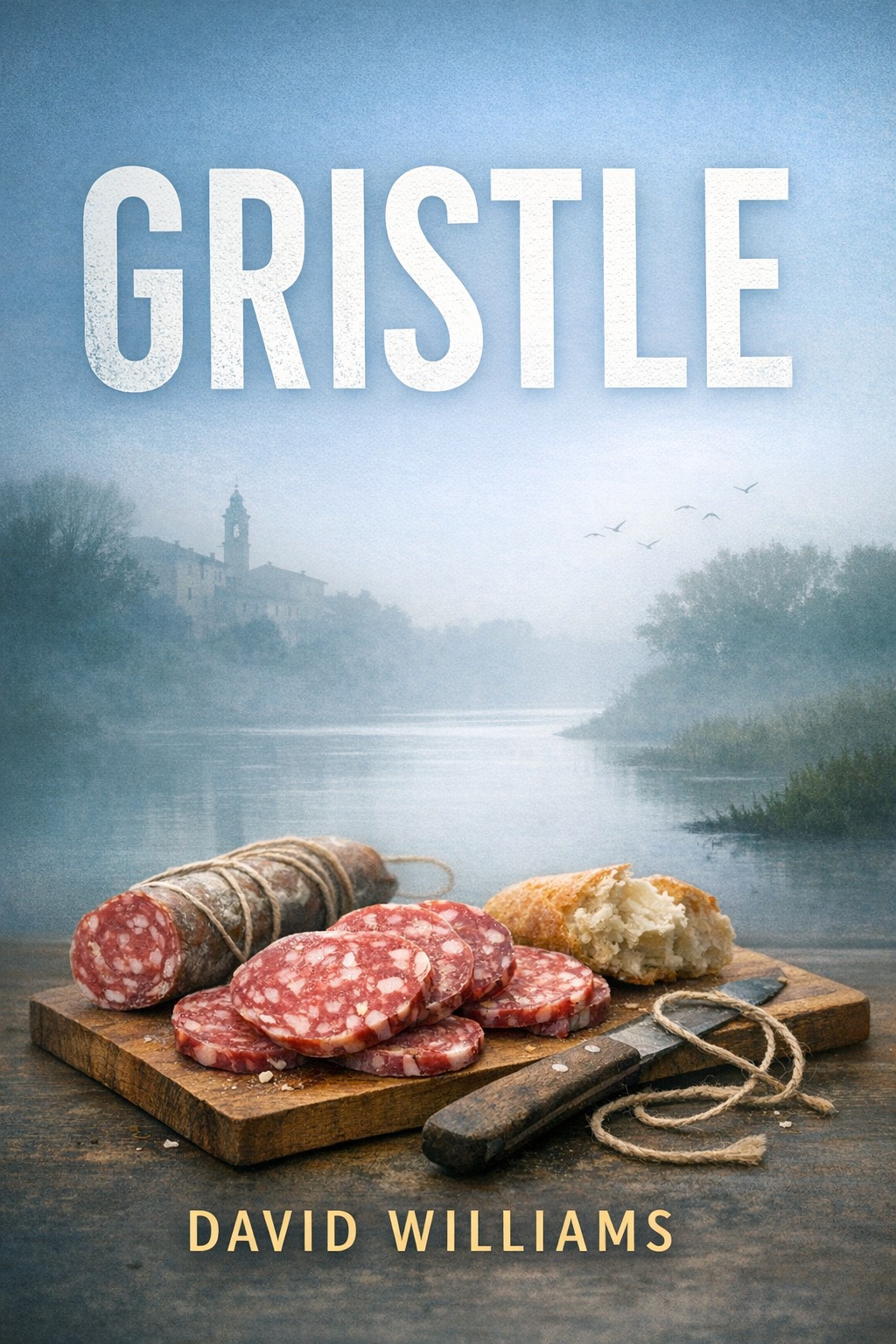
Photo of David Williams

David Williams grew up in Shropshire and studied art history at the University of Leeds before training as an archivist. He has worked as a museum registrar, a night baker, and a clerk behind a butcher's counter, occupations that seeded his preoccupation with the everyday labor that feeds a city. After a fellowship in Emilia-Romagna, he split his time between Bologna and London, writing essays on food, memory, and class for independent journals.

His debut collection, Salt the Margin, won the Fen End First Book Prize and was longlisted for the Northbridge Short Fiction Award. His essay cycle The Tender Cut appeared from Small Weather Press in 2021. Williams has taught workshops at public libraries, volunteers with community kitchens, and keeps an unruly notebook of found phrases. He lives in a small flat above a greengrocer's in Deptford.

Ratings & Reviews

Luca Ferretti
2026-06-09

Bilancio rapido.

  • Atmosfera padana resa bene
  • Tanti dettagli di salumeria, a volte troppi
  • Trama episodica che si inceppa
  • Personaggi secondari pittoreschi ma invadenti
Priya Menon
2026-04-18

Gristle is about the stubborn bonds that refuse to let go, even when language fails. Food here is a grammar for apology and pride, and the looming first frost keeps the hours honest.

I liked how the book keeps worrying the same question, "what to chew, what to spit, and what, somehow, softens." At times the point circles rather than lands, but the motif of labor turning tough things tender lingers.

Celine Morozov
2026-02-05

What worked best for me was place. The fog-softened banks, the chilly exhale of the Po, the Tramontana licking at an attic where meats rest, and the cramped geometry of La Stella Grassa all feel tactile; even the Ape coughs like an old uncle. The culinary craft reads as process rather than postcard, with patient attention to salt, time, and trust.

Miguel Aranda
2025-11-21

Milo reads as a young professional in free fall, observant yet self-effacing. His rapport with Edda is sharp and funny, built from clipped exchanges where both refuse to yield ground. Agnese enters as a counterweight, all gentle scrutiny and green-Vespa energy, though her scenes sometimes feel borrowed from a different novel.

I wanted one deeper moment where they say what they mean.

Taryn Okafor
2025-07-10

I signed up for a novel about work, love, and the costs of care; I got a string of errands stitched together by recipes. The conceit is charming for a few chapters, then it turns into a loop of chores with garnish.

Yes, the prose is quick and unsentimental, but it keeps preening. Jokes elbow their way in, salumi trivia piles high, and the lists feel like display cases instead of living scenes.

The structure is pure stop and start. Coax an istrice. Drag a moody prosciutto to the attic. Hunt for a fossilized brining vat. Deliver parcels on the Ape. Rinse, repeat. Where is the engine, the pressure, the reason to turn the page?

Milo stays blurry, a competent pair of hands without a center. Edda can dominate a room, but she is often deployed as a device to cue the next task. Even the ledger that promises revelations behaves like a prop.

Every time a new walk-on arrives, the book slows to admire them, and momentum vanishes. By the time the Po exhales its cold breath, I was restless, not moved. Two stars because the setting cooks, but the story never quite does.

Naomi Pritchard
2025-04-02

Funny and faintly melancholy, Gristle wanders with Milo on his sputtering Ape, pausing for salumi minutiae and sudden quarrels. The meander sometimes stalls the story, but the final stretch steadies the line.

Generated on 2026-07-14 12:03 UTC