
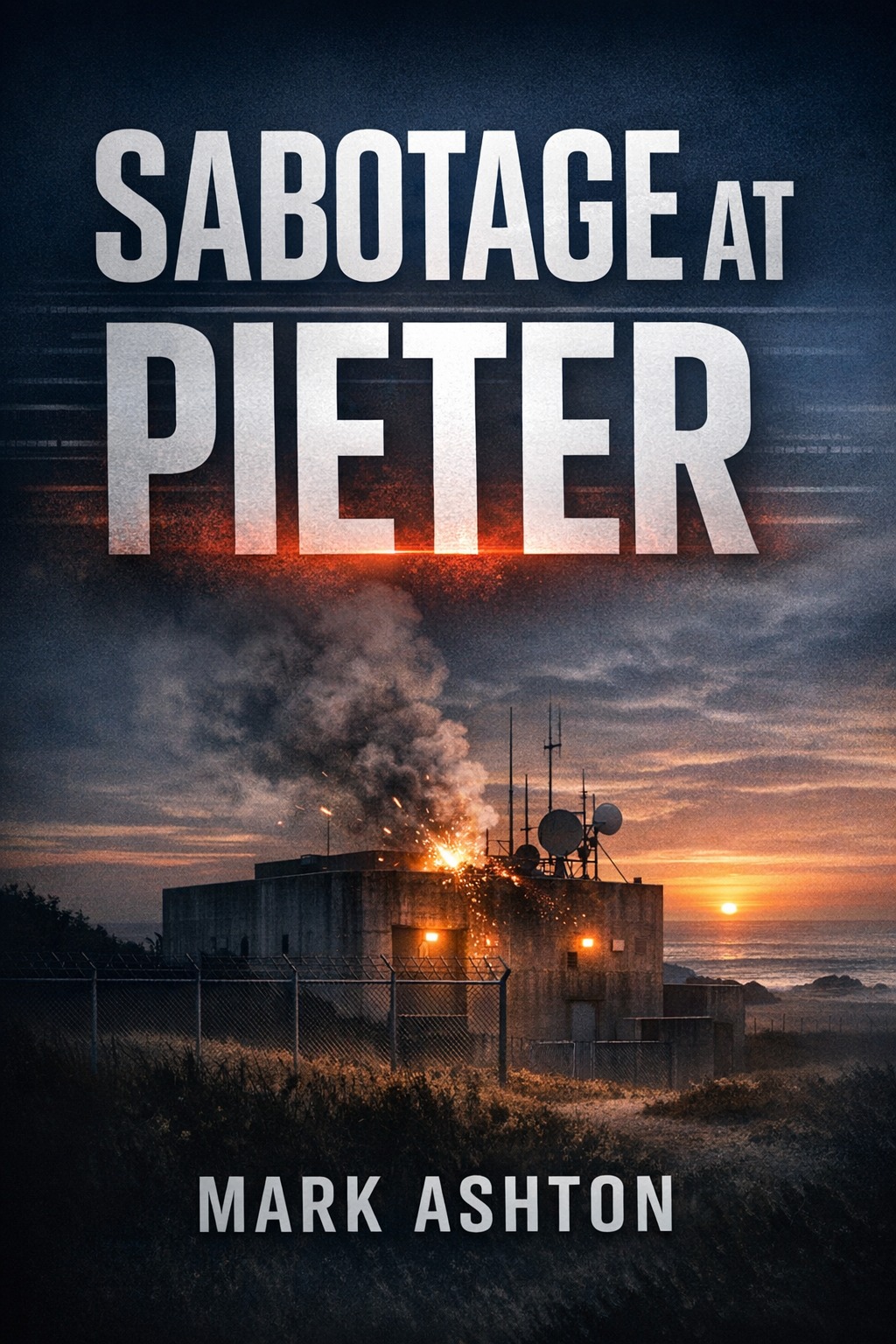

Cover of Sabotage at Pieter

Sabotage at Pieter

Thriller · 368 pages · Published 2025-05-20 · Avg 3.2★ (6 reviews)

At dusk on the Oregon coast, a precision failure ripples out from a concrete bunker behind Fort Stevens State Park. Codename PIETER—short for Pacific InterExchange Terrestrial Edge Router—was designed to be the most hardened telecom handoff point north of San Francisco. Instead, a staged power-shed and a surgical nick in a fiber trunk trigger a regional outage, a medevac drone crash over Hammond, and a diver’s death at the Warrenton marina. The sheriff arrests nineteen-year-old eco-activist Lark Benitez after a damning burner phone surfaces, but private network auditor Alethea “Al” Knox sees what the arrest report misses: suppressed SNMP traps, a counterfeit crimp with a distinctive tool mark, and maintenance tickets forged to create the perfect window. With Detective Kenji Sato of Clatsop County’s Major Crimes, Al pivots from a sleepy HOA meeting on Kenny Lane to midnight tide charts, ham-radio chatter off Saddle Mountain, and a data center boardroom where the coffee is as corrosive as the sea air.

Every clue in the sand points in two directions at once. A ceramic gull on the Peter Iredale shipwreck hides a microSD loaded with route maps and a ghost account labeled “GREYLINE.” An ex-splicer named Doyle Kincaid drinks at The Rusted Clam and remembers serials on DWDM shelves the company swears were never installed. A retired maintenance scheduler, Greta Loomis—quiet, invisible, meticulous—keeps a handwritten ledger in a waterproof Pelican case stashed under a drift log. The deeper Al digs into Hallowell Networks’ contracts and “disaster monetization” playbook, the more a sabotage looks like a desperate audit from someone who knows the system better than the people sworn to guard it. As a king tide crawls over the flats and backup generators cough to life, Al must decide which crimes keep a city alive and which ones drown it—before the next scheduled outage finishes what the first one started.

Photo of Mark Ashton

Mark Ashton is a Midwestern-born journalist turned novelist whose work threads technology, psychology, and the nuts-and-bolts of investigation. Raised in Des Moines, he studied criminology at Iowa State University and reported on cold cases and public corruption for the Kansas City Star from 2004 to 2012 before moving into the telecom sector as a communications analyst. That hands-on experience with networks and corporate bureaucracy informs his propulsive thrillers and procedurals, where infrastructure and motive collide. His previous books include The Indigo Trigger, Low Light Angle, and The Last Whisper, and his short fiction has appeared in Ellery Queen Mystery Magazine.

Mark Ashton lives in Portland, Oregon, with his partner and a retired search-and-rescue shepherd, Harlow. He volunteers with the Innocence Project Northwest and coaches high school debate. When he isn’t writing, he reads maintenance logs for fun, hikes the coast, and tinkers with open-source forensics tools—all of which tend to find their way into his stories.

Ratings & Reviews

Sanjay Kulkarni
2026-07-03

The book asks "which crimes keep a city breathing", but the answer lands as an easy shrug. The "disaster monetization" motif is sketched with villains in suits and saints in hoodies, and that binary flattens a complex question the premise begged to explore.

Great hardware details, sure, yet the moral math never computes past a tidy thesis.

Elise Hartfield
2026-04-22

Think Eliot Peper for the infrastructure obsession and Patrick Lee for the chase: this sits between them but keeps choosing spreadsheets over sparks. The clues are cool, yet the GREYLINE account and bunker lore feel reheated, and the emotional line with Lark never clears the fog.

Jamal Pereyra
2026-01-18

I love infrastructure thrillers, and this one nails the texture of the coast. You can taste the salt, hear the generators cough, feel the bunker hum under Fort Stevens.

PIETER as a concrete character is brilliant. DWDM serials, counterfeit crimps, the shy terror of a suppressed trap, all threaded into tides and gulls and the hiss of radio at night.

The ceramic gull hiding a microSD, the ghost account tagged GREYLINE, the ledger in a Pelican case under a drift log: these details feel lived-in, not just clever. I was buzzing as each clue folded into beach sand and boardroom carpet.

Most of all, the stakes feel real. Lights go out, a drone falls, a marina goes silent. The story understands how small failures echo across a county.

By the time the king tide creeps in, I was literally standing up to read, heart high, hoping the next scheduled outage would meet a mind as sharp as Al's. Absolutely loved it.

Rina McAllister
2025-10-05

Al Knox notices what others ignore.

That trait, paired with Sato's patience, makes their exchanges quietly electric without resorting to quips. Lark Benitez is not a cardboard villain, and the walk-ons matter: Doyle Kincaid's worn recall and Greta Loomis's ledger sketch a moral map that keeps the investigation human.

Trevor Odhiambo
2025-07-10

Knox's voice leans pragmatic, almost forensic, and the prose mirrors it with abbreviations, timestamps, and snippets of maintenance tickets and ham-radio chatter. The structure toggles cleanly between fieldwork and boardroom, with the ceramic gull and the GREYLINE breadcrumb acting as anchors.

I admired the calm precision, yet the middle third sags when meetings on Kenny Lane and contract minutiae absorb the momentum. The final approach pulls the threads tight again, even if the last turns rely on readers caring more about SNMP traps than about the diver we briefly meet.

Mara Givens
2025-06-02

Lean, salty, and full of clever detours, this Oregon coast thriller braids outage logs, forged tickets, and tide charts into a chase that never dawdles. A few acronyms whiz by, but Al Knox and Sato keep the signal strong.

Generated on 2026-07-10 12:03 UTC