Cover of Concrete Lullabies

Concrete Lullabies

Fantasy · 384 pages · Published 2026-01-12 · Avg 2.8★ (6 reviews)

Korshi is a city balanced on stilts of patience and rebar, stitched from causeways over the blackwater of Tawia Lagoon. After the Flood Charter, the Shore Authority paved its palaces across the terraces, while the Lagoon-born sleep under viaducts where the tide sings through cracked concrete. Rumors surface with every neap: somewhere beneath Bridge Nine, an old-world device can wake the drowned wards or quiet the rebels forever. They call it the Siltheart.

Ama Tafi maps the undercity with chalk and river-mud ink, leading a crew of salvage-thieves who trade in lost blueprints and memory charms. Basa Dakora, known for smiling with his back to the wall, helms a rival outfit that lifts relics from government storerooms and sells hope by the gram. When both crews set their sights on the Siltheart locked inside the Hydraulics Registry, their plans collide in a rain of rust, sirens, and lyrics only the lagoon can hear. The device releases a swarm of concrete lullabies—songs embedded in pillars and flyovers—that bend sleep, blur borders, and stir the names of neighborhoods swallowed by the tide.

To control the Siltheart is to redraw Korshi. To destroy it is to leave the city to the slow mercy of the Shore Authority. Between tide-windows, chisel marks, and coded shanties, Ama and Basa trade misdirections and glances, ferried by a will-they-won't-they current neither can chart. As alliances splinter and old debts surface, the thieves must choose which future to wake: a city remembered back into being, or a hush so deep it drowns the truth along with the streets. Perfect for readers who love knife-edge heists, water-slick magic, and romances that refuse to hold still.

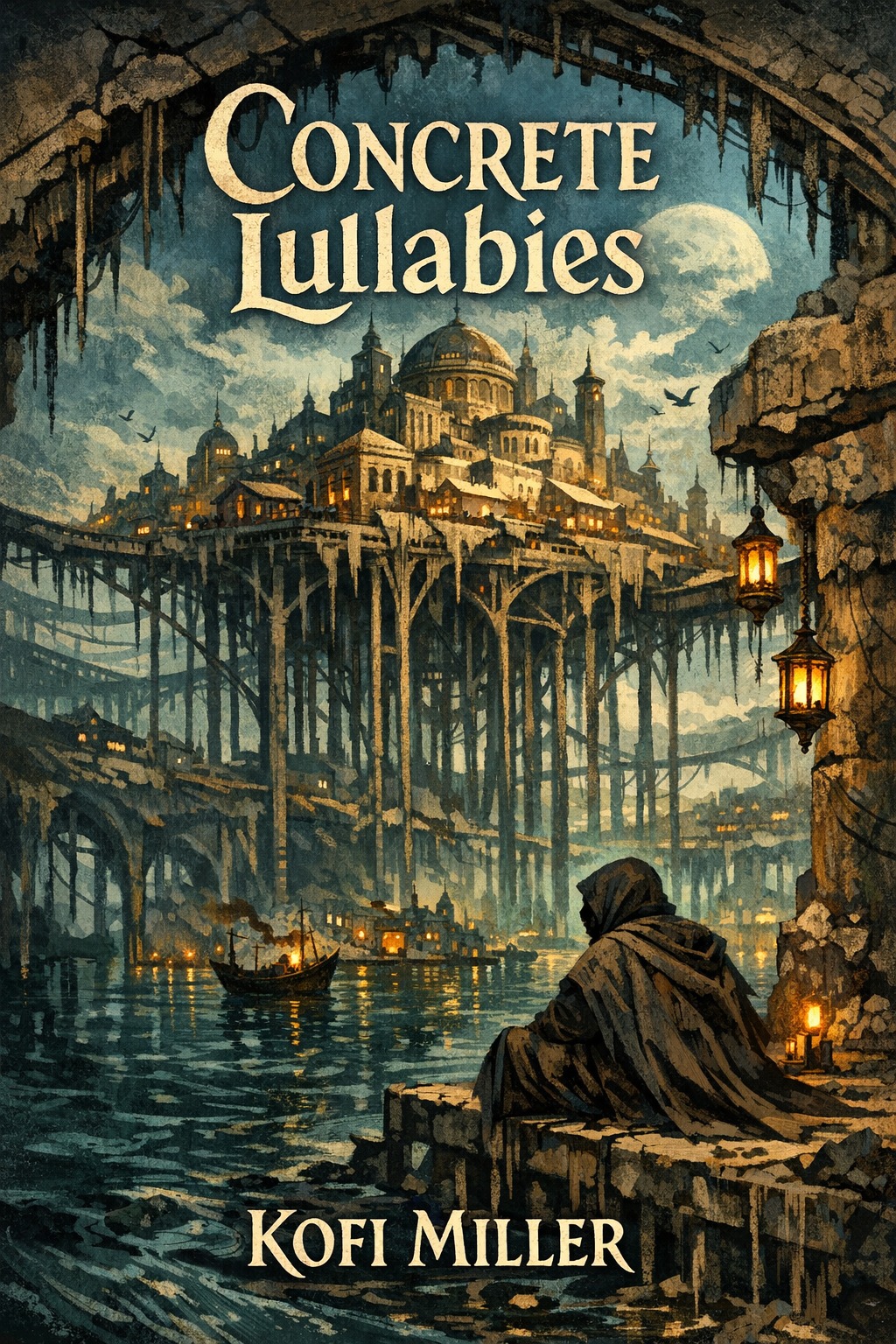
Photo of Kofi Miller

Kofi Miller is a Ghanaian-British writer and ethnographer. Born in Kumasi in 1986, he grew up between Accra and Leeds, studied anthropology at SOAS, University of London, and completed an MA in African literature at the University of Manchester. Fieldwork with riverine communities along the Volta and Mano basins continues to shape his fascination with tides, memory, and shifting borders.

Miller's fiction blends ethnographic texture with speculative and urban-fantasy sensibilities, bringing maps, songs, and shorelines into conversation with myth. His short work has appeared in Wasafiri, Transition, and Omenana, and he was shortlisted for the 2019 Commonwealth Short Story Prize. His novels, including the river-haunted fantasy The Forgotten River and the city-heist fable Concrete Lullabies, explore how infrastructure and folklore collide.

He has taught creative writing with the Arvon Foundation and once served as a librarian at an Africana archive in Freetown. He lives in Bristol, where he maps tidal flats, talks to ferrymen, and brews coffee strong enough to stand a spoon.

Ratings & Reviews

Miriam Stone
2026-07-01

For readers who like urban fantasy that treats infrastructure as magic, complex heist logistics, and a romance that glides rather than sprints. Strong sense of place, dense prose.

Advisories for teens: frequent peril in flood zones; scenes of patrol intimidation, structural collapse, and disorientation caused by song magic. The style is ornate and pacing uneven, so reluctant readers may drift. Recommend to advanced YA and adult crossover shelves that lean experimental.

Jai Patel
2026-06-14
  • Ama and Basa sparring that crackles, every glance its own gambit
  • Crew banter that feels earned, not cute
  • Quiet tenderness beneath the grime, especially in the tide-window lulls
  • One late scene of mutual trust that reframes the whole heist

All in for this crew.

Lucía Benamar
2026-05-06

Tiene buenas ideas y un ambiente acuático sugerente, pero la trama se enreda sin ritmo. Si buscas algo como Low Tide Knives o municipalidades mágicas tipo The Archivist of Sluice Gate, aquí hay ecos, aunque menos pulidos. El asalto al Registro de Hidráulica arranca con promesa y luego pierde pulso entre canciones insertadas y planes que se repiten. Quedan chispas entre Ama y Basa, pero el avance se hunde en la marea.

Roland Pike
2026-03-11

A thoughtful tangle of memory and control. The book turns infrastructure into a choir, asking who gets to name a street and who is taught to sleep through its erasure. The push between Ama's mapping and the Shore Authority's paving turns into a debate about consent, archives, and the politics of rest. It sometimes speaks more than it listens, yet the motif of "a hush so deep it drowns the truth" keeps echoing long after the last tide recedes.

Marin Osei
2026-02-03

I came for a taut heist and left feeling like I had waded through wet cement. The prose keeps pouring concrete metaphors until the lines set around the ankles of every scene. I kept begging the chapter to let one image stand without three others crowding it.

The pacing sags. Tide-windows should snap tension tight, but the break-in beats blur, and a chase will stutter just as it should surge. So many lyrics interrupt so many plans that the music becomes noise.

Point of view feels slippery, not in a designed way, but in a way that blunts momentum. We pause for a verse when we need a choice, we zoom out to admire scaffolds when we need a locked door to click.

The Siltheart's rules wobble. If the lullabies can do so much, why do the stakes shrink just when they should rise? I wanted clarity about consequences, not more fog rolling in under another bridge.

By the end I was exhausted rather than exhilarated. A heist city like this deserves architecture in the sentences, not ornamental overgrowth.

Clara Nwoko
2026-01-20

Korshi feels wet at the edges and hard underfoot.

The worldbuilding hums like tide under concrete. I loved the way the Siltheart seeds songs into pillars and flyovers, and how the city remembers through infrastructure rather than monuments. The undercity maps, the chalk, the river-mud ink, even the bureaucratic sprawl of the Hydraulics Registry make the stakes legible without lecture. Some scene transitions slosh a bit, but the atmosphere is a triumph and the stakes feel carved into the rebar.

Generated on 2026-07-07 12:02 UTC