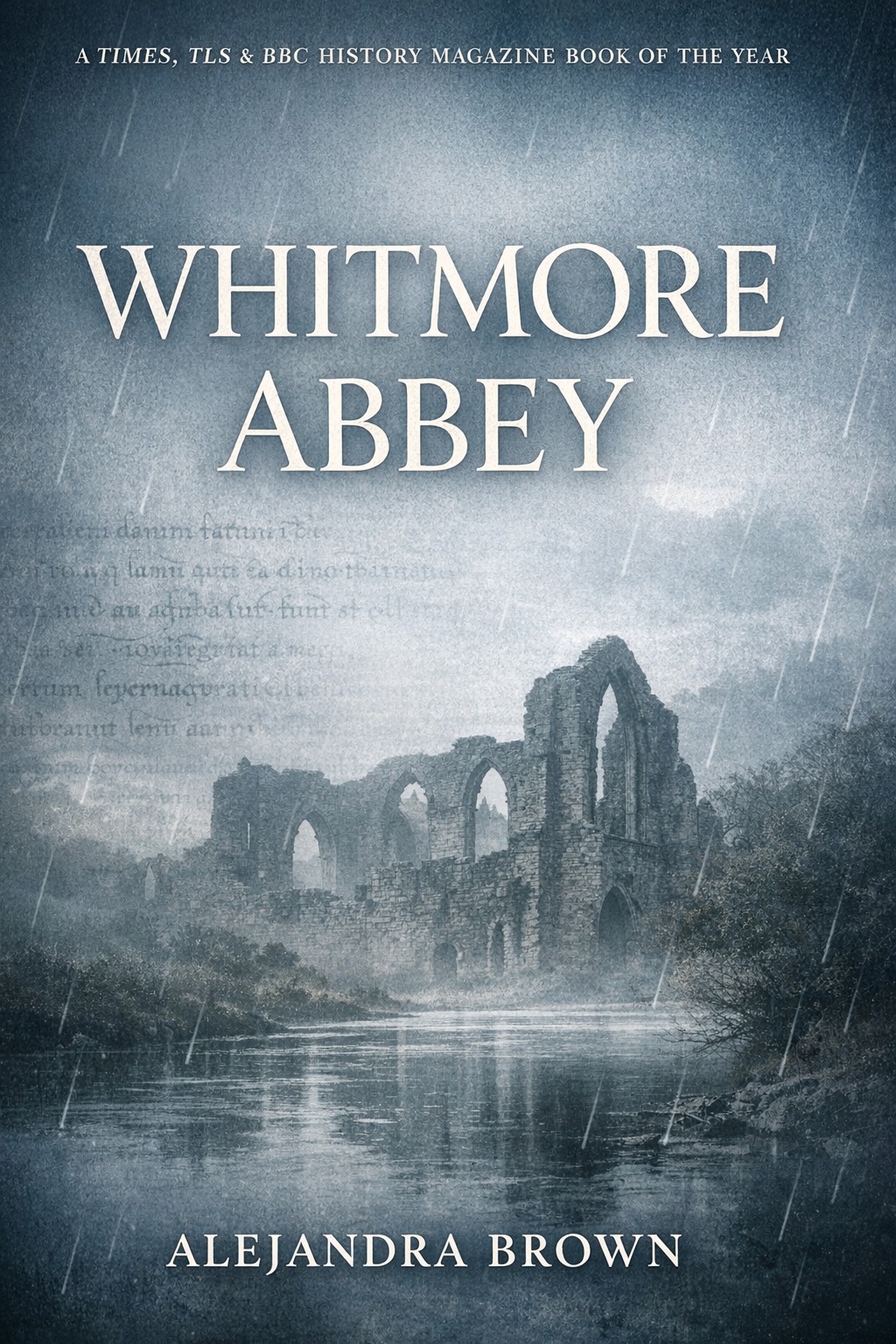
A Times,TLS & BBC History Magazine Book of the Year What begins as a minor monastic footnote becomes one of England’s most turbulent chronicles, traced across parchments, rubble, and rain-streaked stone. Whitmore Abbey, founded by Emeline de Clare in 1181 on a bend of the River Severn, seems an improbable stage for empire and ruin. Its first abbot, Osbert of Lichfield, copied psalters as patiently as masons set Caen stone; the cloister garden held quince and rue; the library housed a single astrolabe and a tattered bestiary. It appears a quiet success—until kings and creditors take notice.
Through subsidy ledgers, court rolls, and a pilgrim’s scallop unearthed in a drain, the archive becomes a live wire. The Black Death empties refectory benches; Henry VIII’s commissioners arrive with wax seals and a measuring chain; a recusant widow, Alice Whitmore, hides chalices in a bread oven. In 1645, Parliamentarian dragoons stable their horses in the nave. In 1792, a Birmingham ironmonger buys the chapter house for scrap lead. In 1917, convalescent soldiers paint clouds on the cracked choir ceiling. In 1983, a bulldozer halts when a schoolboy’s trowel finds a palm-sized codex pricked with bone.
When the paper trail frays, a final cache of letters—tucked in a linenfold chest near Bridgnorth—restitches the centuries. Some voices withdraw into silence; others surge forward with startling clarity. With maps, photographs, inventories, and the dirt of Shropshire under its fingernails, this is a history of connection and care: how households, tenants, and strangers remade a place again and again; how we endure not only under crowns and wars, but in the long maintenance of roofs, recipes, and remembrance.