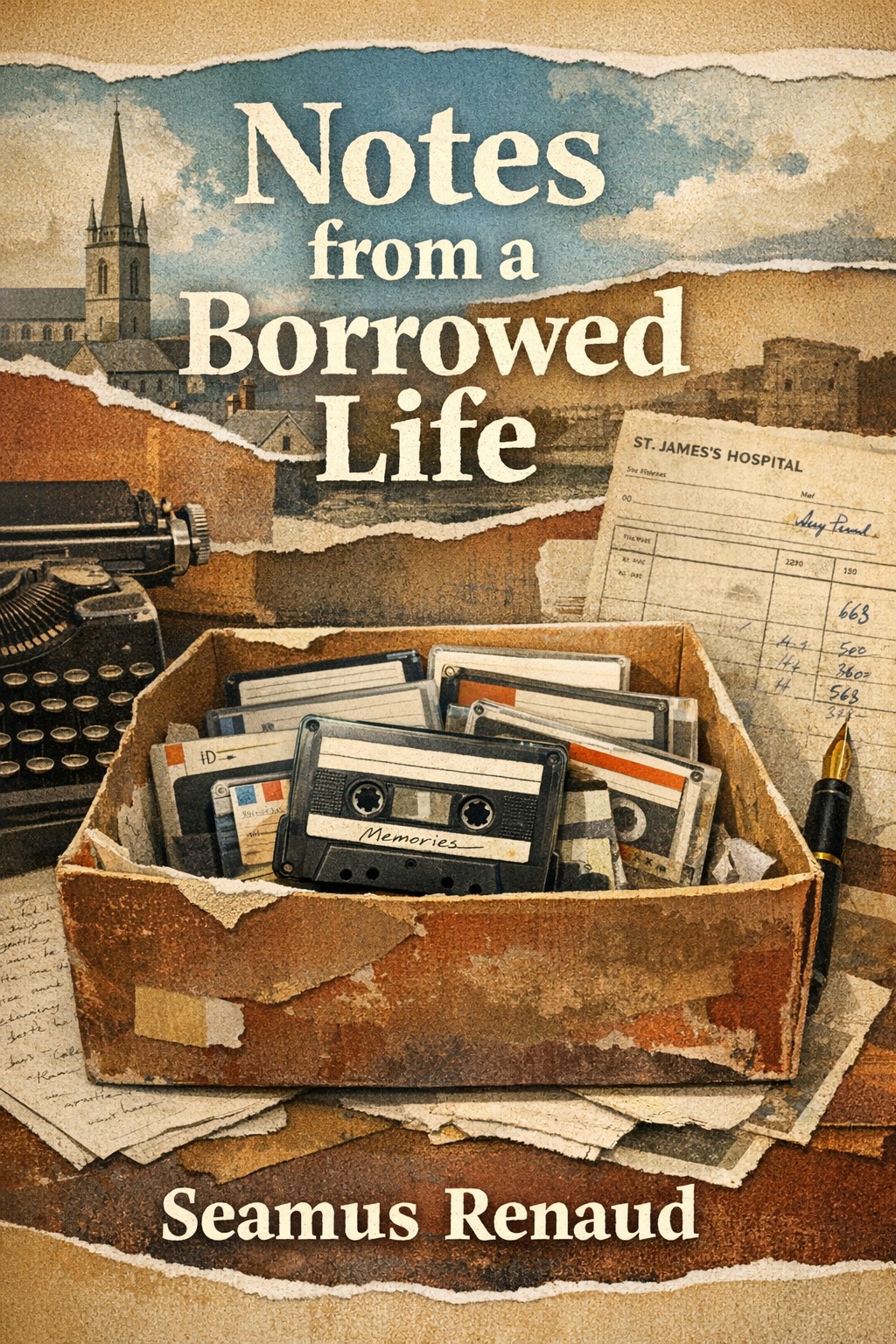
Cover of Notes from a Borrowed Life

Notes from a Borrowed Life

Nonfiction · 432 pages · Published 2025-03-12 · Avg 4.2★ (6 reviews)

An unflinching investigation into how a life can be assembled from other people's scraps, by the award-winning reporter Seamus Renaud. From a shoebox of cassette tapes found in a shuttered lending library in Limerick to carbon-copy invoices pulled from the archives of St. James's Hospital, Renaud traces the strange career of Maeve Kinsella—a nurse, fundraiser, and serial fabulist—whose name was etched onto plaques at Trinity College Dublin, the Art Institute of Chicago, and a satellite clinic in Recife. For decades, donors toasted her brilliance, politicians posed for photographs, and her story fueled a wellness empire headquartered in Tallinn. But the ledgers tell a different account: borrowed credentials, repurposed tragedies, and a money machine built on other people's pain and data. Told with bracing clarity, Notes from a Borrowed Life is narrative reportage at its most intimate—meticulous, propulsive, and impossible to forget.

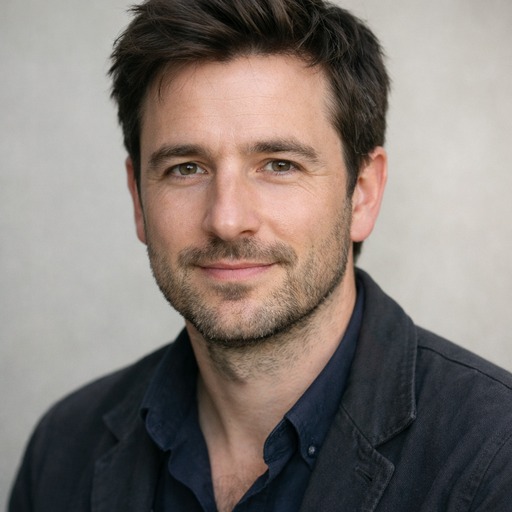
Photo of Seamus Renaud

Seamus Renaud (b. 1985) is an Irish-French journalist and narrative nonfiction writer based in Dublin. Raised between Galway and Nantes, he studied history at Trinity College Dublin and completed an M.S. at Columbia Journalism School. His reporting for The Irish Times, The Guardian, and ProPublica has examined healthcare procurement, philanthro-capitalism, and data governance across Ireland, Estonia, and Brazil. He has received the European Press Prize for Investigative Reporting (2020) and the SOF Investigative Journalism Fellowship at Columbia (2022).

Renaud is the author of The Quiet Docket (2017) and Paper Hospitals (2021), and co-produced the RTÉ podcast Ledger Lines. He teaches longform narrative at University College Dublin and serves on the advisory board of the Centre for Critical Data Studies.

Ratings & Reviews

Hugo Álvarez
2026-06-22

Leí este libro como un mapa de ciudades y archivos: Limerick con su caja de cintas y polvo, las copias al carbón en St. James's Hospital, los nombres brillando en Trinity College Dublin y en el Art Institute of Chicago, el eco de un consultorio en Recife, y la pulida sede en Tallin. Renaud hace que el entorno respire sin adorno, mostrando cómo espacios de prestigio y papeles anodinos crean una atmósfera de legitimidad que protege la fábula. Es un retrato del mundo que permite estas derivas, más que una simple caza de culpables, y por eso convence.

Linh Truong
2026-04-30

If you've admired the granular moral inquiry of Samantha Subramanian and the nervy, voice-rich excavation of Kerry Howley, this delivers their best qualities in a single investigation: intimate reporting, sly structure, and an ethical afterglow that lingers.

Dariusz Kowal
2026-02-08
  • Superb archival detail and clear sourcing
  • Midsection loops the Tallinn wellness timeline a beat too often
  • Recife thread compelling but feels underweighted
  • Closing chapter lands, yet the pacing before it stutters
Priya Kapur
2025-11-15

As a character study, this sings. Maeve Kinsella never turns into a cardboard fraud; through the tapes and the stilted thank-you speeches, you can hear need, quick wit, and the practiced cadence of someone who learned which parts of herself drew money.

Renaud, meanwhile, steps in as a restrained narrator whose questions carry weight. He lets awkward silences do work, quotes just enough dialogue for us to catch the rhythm of Maeve's charm, and keeps empathy on a low, steady flame without excusing the damage.

Marcus Ellery
2025-07-02

Formally, this is a tight braid of artifacts and analysis: Renaud cycles between cassette transcripts, ledger notations, and on-the-ground interviews, allowing evidence to accrete before stepping in with interpretation; the result balances propulsion with patience. A few transitions feel overly neat, but the prose stays clear without sanding off the archival texture, and the chaptering smartly mirrors the widening footprint of Kinsella's myth from Limerick to Tallinn.

Niamh Kehoe
2025-03-18

What a searing, humane piece of reporting. I read with my jaw clenched and my heart in my throat, then closed the book buzzing with questions about who gets to own a story.

Renaud keeps returning to the same moral knot: lives "built from other people's scraps" and sold back to us as inspiration. The phrase echoes through the tapes, the invoices, the plaques, until it becomes a kind of alarm.

The scenes are unforgettable: a shoebox of hiss and breath from a shuttered lending library in Limerick; carbon-blue smudges from St. James's Hospital; bronze letters catching rain at Trinity College Dublin and the Art Institute of Chicago; a clinic in Recife that glints like a promise; a wellness HQ in Tallinn humming with extracted data and praise.

What astonished me most was Renaud's restraint. He refuses the easy villain edit. He shows the machine, the incentives, the small permissions that become a con, and he trusts readers to feel the chill.

I actually gasped when donors toast the myth while the ledgers whisper another truth. The contrast is surgical. The book is meticulous and somehow intimate, a study in how admiration can launder harm.

Absolutely incandescent. I will be thinking about this for years.

Generated on 2026-06-27 12:01 UTC