Cover of Pistol and Prism

Pistol and Prism

Romance · 336 pages · Published 2025-02-11 · Avg 2.2★ (6 reviews)

Mara Liang has watched light the way some people watch weather, since childhood. Thoughtful and reserved, Mara is content with her life as a lecturer in optical physics at Rice University and as aunt to her mischievous niece, Sofi. That is, until she stumbles across a late-night classifieds post for the Desert Optics Project in Marfa, seeking experimental designers to build a next-generation prism-sight for competitive pistol shooting. Suddenly, Mara longs to put color and velocity in the same room and see what living might refract into.

Chosen from a pool of thousands in the summer of 2015, Mara arrives at the high plain beneath the water towers of Marfa and the long shadow of Prada Marfa. She trains at the dusty Desert Range Complex and in a retrofitted hangar off US-90, alongside an unruly cohort: Navy test pilot Mateo Rangel, whose humor never misses; poet-turned-ballistician Jonah Pike, who calculates drift in the margins of used paperbacks; state champion marksman Natalia Voss, who has worked too hard to play nice; warmhearted EMT Alma Rey, hiding her own fault lines; and Rowan Vale, the magnetic and mysterious glass artist whose studio on Highland Avenue is filled with kilns, cullet, and prisms that make a small aurora crawl across the ceiling.

As the new team becomes unlikely friends and prepares an exhibition match at the Fort Davis range and a moonlit installation at the McDonald Observatory visitors center, Mara finds a passion and a love she never imagined. Under the cobalt nights and against the thrum of cicadas, she and Rowan tune a 3D-printed sight mount, swap Leica lenses and stovepipe stories, and invent a language of light and touch. In this new glow, Mara begins to question everything she thinks she knows about tenure, family, and the safer air-conditioned rooms of Houston.

Then, on December 3, 2016, at the Big Bend Classic on the Terlingua Flats, a ricochet and a split-second misalignment turn their careful work into shrapnel. A prism shatters, a wrist breaks, and rumors race faster than sound. Contracts teeter. Loyalty becomes a mark you either hit or miss. In the white silence after, Mara must decide what kind of risks are worth the recoil—and what kind of love can survive the scatter and glare.

Fast-paced, tender, and electric, Pistol and Prism moves through desert towns and shop floors, translating calculus into chemistry and rivalry into desire. It is a transporting romance about craft and courage—about the ways we aim for each other, and how, when the light passes through, we are changed.
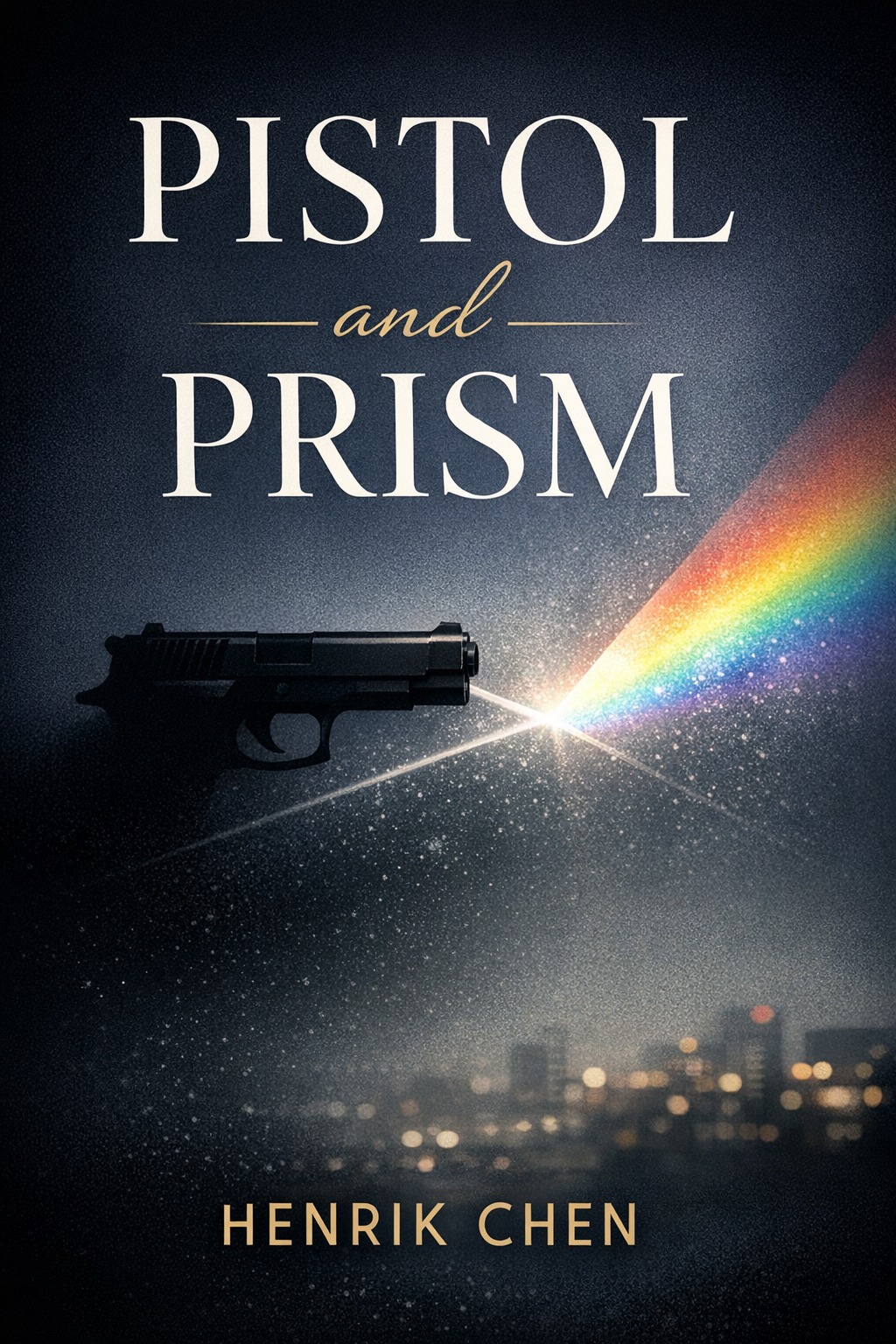
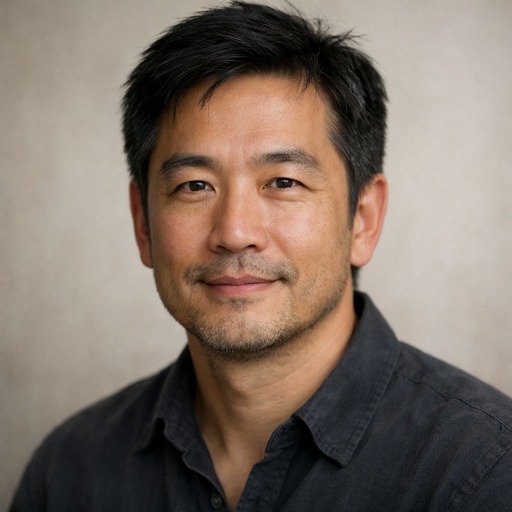
Photo of Henrik Chen

Henrik Chen writes cross-genre love stories about makers, scientists, and the stubborn pulse of the American Southwest. Born in El Paso and raised between Houston and Kaohsiung, Henrik studied materials science at the University of Texas at Austin before working as a lens technician and an apprentice glassblower. He later completed an MFA at New Mexico State University, where the desert light—and a series of odd jobs in camera repair shops and roadhouse kitchens—shaped his attention to craft, atmosphere, and the small gestures that reorder a life.

Henrik is the author of Salt, Smoke, Sugar (2018) and Blue Hour Algorithm (2021), both of which explore intimacy through work and place; the latter was a finalist for the Lambda Literary Award and received the Mountain & Plains Independent Booksellers Award. His essays and short fiction have appeared in Gulf Coast, The Rumpus, and the Texas Observer. He has held residencies with the Chinati Foundation community programs and Lighthouse Works and teaches occasional workshops on narrative structure for engineers and artists.

Henrik lives in Austin, Texas, with his partner and an elderly terrier who naps in sunbeams. When he is not writing, he volunteers with literacy programs at the Travis County Correctional Complex and restores vintage rangefinders, favoring battered cameras with stories still trapped in their viewfinders.

Ratings & Reviews

Josephine Park
2026-05-30

Readers who like Ruby Lang's workplace-adjacent romances and Sara Baume's art-minded quiet will find familiar notes here; the book lingers on craft process as much as courtship.

Be aware of firearms competition on the page and an injury sequence, but the tone stays contemplative rather than sensational. For me, the tender ambition outweighed the misfires, just enough for a cautious recommendation.

Pilar Andrade
2026-01-28

Leí esta novela por la promesa de óptica y romance, pero el ritmo se me enredó.

  • Mucho tecnicismo de óptica
  • Química intermitente entre Mara y Rowan
  • Final abrupto tras el incidente
  • Marfa y el observatorio, lo mejor
Shweta Kulkarni
2025-12-15

Love is treated like refraction.

The novel threads prisms, desert color, and competition into a meditation on precision and risk, and it explicitly asks how we "aim for each other." At times the craft-to-love analogy shines, yet the symbolism stacks too neatly and the moral calculus after Terlingua stays abstract, more theorem than heartbeat.

Marcus Ellery
2025-07-05

The book earns its setting credit: Marfa's water towers, the ghostly Prada facade, and the observatory nights feel dusted onto your skin.

Range routines, hangar tinkering off US-90, and the Fort Davis prep create a tactile project-world that I believed, even when the romance hesitated. The stakes remain fairly local, but the atmosphere makes up for some of the softness elsewhere.

Tomas Nguyen
2025-03-10

Mara is careful to the point of disappearance, and Rowan has presence to spare; together they occasionally click, especially in the kiln-and-camera scenes.

But the side crew (Mateo, Jonah, Natalia, Alma) comes in bursts of quirk without much evolution, and the dialogue leans elliptical. When the accident hits, the fallout skims past interiority, leaving the relationship arcs undercooked.

Keira Donnelly
2025-02-21

I went in for desert optics and romance but found a manuscript fighting itself. The structure reads like lab notes stitched to a travel diary, then toggled into scenes that never settle long enough to resonate.

The prose loves its equations and lens specs, and that love keeps taking the wheel. Whole pages feel like lectures with metaphors tacked on after, which slows the pulse and fogs the emotional throughline.

When Mara and Rowan do meet, their exchanges arrive as captioned vignettes instead of conversations that build heat. The shop-floor detail can be sharp, yet every promising moment gets diluted by another technical sidebar.

The arcs toward Fort Davis and the observatory should crest, but tension leaks out through digressions and cutaways. After the Terlingua mishap the book retreats into rumor and summary, muting the reckoning the story seems to promise.

I admire experiments, truly, but this alignment felt off - sights wobble, impact blurs, and the last shot lands with a thud. I left more frustrated than moved.

Generated on 2026-06-24 12:03 UTC