Cover of Tallow

Tallow

Fiction · 352 pages · Published 2021-10-12 · Avg 4.2★ (6 reviews)

Chicago, 1931. Wind knifes off Lake Michigan and carries the sweet, rancid breath of the Union Stock Yards clear down Halsted Street. Matilda "Tilly" Hanrahan spends her nights shoveling white-hot fat at McAllister & Sons Soapworks and her dawns carving tiny wax saints from stolen slivers, their faces smudged with ash and hope. After a grease fire shutters the vats and leaves her palms bandaged, Tilly takes the only job offered—linens maid at the Hotel Aurelia, a gold-glass colossus with a cracked skylight, a mezzanine piano that never stays in tune, and a lobby that smells faintly of oranges and gaslight. The Aurelia is a palace of performance: bankers and chorus girls, aldermen and preachers, and on Thursday nights, the celebrated Madame Seraphine pouring molten wax into cold bowls to "catch the words of the dead."

At first, the hotel is a refuge Tilly can almost believe in, particularly once she meets Leo Petrowski, a silent-film accompanist who hears secrets in the key of D minor, and Opal Van Dorn, a heiress with bobbed hair, driving goggles, and a knack for collecting the strange art of the working poor. But the Aurelia makes patterns out of people. Doors that shouldn't lock, do. Dumbwaiters glide at odd hours, bellmen cough numbers instead of names, and the candles in every suite give off a faint, unclean sweetness. Hidden in their wax are slips of onionskin, carbon-dotted testimonies from shopgirls and laundresses—ledgered accounts of foremen, judges, and the hotel's richest tenants. When Rosa Morales, a chambermaid and Tilly's upstairs neighbor, vanishes after a delivery to Room 1206—a suite forever rented under changing men and marked by an ostrich-feather fan left on the sill—Tilly understands the Aurelia is more engine than home.

Learning to read wax like a ledger—how cooled edges bevel toward confession, how soot drafts draw a map—Tilly traces a circuit of debt and disappearance that threads through the stockyards, City Hall, and the Aurelia's shimmering heart. With unions, newspapers, and police all bargaining for their own versions of the truth, her only chance is to make spectacle answer to witness. During a winter masquerade that sets the ballroom burning with light, she and Madame Seraphine invert the séance, forcing the city's great and shameless to watch as messages rise black and undeniable from the candles they thought were merely for show. In a world greased to keep turning, what gets burned to keep the lights on—and who refuses to melt?

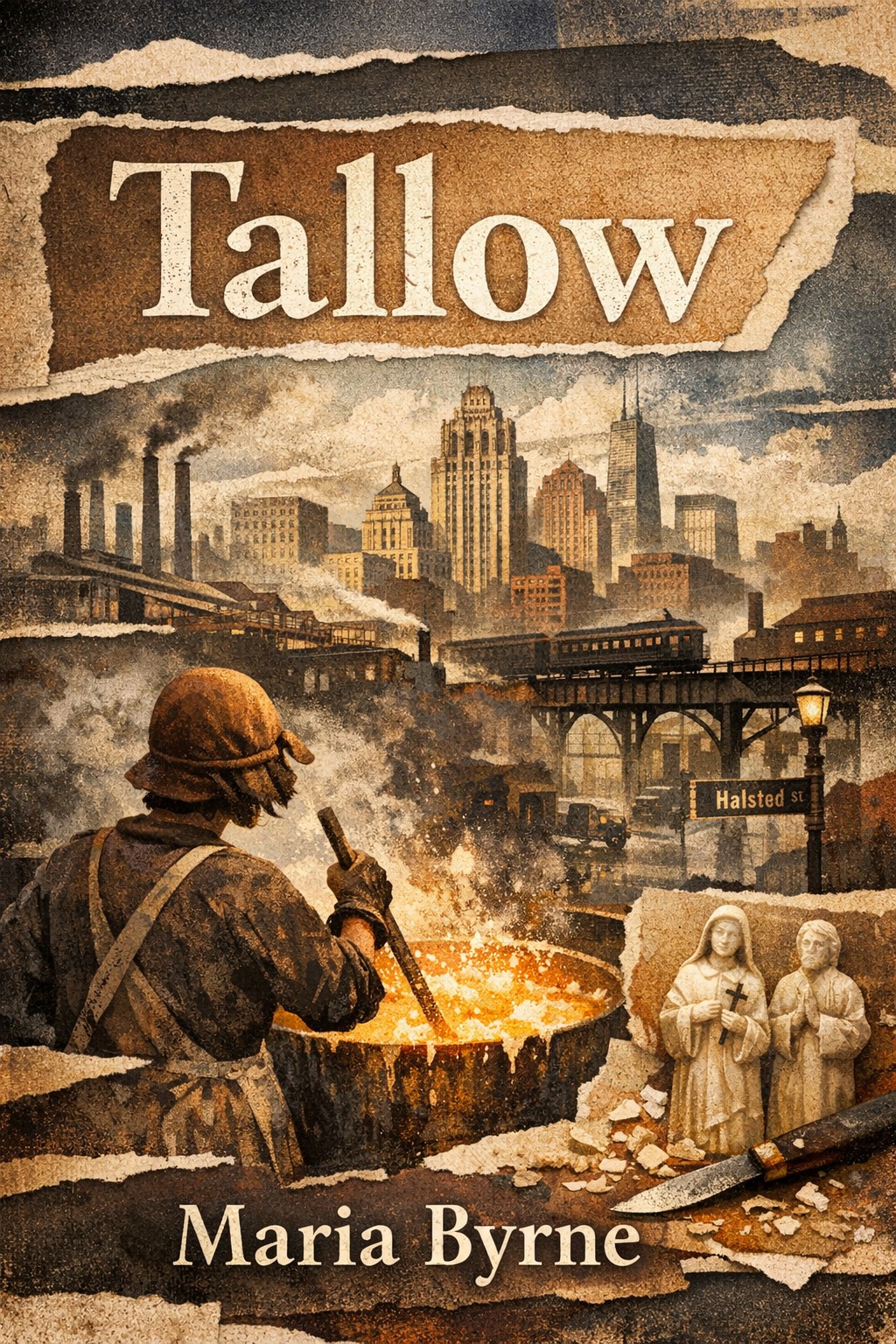
Photo of Maria Byrne

Maria Byrne is an Irish-born, Chicago-based novelist and essayist whose work explores labor, spectacle, and the architectures that hold both. Raised in County Waterford and educated at Trinity College Dublin, she earned an MFA from the University of Michigan before settling in the Midwest. Before writing full-time, Maria worked as an archivist at a defunct soapworks in Cork and later as a researcher at the Jane Addams Hull-House Museum, experiences that inform her keen eye for the material textures of urban life.

Her fiction and essays have appeared in the Kenyon Review, The Stinging Fly, and Guernica. She is the author of Tremor Street and The Quiet Foundry, and the essay collection Render. Her work has been longlisted for the Center for Fiction First Novel Prize and shortlisted for the Kerry Group Irish Novel of the Year.

Maria Byrne teaches part-time at Columbia College Chicago and volunteers with local labor history organizations. She lives in Pilsen with her partner, a pianist, and a crate of flea-market candlesticks she swears she will someday polish.

Ratings & Reviews

Owen Petrovic
2026-05-30

Mixed feelings, but worth the stay.

  • Atmosphere thick with grease, oranges, and snow
  • Inventive wax-ledger device for testimonies
  • Middle third drifts as subplots circle the mezzanine
  • Best for readers who savor mood over tidy mysteries
Marisol Vega
2025-02-08

This story keeps asking how spectacle can be turned into witness, and it lands the question with a flourish when messages rise from the very candles meant to soothe the rich. The central motif is labor transformed into light, and the cost tallied in ash; the line "what gets burned to keep the lights on - and who refuses to melt?" becomes a thesis about debt, power, and stubborn grace. Some thematic notes repeat, but the echo feels intentional, like footsteps on the mezzanine.

Gabe Rinaldi
2024-08-19

Chicago, 1931, breathes here: wind that bites, a lobby scented with oranges and gaslight, a piano that cannot stay in tune. The Hotel Aurelia feels engineered for spectacle and extraction, with doors that lock against sense, dumbwaiters that move at odd hours, bellmen coughing numbers, and an ostrich-feather fan that marks a room like a calling card. The wax carries a faint, unclean sweetness, and inside it the slips of onionskin create a clandestine archive that links stockyards, City Hall, and the top floor. It is an atmosphere novel with genuine stakes, because the patterns Tilly decodes threaten not just jobs but breath and safety.

The building is a character and a trap.

Anika Bose
2023-01-27

I am absolutely smitten with Tilly Hanrahan.

Those bandaged hands, the tiny saints carved from stolen wax, the stubbornness. I could feel the heat licking the rafters.

Leo hears secrets in D minor and somehow the book makes that plausible. Their quiet conversations feel like a duet held under breath.

And Opal! The goggles, the collecting, the appetite for the strange beauty of labor. She is messy in the best way.

These people do not pose for the gilded lobby; they scrape truth out of residue. What a cast, what a pulse!

Trent Holloway
2022-03-12

The prose hums with heat and chill, all stockyard breath and orange peels, cut by piano lines in D minor. Chapters spool like rooms on a service cart; each turn offers a new vignette, yet Tilly's witness binds the sequence. At times the narration lingers on wax drip minutiae, but the testimony-in-candle conceit clarifies the stakes without gimmickry.

Keisha Rowan
2021-11-05

A smoky, propulsive mystery set in a hotel that behaves like a machine. The wax-ledger idea stays taut as Tilly edges through locked doors and stranger patterns.

Generated on 2026-06-18 12:06 UTC