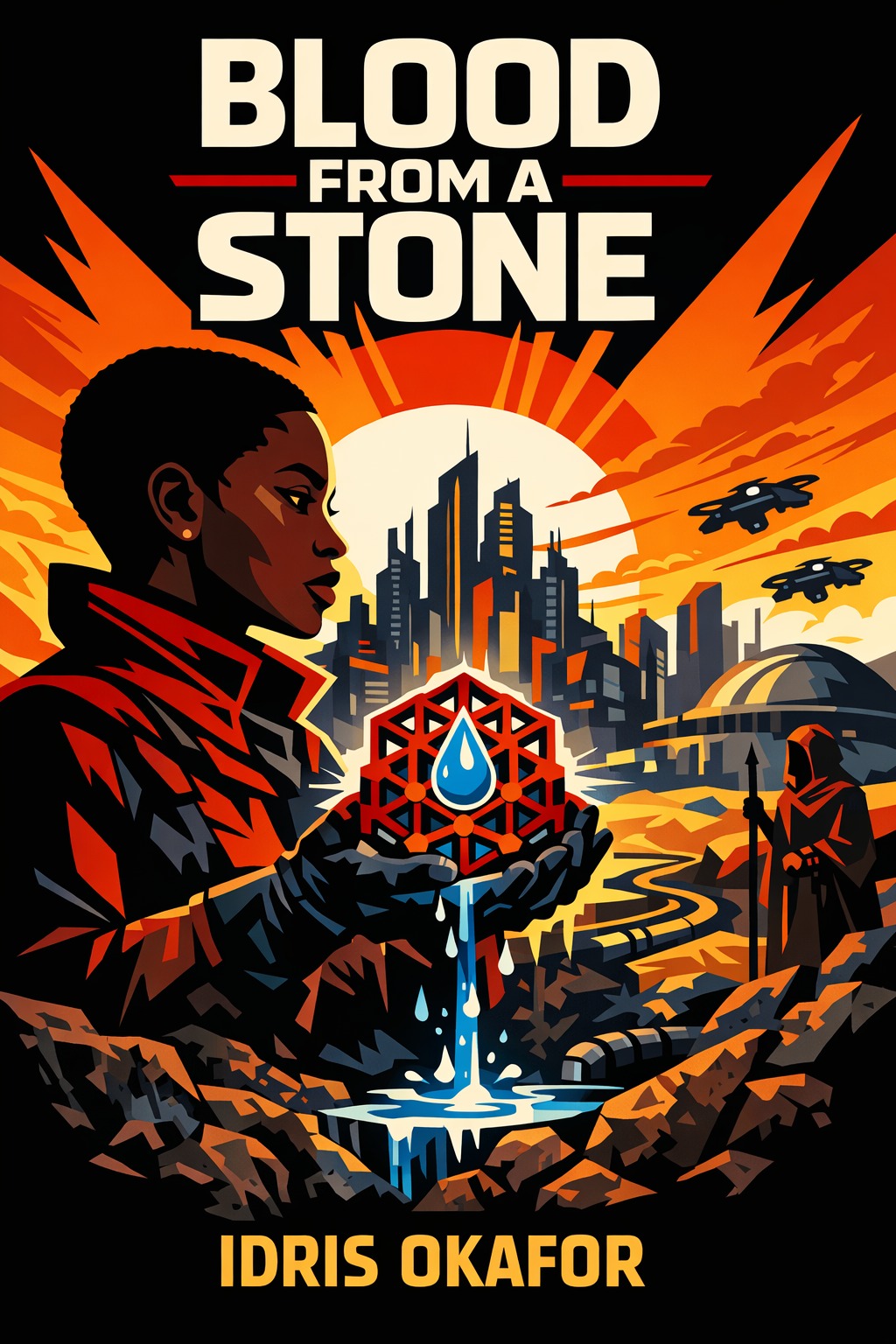
Cover of Blood from a Stone

Blood from a Stone

Science Fiction · 384 pages · Published 2025-09-23 · Avg 3.8★ (6 reviews)

In the drought-choked megacity of Onyx Lagos, geologist-turned-smuggler Ebele Nwosu discovers a contraband lattice called the Hematite Engine, a device rumored to press potable water out of basalt. Hunted by the corporate republic Kestrel Dominion and an ascetic order known as the Calcites, Ebele teams with disgraced systems priest Kaito Mizuno to decode the machine's blood-red schematics. Their trail runs through salt-washed tenements, orbital scrapyards above the Gulf of Guinea, and archives buried under Makoko's stilts. Each clue suggests the Engine isn't technology at all but a living algorithm seeded in Earth's mantle.

As civil unrest erupts and aquifers collapse, the pair must decide whether to ignite the Engine and rewrite the planet's hydrology or expose the Dominion's quiet plan to monetize thirst. From a diamond mine-turned-data vault in Kono to a derelict elevator spindle off Ascension, Ebele races a rival salvage captain, Kira Stone, whose past binds her to the machine's first awakening. In the end, "blood from a stone" becomes literal when tectonic veins answer—and hunger, mercy, and debt take on geologic scales. Choices calcify; some shatter.

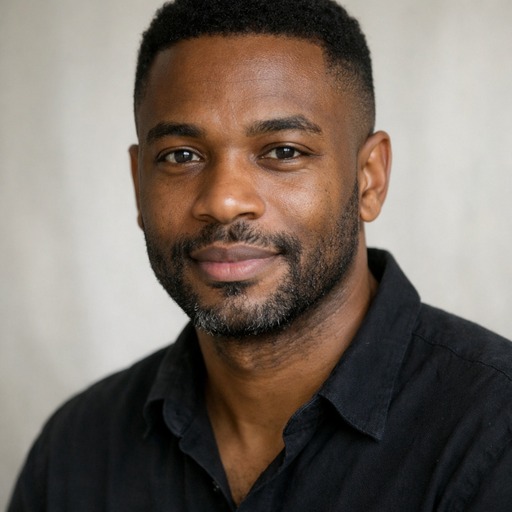
Photo of Idris Okafor

Idris Okafor is a Nigerian-British science fiction author and former hydrologist whose work explores extraction economies, faith, and the physics of scarcity. Born in Enugu in 1986, he studied geology at the University of Ibadan and completed a master's in hydrology at Imperial College London before consulting on irrigation models across the Sahel. His fiction has appeared in Omenana and Brittle Paper, and he was shortlisted for the Nommo Award for his debut novella, Desert Choirs (2019). He is also the author of the near-future climate thriller The Gravity of Salt (2022).

Idris Okafor has taught environmental storytelling workshops in Lagos and Accra, and mentors emerging writers through the African Speculative Fiction Society. He lives between Calabar and London, collecting river maps, obsolete sensors, and stories from dockworkers. When not writing, he volunteers with community borehole projects and annotates satellite rainfall data for artists.

Ratings & Reviews

Liam Okoye
2026-06-10

Amid the dazzling concepts, Ebele and Kaito read like instruments more than people, so the emotional core never quite hydrates.

Priya Ellison
2026-05-19

If Rosewater by Tade Thompson made you crave African-set futures that think in biology, and if Linda Nagata's The Red scratched your itch for systems-level stakes, this belongs on your shelf. The novel fuses salvage-thriller momentum with philosophical speculation about infrastructure and consent.

It is generous to readers who like decoding mysteries alongside the cast, and it trusts you with technical texture without hand-holding. For fans of climate noir, data vault capers, and morally entangled crews, this hits the sweet spot.

Noah Greene
2026-03-08

Smart and inventive, yet the plotting occasionally swims in circles.

  • Opening heist sings, middle quavers around the Ascension spindle
  • Calcites vanish for long stretches
  • Kira's rivalry heats up late
  • Final decision lands, fallout feels rushed
Marisol Ibukun
2026-01-27

La geografía de Onyx Lagos no es solo telón de fondo; es sistema nervioso. Los patios cubiertos de sal, los cementerios orbitales sobre el Golfo de Guinea y los archivos bajo las casas de Makoko crean una ecología de chatarra y deseo que se siente creíble. La Hematite Engine como algoritmo vivo cambia la escala de las apuestas sin perder la textura local, y el choque entre Kestrel Dominion y los ascetas Calcites se entiende en cada cuadra. Me faltó un mapa, quizá, pero el mundo vibra con sed y memoria.

Kenji Alvarez
2025-12-15

The prose is mineral-bright without turning brittle, and the chapters keep toggling between chase and quiet inquiry. The structure is braided across tenements, scrapyards, and archives: a triad that keeps momentum but occasionally stalls in contemplative passages. Dialogue carries a soft crackle, especially when Ebele and Kaito argue method versus faith. A late reveal about the Engine's lineage is positioned well, though a few scene transitions feel jump-cut. Still, the control of imagery and the confident restraint around the science make this a rewarding read.

Adaeze Monroe
2025-10-02

I read this with my throat dry and my heart thudding. Onyx Lagos cracks under heat and hunger, and Ebele's gamble with the Hematite Engine feels like a prayer shaped into machinery.

I kept hearing the promise of "blood coaxed from stone," and the novel keeps negotiating what that miracle would cost. The living algorithm idea is audacious yet intimate, because the thirst is in people as much as in rock.

Kestrel Dominion's spreadsheets sting like blades, the Calcites guard austerity like faith, and Kaito's fall from doctrine turns doubt into fuel. The book keeps asking what we owe each other when scarcity is engineered.

Salt skims the tenements, orbital scrapyards glitter like rusted constellations, and the submerged archives under Makoko hum with memory. Every locale feels chosen to pressure-test mercy and debt without blinking.

By the time tectonic veins answer, the scale is terrifying and humane at once. I ached, I cheered, I feared the bill coming due, and I believed. Five stars, because it dares to imagine repair without pretending it is painless.

Generated on 2026-06-13 12:02 UTC