
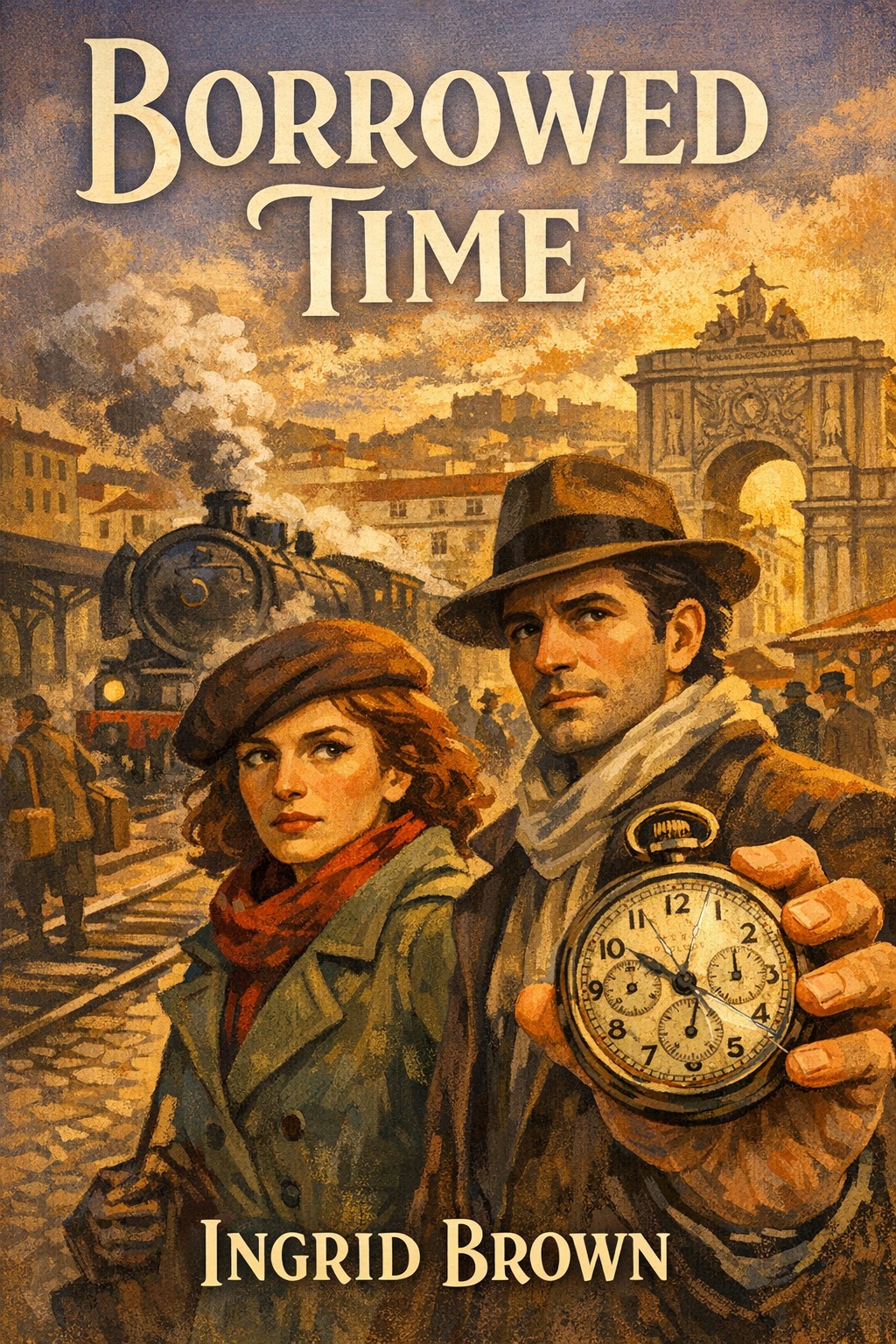

Best for readers who enjoy historical fiction that braids espionage with newsroom ethics, with a patient pace and anchored details of rail hubs and shipyards. Content notes: surveillance, intimidation by secret police, references to off-page torture and wartime deaths, brief gunfire, smoking, slurs directed at refugees, and light swearing in Portuguese. Strong choice for book clubs or college courses on media under authoritarianism; teens 15+ with guidance.
In 1941 Lisbon, railway clerk Ana Lobo moonlights as a smuggler, shepherding refugees from the Santa Apolónia platforms to shadowed pensions off Rua Augusta. Her unlikely partner, a displaced Polish mathematician named Marek Weiss, trusts only a Swiss chronograph with a cracked crystal, its missing second hand hiding a scrap of code. At Café Nicola and the British consulate's back gate, names are traded for tickets, and silence for survival. When the PIDE close in, Ana's last hope is a battered pocket watch once carried by a royal telegraphist—an heirloom she must 'borrow' long enough to turn the tide.
Three decades later, on the eve of the Carnation Revolution, young radio reporter Joana Teixeira discovers the same watch among her father's tools in Barreiro's shipyards. Its faint engravings and a stained 1941 railway timetable pull her into a vanished network of couriers, betrayals, and debts unpaid. As tanks crawl over the Ponte 25 de Abril and carnations blossom in rifle muzzles, Joana must choose between airing a story that could unseat a minister and protecting a secret that kept her family alive—while the past insists that all freedom is won on borrowed time.