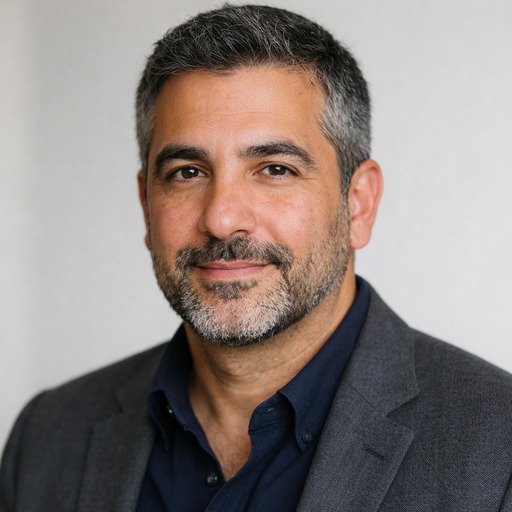
Cover of Last Rites for Bleecker

Last Rites for Bleecker

Nonfiction · 272 pages · Published 2024-09-17 · Avg 3.5★ (6 reviews)

Last Rites for Bleecker is a nonfiction wake for a street that keeps refusing its funeral. Walking from Abingdon Square to LaGuardia Place with a creased Sanborn map and an Olympus recorder, Michael Al-Rashid interviews Rosa Martínez at 394 Bleecker, former Cafe Wha? booker Liam O'Farrell, Community Board 2 member Shalini Kapoor, and a boutique manager arranging $900 shoes beneath tired neon. Their stories expose the peril of certainty: the myth that the Village must either freeze as bohemia or surrender to glass and logos. He shows how leaders who say 'I don't know'—a precinct captain on Carmine, a principal at P.S. 3—unlock coalitions facts alone never do.

New reporting and field exercises suggest reimagining can be taught. Section I examines why we clutch old maps and how to practice 'grace over grit,' from Vesuvio Bakery's ledger to updated FEMA flood lines. Section II teaches civic argument—rent rolls, noise logs, listening circles at Our Lady of Pompeii, and tape-and-butchers-paper charrettes on MacDougal—to help neighbors rethink together. Section III reveals how agencies, landlords, and universities reward certainty, and profiles outliers from Jackson Heights to Rotterdam that build cultures of revision. In a city remade by algorithms, pandemics, and rising seas, the ability to redraw your mental street grid may be the sharpest edge.

Photo of Michael Al-Rashid

Michael Al-Rashid is a journalist and urban planner whose work focuses on housing, public space, and civic conflict. Born in Dearborn, Michigan, he studied engineering at Wayne State University before earning a master's in urban planning from Columbia and a journalism degree from NYU. His reporting has appeared in City Limits, The Atlantic, and The Guardian, and he has consulted on community engagement for small cities across the Northeast.

He has received the Urban Reporting Fellowship from the Metro Policy Lab and a Front Page Award for feature writing. Michael Al-Rashid is the author of Sidewalk Atlas and Metered, and he teaches adjunct courses in participatory planning at Pratt Institute. He lives in Brooklyn with his partner and an elderly rescue mutt that insists on walking the long way home.

Ratings & Reviews

Tomasz Wrona
2026-05-29

I came for the people and left wishing they were less schematic. Rosa Martínez, Liam O'Farrell, Shalini Kapoor, and the boutique manager feel more like positions in an argument than textured lives.

The precinct captain and the principal offer sparks, but the voices often blur, and the how-to pages read like lecture notes. The street deserves messier portraits.

Keisha Morrell
2026-01-12

Some readers will shelve this between Sharon Zukin and Luc Sante, and that feels right: it balances neighborhood ethnography with a user-friendly civic toolkit. The interviews sing in places and the exercises demystify process, yet the tone can lapse into panel-discussion cadence and the throughline wavers.

If you like microhistories that teach you how to participate, this is a solid, slightly wonky pick.

Anton Reznik
2025-08-30

Al-Rashid turns Bleecker into a working atlas, where past bakeries, neon, and boutique vitrines sit beside updated flood maps, a captain's cautious brief on Carmine, listening circles at Our Lady of Pompeii, and tape-and-paper charrettes on MacDougal, all while the stakes of algorithms, pandemics, and rising seas press closer to the curb.

Maribel Chong
2025-02-18

An earnest field manual with a habit of double-backing.

  • Ground-level interviews that feel candid
  • Practical exercises neighbors can copy
  • Repetitive policy detours
  • Choppy pacing between profiles and toolkits

I learned things, but I also kept losing the thread.

Owen Carlucci
2024-11-12

In a culture that mistakes posture for principle, this book insists on the civic strength of uncertainty; when a precinct captain or a principal says "I am not sure", new rooms open for neighbors to work.

Al-Rashid keeps returning to the myth that the Village must be frozen or sold off, and then shows how grace over grit becomes a practice in listening circles, noise logs, and tape-and-paper charrettes that teach people to redraw their own mental grid. I left feeling both instructed and enlarged.

Priya Mandal
2024-10-05

Sectioned into inquiry, argument, and systems, the book has a purposeful gait. Al-Rashid's walk from Abingdon Square to LaGuardia Place threads interviews with Rosa Martínez, Liam O'Farrell, and Shalini Kapoor through tactile artifacts like a Sanborn map and an Olympus recorder.

Acronym thickets and rent-roll minutiae sometimes slow the march, but the prose is limber, the transitions clean, and the braiding of voices confident. The field exercises feel assimilated rather than bolted on, which is rarer than it sounds.

Generated on 2026-06-05 12:02 UTC