Cover of Marrow

Marrow

Horror · 336 pages · Published 2025-10-14 · Avg 3.7★ (6 reviews)

When their iron-willed grandmother dies, three cousins—Rhea Kiran, Dev Patel, and Anika Singh—return to the family's derelict acreage outside Ash Bramble, Minnesota, to settle debts and divide what's left of Maple Knife Farm. Rhea, the eldest, never left; she kept the farmhouse and slaughter shed alive on grit and a ledger, sleeping on a cot under a nailed-up window. Dev, an EMT from Chicago nursing a tremor he won't admit to, hasn't set foot on the property since a night he doesn't clearly remember. Anika, a ceramicist in Phoenix, arrives late, clutching an urn and a box of keys she swears their grandmother mailed her years too early.

In the pantry they find a wall thin as paper and heavy with the smell of tallow. Behind it, a root cellar yawns, lined with mason jars sealed in fat and labeled by year. On a rusted workbench sits a hand-cranked reel-to-reel player and a milk crate of Hi8 tapes scabbed with duct tape and dates. One tape marked Harvest 99 is not a home movie at all: a pale figure in a deer skull steps through the slaughter door, a burlap sack writhes on the table, and someone off-camera hums the lullaby their grandmother used to sing while the light pops and the camera jitters. A bone wind chime rattles. In a grease-spotted ledger, three names—Rhea, Dev, Anika—are written beside weights and the same two words repeated column after column: marrow tithe.

They can salt the cellar and burn the farm, or they can follow the line of cedar stakes that leads from the smokehouse through Black Sedge Bog to an old gravel pit the town calls the Borrow Pit, where the ground sinks and exhales and something waits to be fed. As nights lengthen, Dev's thigh aches as if gnawed from the inside; Rhea wakes with crescent bites pressed into her shins; Anika finds her clay figures wet with blood that isn't hers. At the Grackle & Gear tavern, the regulars stop talking when the rendering plant in Hibbing comes up, and the pastor won't step past the fence line after dark. Every secret they pull lifts another from the muck. What their elders fed has kept Ash Bramble safe for decades. Ending the tithe might starve it—or teach it to hunt.

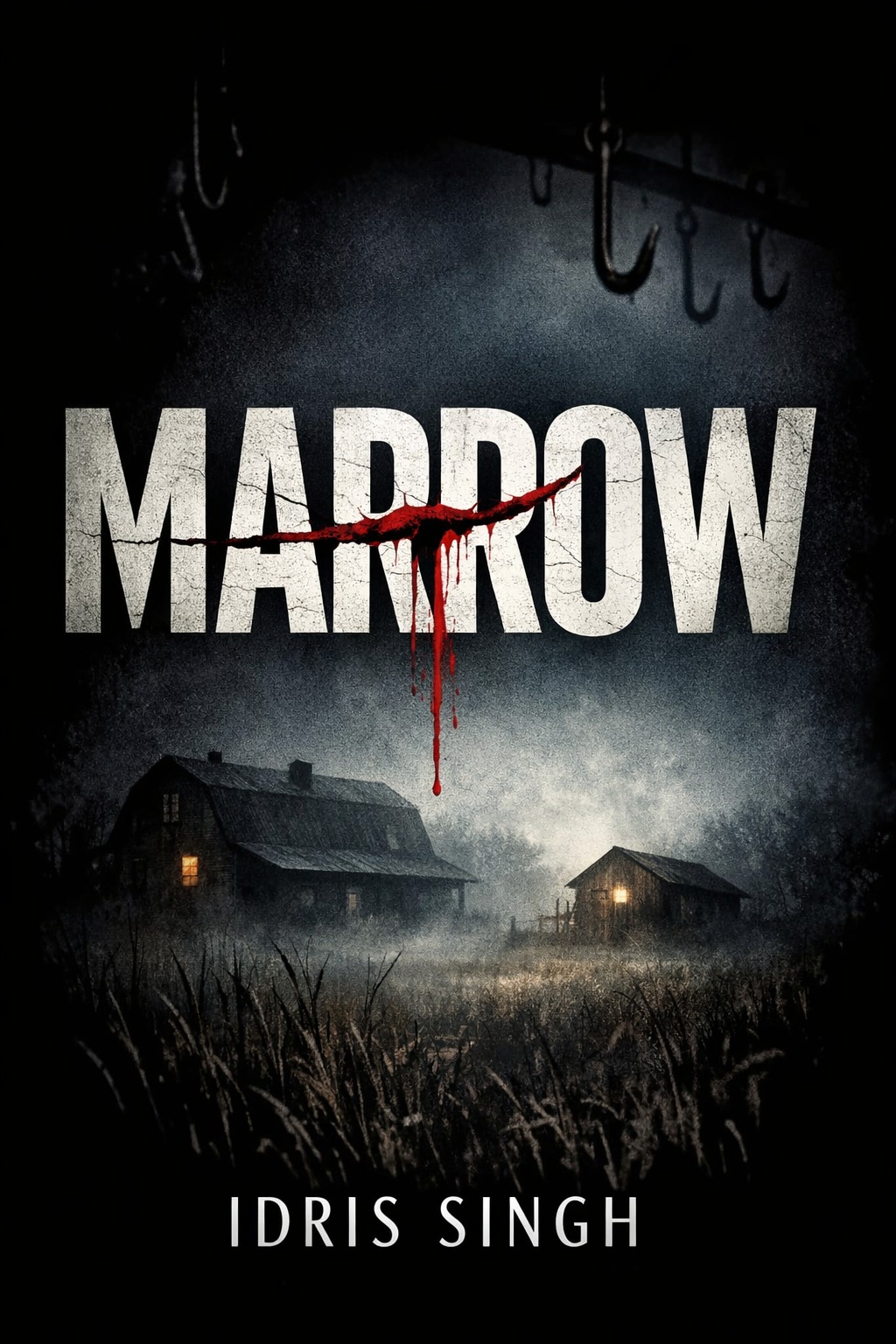
Photo of Idris Singh

Idris Singh is an American horror author whose work fuses Midwest folklore, immigrant family sagas, and body terror. Raised in Eau Claire, Wisconsin, he studied anthropology at the University of Wisconsin–Madison and earned an MFA in creative writing from the University of Minnesota. His novella Huskwater won the Midwest Book Award in 2022, and his collection Static Lake and Other Hollows was a Shirley Jackson Award finalist in 2024. His short fiction has appeared in Nightmare, The Dark, and Apex, and his essays on rural hauntings have been featured in regional arts journals.

Singh lives in Saint Paul with his partner and a rescue mutt named Fen. When he isn't writing, he teaches community workshops, volunteers at the Ramsey County Library, and hikes bog boardwalks for field notes, collecting the small, uncanny details that root his fiction in the grain of real places.

Ratings & Reviews

Elena Moroz
2026-05-20

Bleak, greasy, and inert for long stretches, this farm-haunt leans on shock props like fat-sealed jars and shaky tapes while leaving the story thin.

Jonah McKee
2026-03-30

Loved the mood, wrestled with the momentum.

  • Tallow-smell and Hi8 artifacts set a queasy tone
  • Middle stretch circles the same dread beats
  • Cedar stakes make the investigation tactile
  • Final choices land, but the route there loops once too often
Diego Álvarez
2026-02-28

La atmósfera es un personaje más. Ash Bramble huele a sebo y óxido; el viento que hace sonar el móvil de huesos parece salir de una garganta vieja. Seguir la línea de estacas de cedro hacia Black Sedge Bog y el Borrow Pit es como caminar sobre un pecho que sube y baja.

Los detalles locales —el bar Grackle & Gear que se queda mudo, el pastor que no cruza la cerca de noche, los frascos sellados en grasa con fechas— construyen una mitología rural que se siente vivida y peligrosa. No explica de más; deja que el terreno te enseñe sus reglas.

Lakshmi Rao
2026-01-15

As a character study, Marrow shines. Rhea is flint and fatigue, a woman counting nickels and bite marks with the same steady eye; her refusal to dramatize is its own kind of drama.

Dev's inner quiver, that EMT steadiness unraveling, comes through in small, skittering moments rather than speeches, and Anika's sensibility — the maker who wants to fix the unfixable — turns those clay figures into a diary she won't keep. Dialogue is clipped, pragmatic, exactly what people say when the dark starts asking for names.

Quincy Ortega
2025-11-03

Craft-wise, this is tight and deliberate. The structure is precise: short present-tense chapters rotate through Rhea, Dev, and Anika, punctuated by the tactile business of ledgers, jars, and the hand-cranked reel-to-reel, so the horror accrues like sediment.

Occasionally the rhythm slackens in the middle when tavern talk and farm routines stack up, but the sensory motifs stay sure — tallow, bone, the hum of old tape. The closing movement threads all those textures into choreography you can feel underfoot, like walking the cedar stakes in the dark.

Mara Ellison
2025-10-22

I finished Marrow at 2 a.m. and turned every light on. Hunger and inheritance snap like traps here, and the trap is the land itself.

That ledger line — "marrow tithe" — keeps echoing. Debt paid in body, safety bought with pieces of yourself, a town pretending it is merely thrifty while it feeds something with a memory for names. The book makes you complicit; you keep reading the weights in the columns and wonder what you'd owe.

The images burrow deep: jars sealed in fat stacked like a calendar of wrongness, a deer skull figure slipping through the slaughter door, bone chimes breathing in a draft, the shiver of Hi8 static like gnats in your ear. You can taste tallow. You can hear that lullaby warping when the reel clicks.

What hurts is how human it all is. Rhea's ledger-soul and cot under the nailed window. Dev's tremor he will not name, the ache that reads like a long confession. Anika's clay bleeding on its own. Love is a kind of feed, too — what you throw to the dark to keep your people.

I don't want to spoil the last turns, but this is terror with teeth and tenderness. I'll be thinking about cedar stakes disappearing into Black Sedge Bog and the Borrow Pit's slow breath for a long time. The book leaves a film on your hands. You wash. It stays.

Generated on 2026-06-01 12:02 UTC