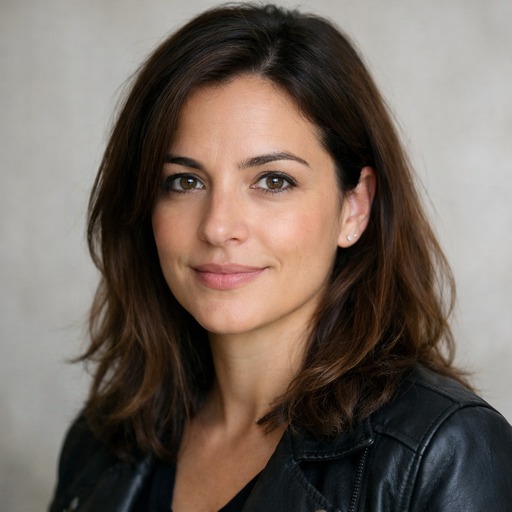
Cover of Barrow Hill

Barrow Hill

Crime · 368 pages · Published 2026-04-15 · Avg 3.7★ (6 reviews)

The tip lands at 2 a.m. on night-shift reporter Mariana Sanches's desk: a young municipal surveyor, Tomás Vale, claims Barrow Hill—a windswept rise above Afurada, once a Roman tumulus and now an illegal landfill—is being paved into a logistics park to launder bodies and money. He brings a cemetery ledger with two pages cut out, a USB stick of truck GPS traces, and a shaky whisper about an Anglo-Portuguese consortium with friends at City Hall. Mariana passes the evidence to Inspector Ana Meireles of the Polícia Judiciária, and the investigation begins along the damp run of the Douro, past cranes, chapels, and the creak of old barges.

When a young couple is found dead in their Miragaia flat—bathwater cold, a plastic rosary looped on the tap, and river silt in their lungs—it looks like a straightforward call. The tool that crushed their windpipes, a shipyard clamp, sits on the tiles, and the only fingerprints belong to Ângelo dos Remédios, a taciturn undertaker who moonlights hauling waste up to Barrow Hill. Meireles and her team close in, but the neatness stinks of bleach and borrowed alibis.

Salomé Brás, an ex-archives technician with a history of volatile whistleblowing, vanishes the same night the couple dies, leaving only logins to parish-registry software and a trail of scanned burial permits threaded through hacked municipal servers. Her anger has made her a danger to everyone—and the only way she can be reached is through records: baptism ledgers, mortuary tags, a backroom at Agramonte crematorium where the printers never cool. To smoke out a network that hides women and contraband under the cover of funerals, Mariana and Meireles must wade the city's folklore and its paperwork, from the tiled saints of São Bento to midnight on the Dom Luís I Bridge, where Barrow Hill glows like a bruise above the river.

Photo of Chiara Ferreira

Chiara Ferreira is a Portuguese crime writer and former courtroom interpreter from Porto. After studying criminology at the University of Porto, she spent six years covering late-night police shifts for a local paper, work that sharpened her procedural rigor and a river-lit sense of place. Ferreira is the author of the Lusophone noir novels Pier of Ashes, Borrowed Evidence, Paper Saints, Last Rites for The, and Barrow Hill. Her fiction has been shortlisted for the Sombra Noir Prize and the Lusophone Crime Writers Award, and she is known for threading archival research, funerary customs, environmental anxieties, and urban folklore through tightly wound investigations.

Alongside prose, Ferreira writes for the page-and-panel form, collaborating with illustrators to bring her atmospheric Porto to graphic storytelling; her graphic work includes Lacquer. Her essays on mourning rites and city mythologies appear in cultural magazines across Portugal and Brazil. When she isn't interviewing detectives or sitting in on inquests, Chiara teaches narrative craft at a community arts center in Foz do Douro—mentoring novelists and comics creators alike—and walks a retired racing greyhound named Fado along the Atlantic breakwater.

Ratings & Reviews

Beatriz Araujo
2026-05-27

If Eva Dolan's community-corruption puzzles and Dervla McTiernan's calm procedural build appeal, this Portuguese-set crime novel belongs on your list. It favors evidence trails over car chases, uses the Douro as weather and witness, and finds suspense in printers that never cool; readers who enjoy investigative journalism alongside police work will be well served.

Clara Mendes
2026-05-18

Corruption here is bureaucratic theater. The novel keeps asking who owns memory when records can be cut, forged, or outsourced, and it does so through recurring emblems, from the plastic rosary on a tap to the missing pages in a burial book. Barrow Hill "glows like a bruise above the river", a literal landmark and a moral mood, while folklore rubs against spreadsheets until both squeal. A few thematic beats are repeated once too often, but the argument about how cities hide women and contraband under paperwork lands.

Rui Castellon
2026-05-10

Porto aqui parece húmido e febril, da Afurada ao recorte de Miragaia, com gruas, capelas e barcaças a ranger no Douro; Barrow Hill brilha como nódoa acima da água. A cada página há registos e rituais, do azulejo de São Bento à noite na ponte Dom Luís I e ao recanto das impressoras no crematório de Agramonte, e isso dá peso ao esquema do parque logístico sobre a antiga tumulus. A atmosfera convence e arrepia, com cheiros de lodo e de lixívia, e a intriga mantém-se clara sem trair o segredo.

Noor Salim
2026-05-02

Mariana vibrates with deadline nerves while Meireles reads quietly between lines, and the contrast works. Ângelo dos Remédios stays opaque in a way that suits an undertaker who carts waste up to Barrow Hill, though his scenes risk monotone, and Tomás Vale feels more like a fuse than a person. Salomé Brás is the standout, a presence built from logins, tags, and petty rebellions rather than scenes; still, some dialogue speeds past the emotional fallout, leaving sharp motives sketched rather than sunk in.

Elinor Graves
2026-04-23

The book runs on documents: cemetery ledgers, burial permits, GPS dumps, even the printer heat at Agramonte, and that archive-first approach gives the investigation a cool, convincing texture. The switching between Mariana's nocturnal reporting and Meireles's procedural rhythm is clean, with a few patches where municipal jargon pools too long, but the pacing resets quickly and set pieces like the Miragaia bathroom are staged with exactness.

Jason Hart
2026-04-19

A 2 a.m. tip yanks Mariana Sanches and Inspector Ana Meireles into a taut hunt of GPS trails, cut ledger pages, and a Miragaia flat gone wrong, and the steady climb toward Barrow Hill delivers tension without theatrics.

Generated on 2026-05-29 12:02 UTC