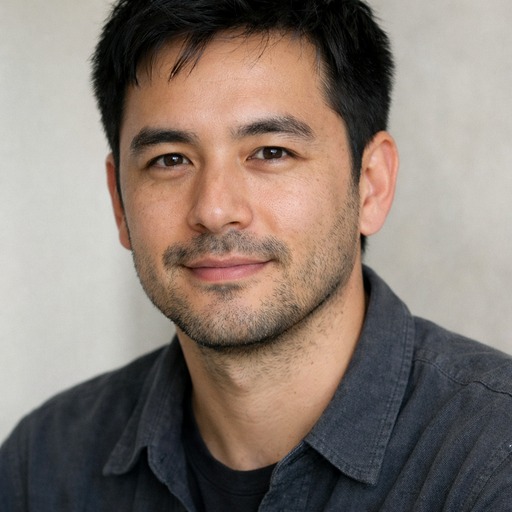
Cover of Prism: An Inventory

Prism: An Inventory

Suspense · 368 pages · Published 2025-10-21 · Avg 3.6★ (7 reviews)

In Albuquerque's South Valley, Rafael Rafe Calderon keeps his life to a narrow beam: counting tarps, generators, and water filters at Solace Aid's cinder-block warehouse; walking his mutt, Loba, along the irrigation ditch at dusk; pretending the past is a different man's story. Fifteen years ago he was a quiet numbers savant who built an ingenious color-coded ledger for a Las Vegas skimming crew and later slipped the FBI a map in exchange for a sealed record and a second chance. When Pilar Rios, a forklift driver at Solace with a sideline importing artisanal glass prisms from Oaxaca for boutique architects, has a pallet seized at the Port of Houston, everything fractures. Hidden inside two dozen hollow prism rods are mil-spec FPGA chips wanted by a shadowy buyer in Rotterdam; federal agents arrest Pilar before the crate is even off the flatbed. Rafe notices that the seized manifest is marked with the very spectrum cipher he once invented—a wavelength-to-route code that turns shipping labels into a rainbow of instructions—and he feels the old undertow from the life he swore off. To help Pilar, he tracks down Juniper Lee, a former Assistant U.S. Attorney who relocated to Las Cruces after a public divorce, now weathering small-firm chaos at Sotero & Lee while raising two kids and an aging Subaru. Juniper isn't sure what to do with a client whose innocence is spiraling through export-control jargon and shell-company smoke, but Rafe's fluency in freight paper and his guilty memory of the code convince her to take the case. What begins as a paperwork puzzle turns, under fluorescent lights and the hum of a barcode gun, into a hunt for an inventory he wished he'd never cataloged.

The further they dig, the more the spectrum spreads: a freight forwarder in Santa Teresa with a saint's altar in his dispatch office and a second set of books hidden behind a false wall; afternoon meetings in a Las Cruces diner where a woman named Odessa Kihlstrom, a supply-chain prodigy with a preacher's calm, orders black coffee and trades in favors; a drone that smacks into the Solace roof and scatters a velvet bag of rough sapphires; a white Tahoe that idles across from Rafe's adobe rental until midnight. Homeland Security investigator Mateo Pacheco, whose cousin once went to prom with Pilar, thinks the chips are part of a sanctions-dodging pipeline that moves through private hangars at Double Eagle II and slipyards along the Gulf. When an arson attempt scores the warehouse floor and Juniper's case files, she learns what it means to practice defense work without a federal backstop: chasing subpoenas herself, leaning on a county clerk who knows every judge's lunch order, bargaining with a bondsman called Pocket Salazar while her son Milo's saxophone bleats upstairs. The code resurfaces everywhere—paint swatches taped under a desk, a rainbow of zip-ties on a pallet, even a child's plastic prism left on Juniper's porch—and Rafe understands that the only way out is through. He stages a false manifest for selenium lenses bound to a West Texas wind farm and leaks it through the old channels, luring Odessa's buyers to a late-night pickup beneath turbines that thrum like hearts. Under the whirling blades and the salt-bleached stars, mirrors and reflector tape turn the field into a hall of ghosts long enough for Rafe to record a confession on a battered MiniDisc he still calls Marfa. The takedown at Elephant Butte Dam is messy, the charges for Pilar hinge on her cooperation, and Odessa's network is less a line than a prism: cut one facet, light finds another. Juniper steadies her footing in the new life she's chosen; Rafe opens a ring binder stamped Prism: An Inventory and begins to list what he's owed and what he owes back, counting rainbows in the dam's spray and trying to make the colors resolve into one.

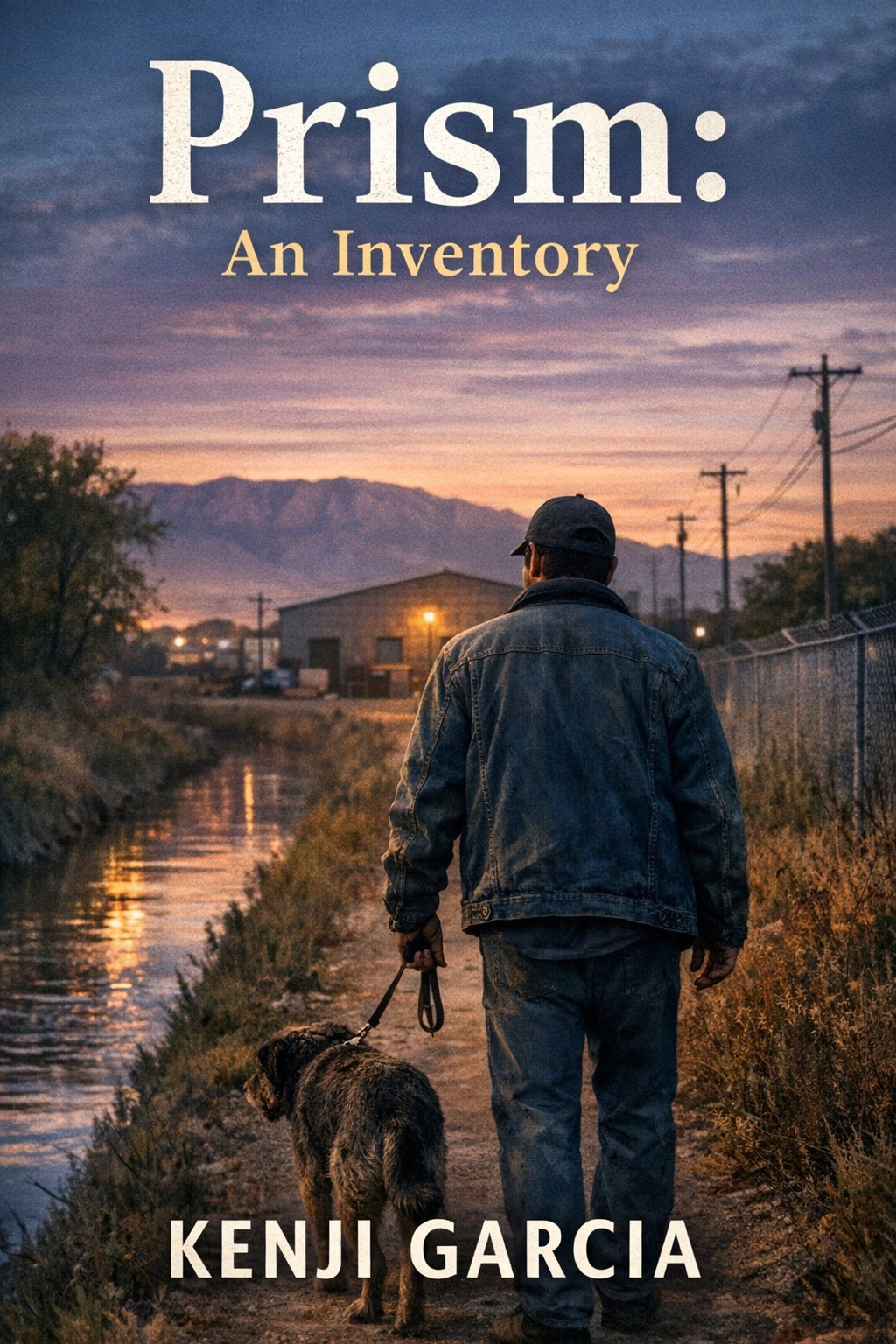
Photo of Kenji Garcia

Kenji Garcia is a Mexican-Japanese American novelist and former logistics analyst. Born in 1985 in Salinas, California, he studied applied mathematics at UC Santa Cruz and spent a decade auditing warehouse flows and port paperwork up and down the West Coast. His understanding of supply chains and the people who move them informs his place-rich suspense fiction.

Garcia is the author of the novels Night Parcel (2019) and Floodplain (2022), the latter a Lefty Award finalist. His short work has appeared in regional journals and crime anthologies, and he has taught community workshops on narrative structure for working adults. He lives in Portland, Oregon, with his partner and a retired search-and-rescue dog, and he volunteers with a neighborhood bicycle co-op.

Ratings & Reviews

Eldon Prieto
2026-05-10
  • Strong sense of place and supply-chain texture
  • Rafe and Juniper feel human without speeches
  • Motif of prisms leans heavy in the middle
  • Ending balances consequence with a sliver of grace
Lucía Meneses
2026-04-02

Para quienes disfrutan del noir fronterizo con logística real, esto se siente como la intersección entre Sam Hawken y Alex Segura: calles polvorientas, burocracia y favores pagados en cafeterías. Los detalles de manifiestos, almacenes y ese código de espectro dan sabor sin saturar; el clímax bajo los aerogeneradores es sobrio y eficaz. Recomendado para lectores que prefieren tensión paciente a trucos pirotécnicos.

Owen Dalvi
2026-03-22

I can live with a story that loves its motif, but this one keeps flashing the same prism in my eyes until I flinch. The rainbow shows up again and again in clever placements, and then keeps showing up past clever into cloying. I wanted texture; I got a highlighter.

The premise sings, and the ethical knot is sturdy, yet the symbolism keeps leaning on the mic. When the spectrum cipher appears on zip-ties, paint swatches, and even a toy left on a porch, the resonance curdles into reminder.

The book promises "a hunt for an inventory" of what is owed and owed back. I admire that intent. But the accounting metaphor becomes an audit of metaphors, the human stakes buried under color codes.

The best scenes breathe in ordinary light, like Loba's evening walks or the county clerk scrounging a signature. The mirrors and reflector tape at the wind farm should have landed with awe. Instead they felt like a thesis underline.

There is heart here, and craft, and some cold-beautiful turns of phrase. I just needed the spectrum to step aside long enough for the people to radiate.

Graham Ricks
2026-02-18

New Mexico is rendered as an ecosystem of movement: cinder-block charity floors, a dispatch altar behind a false wall, private hangars at Double Eagle II, and the hiss of the irrigation ditch at dusk. Ports, slipyards, and turbine fields feel mapped to the same spectrum logic, raising the stakes without ever needing explosions.

Maribel Sosa
2026-01-08

Rafe is a careful man trying to keep the math humane, and his quiet guilt gives the book its current. Juniper, juggling kids and court filings, has dialogue that trusts subtext. Pilar shines in brief strokes, and Odessa's preacher-calm menace never overplays. Even Pacheco reads as a person, not a badge.

I believed him.

Darius Montel
2025-11-20

The book leans on lists and color cues, turning bills of lading into a kind of poetry. I liked the alternating textures: clipped procedural scenes against dusk-lit walks by the ditch with Loba.

The middle third feels over-invoiced, with several meetings that restate the sanctions tangle, yet the final setup with the selenium lenses snaps the frame back into focus. The MiniDisc motif threads memory through the case file, and the closing inventory conceit is earned.

Carina Wells
2025-11-03

A taut logistics chase where a warehouse clerk, a small-firm attorney, and a forklift driver are pulled into a spectrum-coded scheme. Scanners hum, a drone drops sapphires, and a turbine-night sting clicks into place with clean, chilly precision.

Generated on 2026-05-26 12:02 UTC