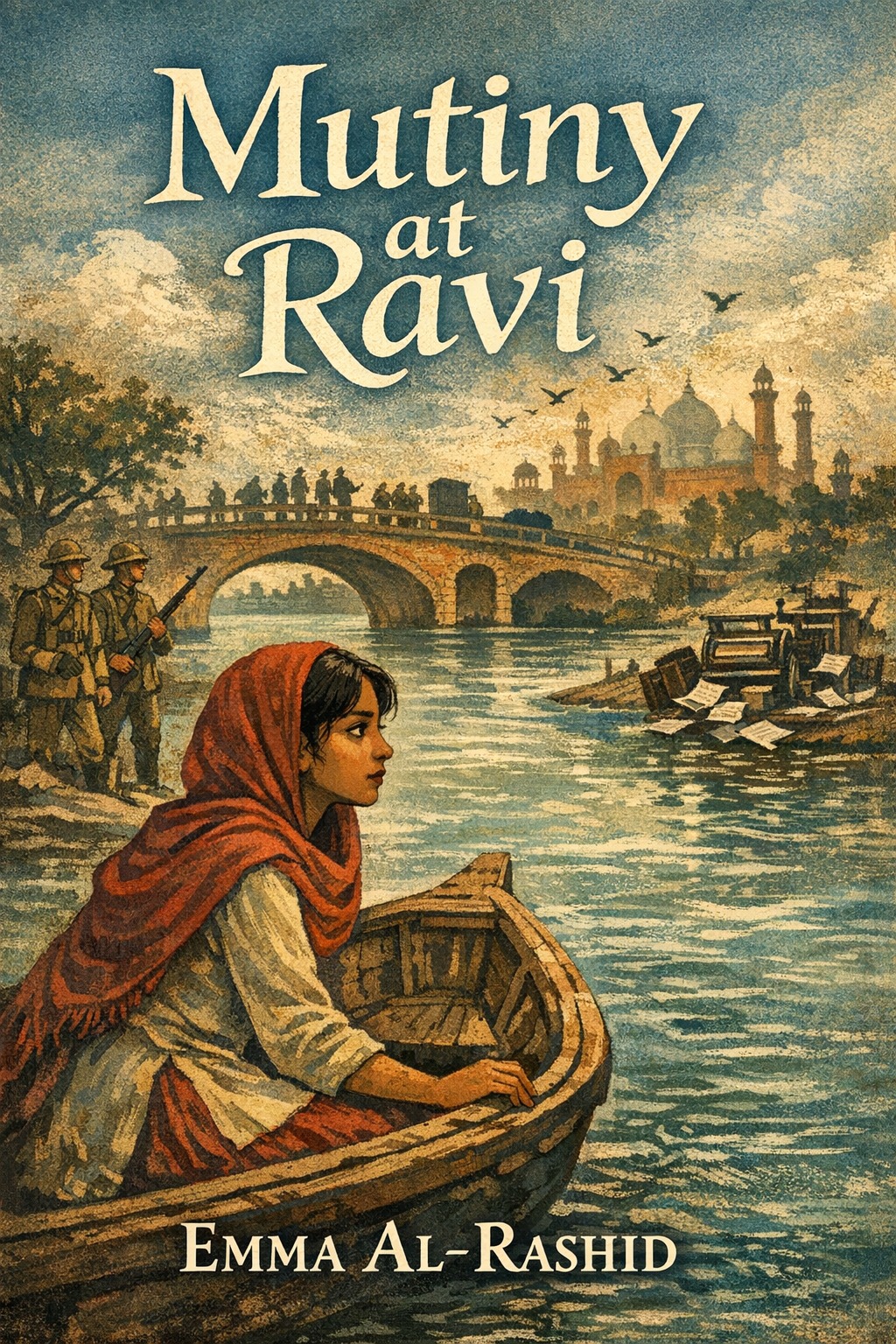
Everyone hears, but along the Ravi, people learn to swallow their words. In 1919 Punjab, fifteen-year-old Saira Dar minds her father's ferry at Shahdara while rumors drift on the water: soldiers refusing orders at Mian Mir, printers disappearing from Anarkali, a bridge that will not carry troops without protest. When her brother Imtiaz fails to return from Lahore—his satchel found bloodied near the Badshahi Mosque—Saira is abruptly sent to a mission sewing class, far from the river she reads so well. She cannot yet decipher print; the English letters pinned to her bodice are as useless as fish bones.
Behind the Circular Road she meets Mehar Kaur, a railman's daughter who knows the turn of every key. Mehar teaches her to sound out contraband broadsheets, to fold petitions into puri dough, to flash a copper bangle as a signal at dusk. After Jallianwala Bagh, martial law descends; curfews choke the bazaars; presses are raided; a Cantonment captain boasts of a 'cleansing' to come. Everyone knows, but no one dares write it down.
When whispers spread that sepoys will refuse to march across the iron lattice of the Ravi Bridge, the city calls it mutiny, the officers call it treason, and Saira calls it a chance to find Imtiaz alive. With a brass compass, an oar worn smooth, and a ledger salvaged from the canal office—its pages coded in the blotted Urdu of a left-handed clerk—she steers through flooded ghats and a tea stall beneath the bridge where all the signs converge. Facing informers, river police, and her own family's silence, Saira must decide what is worth betraying, and whom to save when saving anyone might drown them all. Set in an era of edicts and erasure, Mutiny at Ravi is about the private rebellions that make public ones possible, and the love it takes to choose a different current.