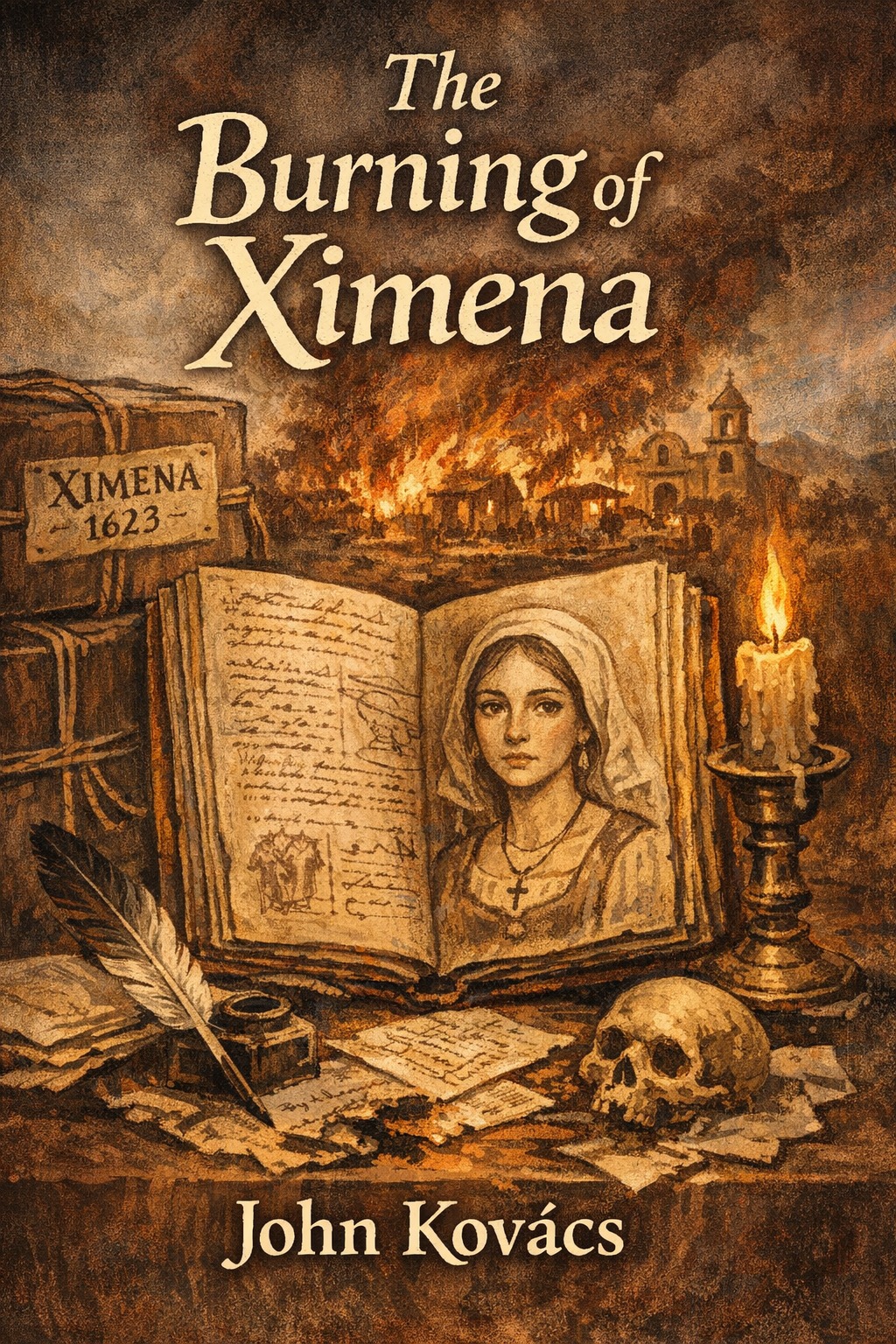
When historian and journalist John Kovács was granted provisional clearance to open three sealed crates in the Archivo General del Estado de Oaxaca—labeled simply "Ximena, 1623" in a brown ink hand—he did not expect to find a life staring back at him. Inside were goat-leather ledgers, a blackened cedar comb, and a wavering bundle of vellum folios stitched with blue silk: the trial record of Ximena de los Ángeles, a midwife and singer accused of heresy after a market fire raged through the barrio de Xochimilco. His year in Oaxaca and Mexico City, and his weeks chasing microfilmed echoes in Seville’s Archivo General de Indias, became a sustained forensic conversation with voices that colonial bureaucracy tried to flatten and fire tried to erase. What truly happened on the night the plaza burned? And why did the memory of Ximena—saint to some, sorceress to others—persist in whispers for four centuries while vanishing from the footnotes?
Kovács follows the ash-trail across landscapes and archives, interviewing stonemasons in Tlacolula, a family in San Miguel el Grande who keep a clay thurible said to have survived the blaze, and a choir director in the cathedral who hums a lullaby that appears, scrawled and half-crossed-out, in the margin of Ximena’s testimony. Alongside conservators at the Biblioteca Francisco de Burgoa, he deciphers palimpsested annotations, alternate charges, and an exculpatory affidavit quietly removed from the record and tucked into a linen pouch. He speaks with present-day fire investigators in Monterrey about flame patterns in thatch and ocote, and with legal scholars in Madrid about the Fugitive Witness Statute of 1618. The result is an investigation into how rumor, drought, silver caravans, and ecclesiastical ambition can conspire to ignite a person into a parable.
Part archival mystery, part field report, part meditation on how communities remember and courts forget, "The Burning of Ximena" restores a woman’s name to the ledger and tests the limits of what the historical record can hold. By publishing key folios and the candid interviews around them, Kovács lets readers watch the past flicker into legibility—and asks what it takes for a story to keep burning after the flames are gone.