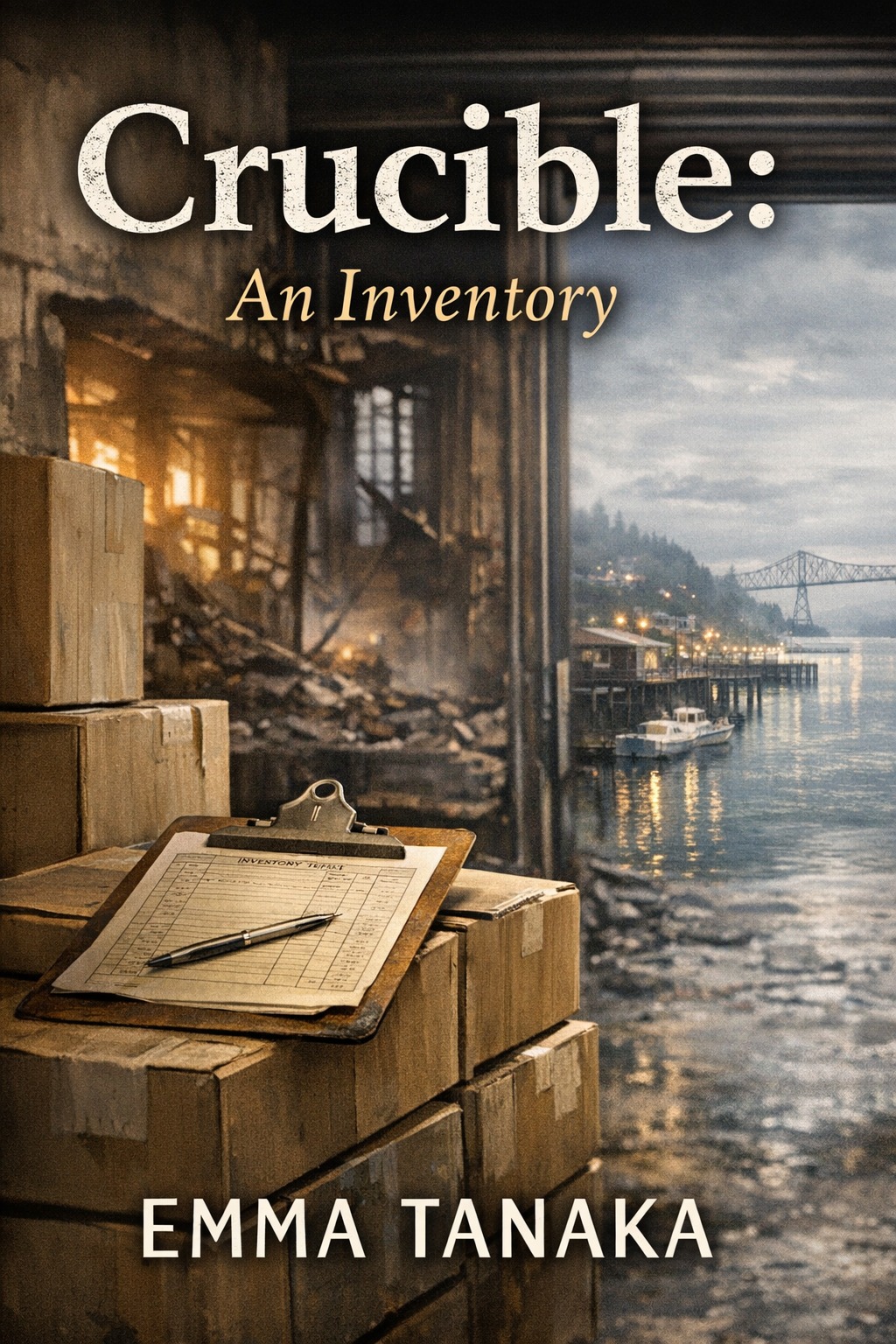
An inventory is supposed to be boring. Count the boxes, note the dents, keep your heart out of it. Naomi Sato, thirty-nine, municipal archivist for the rain-glossed harbor town of Astoria, Oregon, is very good at keeping her heart out of things. After a suspicious fire at the old Columbia Crucible foundry, she is hired to catalogue what survived: dented lunch pails, a brass saint's medal, a ledger sticky with sugar, a melted snow globe of Cannon Beach. She is given a clipboard, a hard hat, and a single instruction from City Hall: make a clean, neutral list.
Neutral lasts until Naomi realizes the tags on a few salvaged objects have been renumbered to match houses along Kellogg Street. Then a talkative ten-year-old magpie of a neighbor, Birdie Ramos, starts turning up with trinkets pried from storm drains that seem to complete the set. And Lucille Harrigan, eighty-four—retired bookkeeper and unofficial historian of the union hall—keeps stopping by with coffee and questions Naomi can't file away. The closer Naomi gets to understanding why the foundry's brass brand turns up on a wedding ring and a padlock and a child's pocketknife, the more a thirty-year-old death by drowning stops looking like an accident.
Told through packing slips, petty-cash memos, and a list that refuses to stay tidy, Crucible: An Inventory is a darkly funny, quietly furious novel about what a town keeps, who gets to keep it, and the cost of imbalance. Who was Tomas Vega at the river's edge? Who is Naomi when the last numbered tag is gone? And if small places recycle their myths, who pays the invoice when the story comes due?