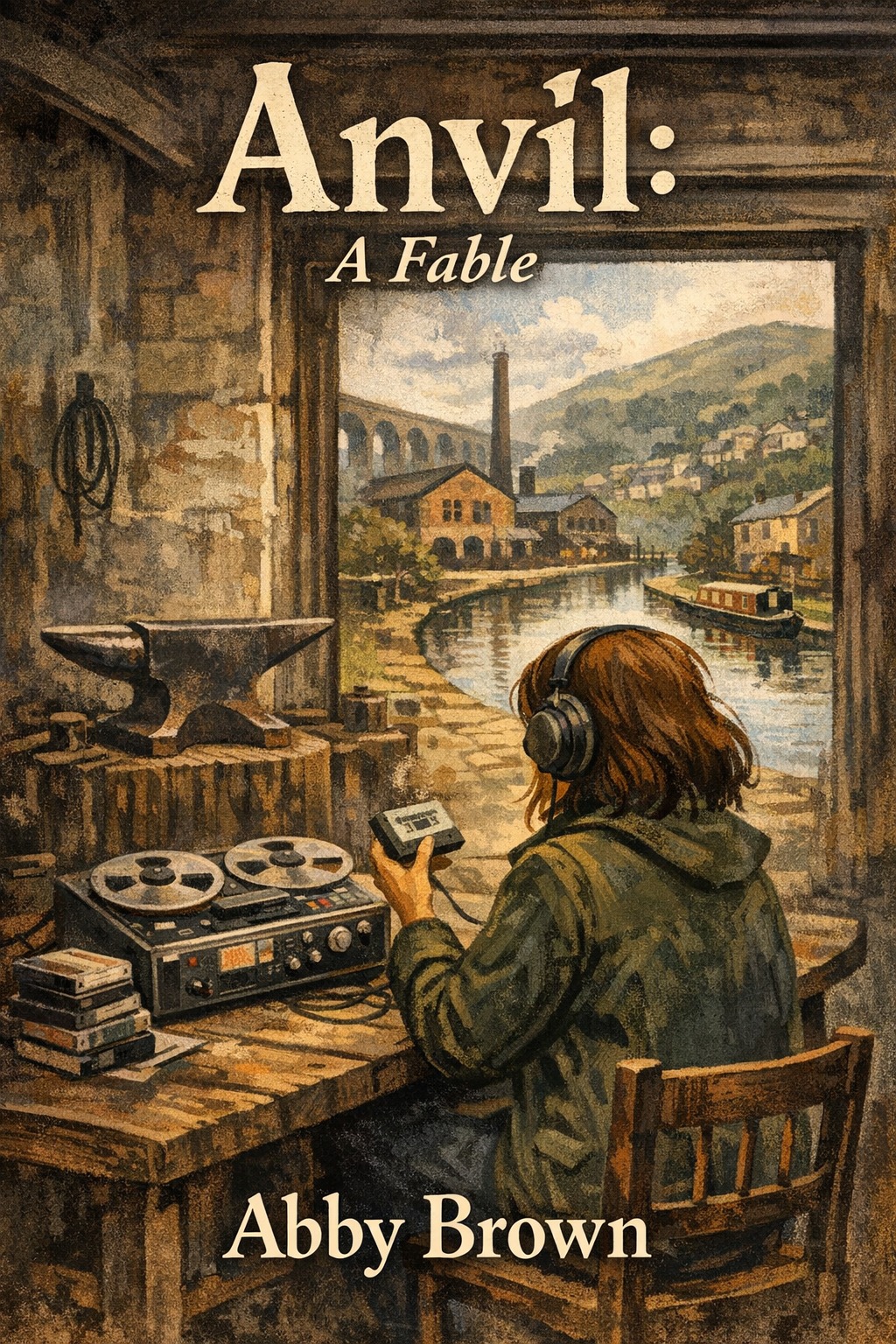
Mara Fielding is good with other people's echoes. A former community radio producer with a box of worn cassettes and a secondhand Nagra, she's returned to the Calder Valley to catalogue a shuttered ironworks museum in Throstleford, a canal-side town wedged between viaduct and hill. In a back room that smells of oil and nettles she finds Anvil 42—pitted, mute, and rumored to have outlasted three floods—alongside reels labeled in grease pencil: DENSITY, SHIFT, LIANG.
Mara hears almost nothing on the tapes. Air. A breath. The lift-and-fall of a far train. She tells herself that absence is a story too. She begins to build a performance she calls Anvil: a fable of the town told through percussive strikes, river hiss, and voices gleaned from the archive—Geoff Coldwell, union steward; Naila Akhtar, ex-roller; a handwritten note mentioning Liang Shen, a toolmaker who vanished after the 1979 waters took the lower works. She amplifies the anvil with contact mics, edits silences into speech, and stitches a blueprint of belonging that fits the stage at the Piece Hall as neatly as chalk marks on steel.
By the time the Saltaire Sound Walk names her winner, the town is listening back. A retired volunteer posts scans proving the DENSITY reels were safety drills, not secret laments. A granddaughter says Liang's story has been bent to fit a pretty shape. As the river fattens under late rain and the anvil begins to ring in ways Mara did not plan, she must decide which sound to protect: the one that made her famous, or the one that leaves her—finally—answerable to the people whose lives she borrowed.