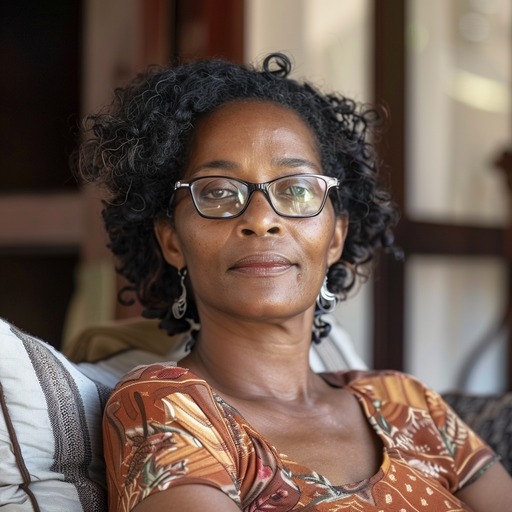
Cover of What the River Kept

What the River Kept

Thriller · 352 pages · Published 2025-06-03 · Avg 4.3★ (6 reviews)

Thandi Maseko knows how to read a river. Raised on the Mohokare—the Caledon River that threads the South Africa–Lesotho border—by a grandmother who taught her to watch reeds and sky more closely than men, she has learned to survive, adapt, endure. Now a historian at the University of the Free State with a battered Garmin, a fleet of kayaks, and a lab full of 1976 topo sheets, she is racing a new dam project that will drown the old crossings and the stories tied to them. The funder, charismatic developer Saul van Zyl, promises access, money, and prestige—if she delivers clean maps and no trouble. After the field accident that nearly ended her career, Thandi tells herself the deal is a necessary cage. It keeps the river's past within reach—and her darkest day sealed off.

When a crumbling bank near Ha Mofokeng coughs up a rusted film canister—16mm reels shot by a ferryman who vanished in 1993—Thandi breaks her own rules. Instead of logging it and moving on, she calls Kit Nthunya, a Maseru reporter whose work on sand-mining syndicates has made her inconvenient to powerful men. Kit is also the person Thandi's estranged husband, Daniel Hart, would least like to see: his former expedition partner, co-conspirator in a dozen sponsored adventures, and the only one who ever told him no. Daniel insists on joining the trip downstream from Ficksburg to the old swing bridge at Ha Makoanyane, where rumor says a Pelican case was lashed beneath the girders during the last great flood. He knows the shortcuts through reedbeds, the eddies that pin a boat, and the places where a person can disappear as quietly as a tire slipping off silt. He also knows how to keep Thandi under his thumb—with keys, passwords, and a story about guilt she can barely face.

As the river tightens into clay-banked bends below Ladybrand and widens into blackwater pools along Maseru's outfalls, desire and dread curdle into something unpredictable, dark, and deadly. A green-and-white border beacon winks through the reeds like an eye; a drone hums; a police patrol boat veers too close. Someone is lying. Someone is watching. The reels show more than ferries and cattle: sloshing diesel drums at midnight; faces caught in headlamps; a hand Thandi knows too well on the tiller. When a highveld thunderstorm tears off the escarpment and the Mohokare rises, the past breaks free of its moorings. In the roar and silt and spinning hyacinth, each of them must choose what to sacrifice—love, truth, or the last measure of safety—to make landfall alive.

Taut and atmospheric, What the River Kept drags the borderlands' drowned histories to the surface, fusing archival intrigue with survival grit and the kind of psychological control that hides in plain sight—on a map, in a marriage, and in the dark under a bridge.

Photo of Nadia Mbeki

Nadia Mbeki (b. 1984, Ladybrand, Free State) is a South African historian of borderlands and memory whose research increasingly spans narrative nonfiction and literary thrillers. She earned a BA from the University of the Witwatersrand, an MA from the University of Cape Town, and a DPhil in African history from the University of Oxford, where she examined mountain fortifications in the southern African interior. Since 2016 she has lectured at the University of the Free State, directing a field lab on historical GIS and oral archives.

Mbeki's work has appeared in Journal of Southern African Studies, Kronos, and African Studies Review, and she has consulted on heritage mapping projects in Lesotho and the Eastern Free State. Her historical monograph, A Hill Worth Dying On (2024), explores the entanglement of landscape, defense, and community memory; her fiction, including the thriller What the River Kept (2025), brings those same terrains and testimonies into high-stakes narratives about power, secrecy, and survival. She lives in Bloemfontein, where she mentors student mappers and still prefers paper topo sheets to any app.

Ratings & Reviews

Sipho Mthembu
2026-04-18

Strong sense of place, mixed mileage on momentum.

  • border setting with tactile detail
  • kayak logistics feel authentic
  • midriver cat-and-mouse drags
  • Daniel's hold over Thandi repeats beats
Gavin Stein
2026-02-11

On every bank, the book asks, "choose what to sacrifice": heritage to concrete, truth to safety, love to autonomy. The border beacon, the ruined swing bridge, even the battered Garmin act like litmus strips for power and complicity.

I loved how mapping becomes an ethics of attention. Watching reeds and sky becomes a way to unlearn who gets to decide where lines are drawn, and the thriller engine never lets that question idle.

Marta Nowak
2025-12-03

If Anika Pretorius' River Bones is your kind of river noir; and if you admired the cross-border unease of Tendai Moyo's Borderlights, this will slot right in. The chase south from Ficksburg to Ha Makoanyane hums with tactical choices, shallow runs, and reedbed puzzles, though a late subplot flutters before it locks back to the main thread.

Aisha de Villiers
2025-09-15

Thandi's interiority is the pulse here, equal parts trained observer and survivor fighting the narratives pressed upon her. Her decision-making feels hard-won, not convenient.

Kit cuts through pretense with a journalist's edge, while Daniel radiates the chilly charisma of someone who learned to hide control inside competence. The dialogue snaps, especially in cramped boats and under humming wires, exposing the marriage as another hazardous crossing.

Jasper Kimathi
2025-07-22

The prose is lean without losing texture, and the structure braids field notes, map-room scenes, and the unearthed reels into a clear current. Chapters land where they should, often on an image that refocuses the investigation.

A few transitions from academic context to on-water peril clip too fast, and Daniel's backstory arrives in tight bursts that could breathe a touch more. Still, the cartographic motifs and temporal layering make the whole design feel purposeful and tense.

Naledi Mokoena
2025-06-10

This book sluiced into my chest with cold clarity. The Mohokare is rendered with a fieldworker's precision and a poet's awe, and I felt the current tugging at every page.

The river is a character, a jury, a secret keeper.

The archival breadcrumbs - rusted 16mm, topo sheets, a ferryman's gaze - meet kayaks and GPS logs in sequences that surge with danger. When the developer smiles and the dam creeps closer, the stakes feel massive and immediate.

I loved how the storms, the drone, the patrol boat close in while the triangle of Thandi, Kit, and Daniel flexes around power, shame, and survival. Keys and passwords are as sharp as hooks. I read with my shoulders inching up and my knuckles whitening.

By the time hyacinth spins and the thunderheads split, I was shouting at the book. What a fierce, river-wise thriller, and what an ending surge of truth and cost!

Generated on 2026-04-30 12:02 UTC