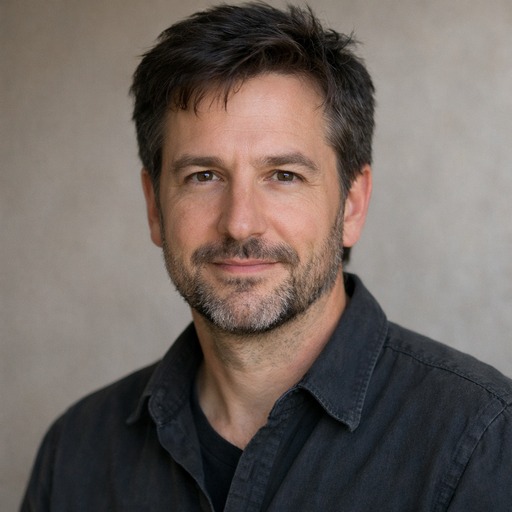
Cover of Creosote

Creosote

Fantasy · 392 pages · Published 2025-08-13 · Avg 2.2★ (6 reviews)

The spellbinding first novel in the Moon-Salted Wastes cycle, about memory, bargains, and the scars we keep so love will not be forgotten. In the desert rail-town of Creosote, where wind towers hum and the air smells like rain striking hot stone, Tamsin Mora has always trusted the old rules: paint your thresholds with tar, hang a string of bottle charms, never answer when the road calls your true name. She trusts them until the day her betrothed, Callum Greer, is bartered by his family to the water barons of Pitchhaven in exchange for a decade of river rights. Tamsin would have let her heart fracture quietly, if not for the rumor of a courier who walks the forbidden mile-markers and never leaves footprints.

Desperate to unmake a contract signed in brine and blood, Tamsin strikes a pact with Veyr, the Sable Road's Black Courier, a smiling immortal bound to the tarred paths between towns. In return for his aid, he demands three deliveries borne under oath: sealed parcels to be carried at hours he names, on roads that shift, to doors without hinges. But after the first parcel—an obsidian envelope that vanishes in a dead orchard at Girasol Bend—Tamsin learns the messages do not merely travel; they alter what they pass. Maps unwrite themselves. Mouths forget vows. And Veyr's attention is a warmth that scorches. He wants more than her footsteps; he wants her voice to rename the mile-markers, to etch a new route that would free him or salt the world. Between salt wells, rusted rails, and the creosote wind, Tamsin must choose: preserve what she loves as it is, or pave a road to what it might become—at a cost only the desert can count.

Continue the journey in The Thunder Ledger, Brineglass Saints, and A Map of Vanishing Roads.

Also by Dmitri Williams: - The Gloaming Orchard - Rope Tricks at the End of the World - The Drowned Observatory - Thornbright & Other Stories

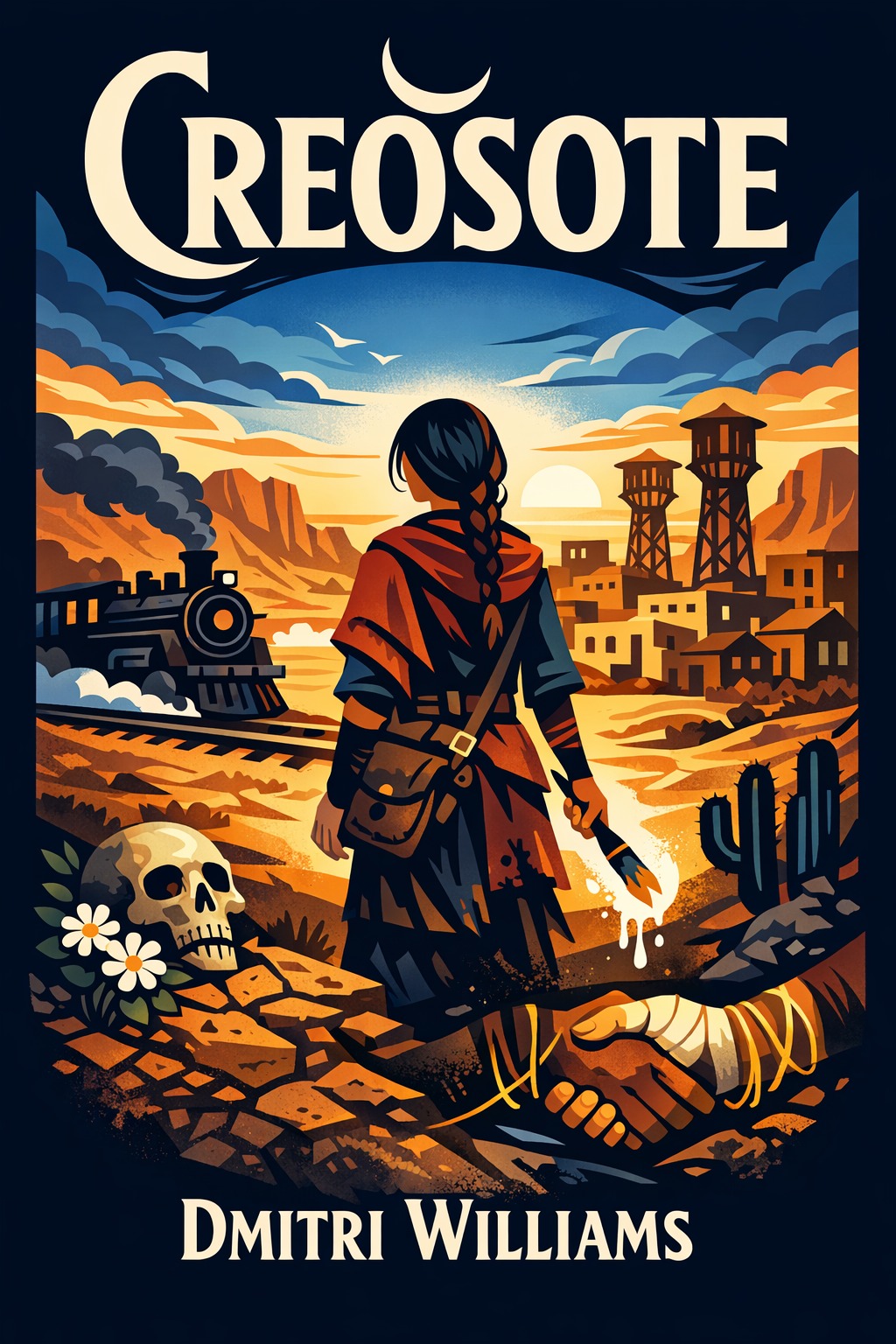
Photo of Dmitri Williams

Dmitri Williams is a fantasy and slipstream author whose work explores deserts, memory, and the uncanny rules that bind everyday lives. Raised along the high mesas of northern New Mexico, he studied folklore and cartography at a small liberal arts college before working as a surveyor on rail projects—an experience that seeded his fascination with maps that don't stay put.

He is the author of the novella collection Thornbright & Other Stories and the novels The Gloaming Orchard and The Drowned Observatory. His short fiction has appeared in regional zines and small-press anthologies, earning the Saguaro Prize for emerging voices and a Copper Lantern Award for best desert myth retelling. Dmitri Williams lives in Portland, Oregon, where he keeps an unruly herb garden, trades recipes for campfire coffee, and hikes whenever it rains so he can smell the creosote on the wind.

Ratings & Reviews

Sana Al-Harith
2026-04-12

For readers who like arid, myth-tinged fantasy with moral knots, this fits the shelf next to quiet, road-haunted tales. Teens comfortable with lyrical prose can handle it, but patience is required for the slow build.

Content notes: family bargaining, coercive contracts, minor blood rites, obsession-laced attraction, and a few unsettling images of forgetting. Educators and book clubs could use it to discuss consent wrapped in enchantment and what communities trade for survival.

Elena Duarte
2026-03-04

As a character study, it is half-successful. Tamsin reads as stubborn and tender in the same breath, her choices springing from hurt pride and real love. Veyr's charm has edges that cut, and his dialogue does a neat two-step between invitation and threat.

What kept me at arm's length is how often the people are drafted to embody motifs rather than to argue or surprise. Callum's absence weighs properly, but I wanted more friction that was human-scale rather than symbolic sparring. Still, the central dynamic holds enough charge to keep me curious about the next book.

Marko Velas
2026-01-25

A smart premise slowed by detours.

  • Languid first half
  • Repetitive courier beats
  • Intrigue spike at Girasol Bend
  • Ending cadence more echo than crescendo
Petra Ndlovu
2025-12-07

As a worldbuilding devotee, I loved the smell of rain on hot stone, the wind towers, the bottle charms clinking on doorframes. The bartered river rights and tarred roads have a lived-in logic, and Creosote itself feels like a settlement with long memory.

But the rules that govern the Sable Road wobble just when the stakes climb, and clarity gives way to mood. Atmosphere is a mirage without a clear oasis.

Gavin Orellana
2025-10-18

Williams has a knack for tactile images, but the line-by-line prose often leans purple enough to bruise. The structure flirts with fever-dream leaps; scenes end on an image, then the next chapter pivots to a distant thread with little connective tissue.

Point of view stays near Tamsin yet withholds basic orientation so often that momentum stalls. The obsidian-envelope episode is evocative and strange, but too many chapters mimic that cadence without escalation, and the late-book refrains feel like copy-paste variations instead of earned echoes.

Hollis Mireya
2025-09-02

I wanted a novel that wrestled with memory like a living thing, but this one drags its themes through every chapter until they crack from overuse. The dust of Creosote gets everywhere, yet the emotional throughline never evolves. It just circles.

The book keeps pointing at its thesis about bargains and remembrance and waits for awe to arrive. The old cautions, the bottle charms, the tar on thresholds, even the line about "never answer when the road calls your name" get repeated until they feel like stage props instead of myth.

When messages can change what they pass, that could have been terrifying. Instead, maps unwrite, mouths forget, and I kept feeling the author tugging on the strings. Not wonder. Not dread. Just design.

Veyr is presented as desire and danger, but the heat is mostly rhetorical. He wants Tamsin to rename the mile-markers, and the book clearly wants that to sound like fate. To me it read like a thesis statement stretched too thin over too many miles.

I closed the last page convinced the novel loves its symbols more than its people. The scars it asks us to keep feel assigned, not earned.

Generated on 2026-04-24 12:02 UTC