Mixed feelings, clear craft.
- Atmosphere thick with rain, cameras, scanner static
- Mara's perspective credible and humane
- Midsection lingers too long on map-making
- A few clues feel delayed
- For readers of quiet, systems-level suspense
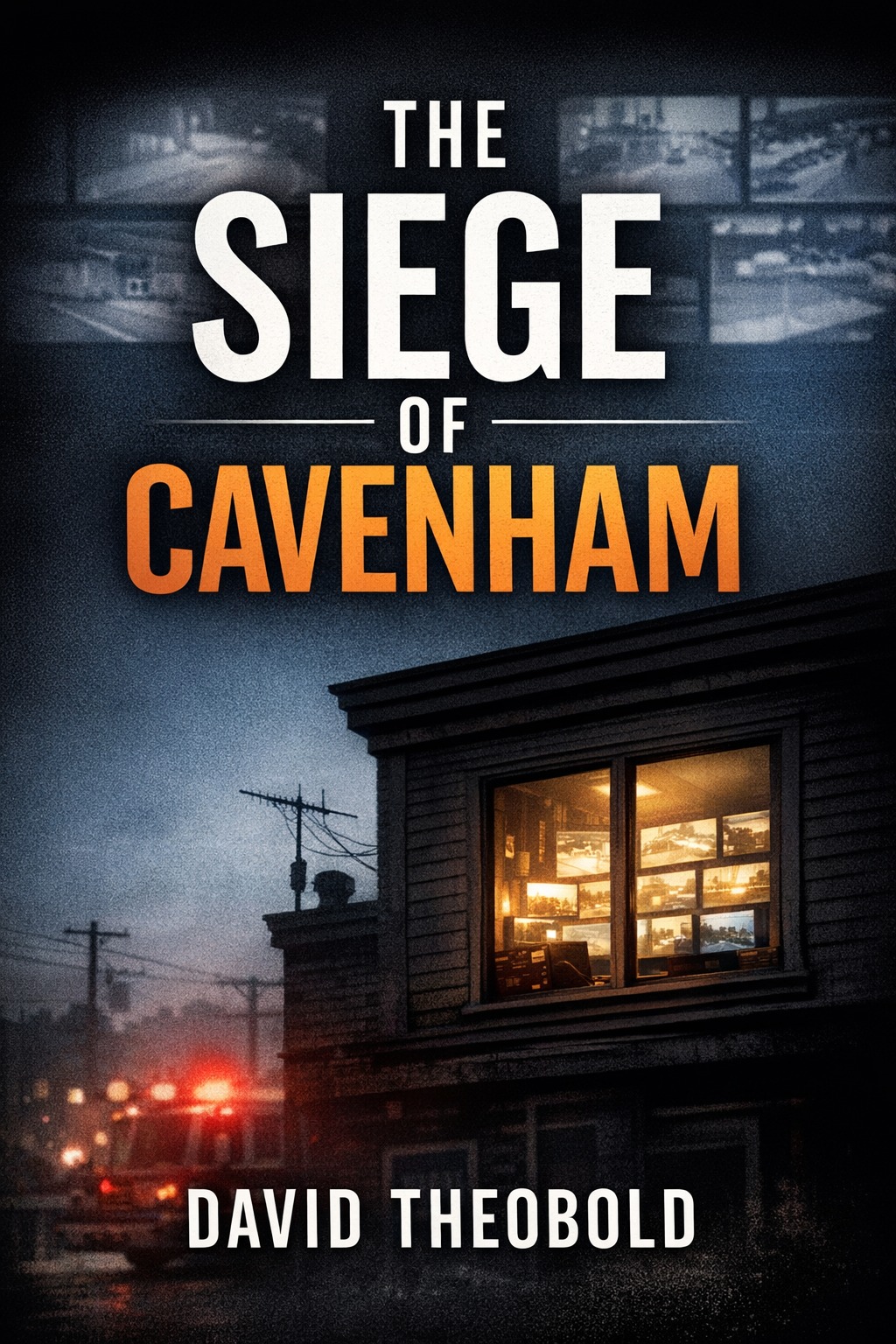
In Cavenham, Massachusetts, Mara Kincaid keeps watch from the second-floor apartment above Winch & Wire Hardware, a volunteer fire dispatcher with a city scanner, a tangle of coax, and the town's public camera feeds glowing across her walls. After panic attacks drove her from Boston, she has learned the rhythms of Main Street: the milk truck at 4:10, the school crossing at 7:55, the DPW plow staged by the iron bridge before any storm. When the Barlows—Nate, Meera, and their teenage son, Leo—move into the painted Victorian across from her window, their tidy routines feel like reassurance. Then, on a rain-slick October night, Mara sees Meera at the floodgate control box by the mill dam, arguing with a shadowed figure who presses something to her throat. By morning the river is backing up, cell service is spotty, the town's emergency alert siren wails without a message, and rumors swarm. The bridge is closed. Trucks stop coming. Cavenham tightens into itself like a clenched fist.
As outages cascade—water pressure flickers, the clinic's generator fails, the school's Wi‑Fi names change to cryptic strings—Mara starts mapping anomalies on butcher paper and old insurance forms, convinced someone is orchestrating a siege from within the town's quiet systems. Her calls are waved off as nerves and sleeplessness; even Leo's cryptic notes left in the library's returned-book slot might be coincidence. But from her window she catches glimpses: a red-handled bolt cutter near the water tower; the DPW chief unlocking the dam at 3:03 a.m.; the perfect family keeping two sets of house keys. Every pattern she trusts frays. What did she really see by the river? Who is orchestrating Cavenham's slow suffocation—and who is simply trying to survive it? When the rain turns to ice and the floodlights fail, Mara must decide who to believe and how far she'll go beyond the threshold she hasn't crossed in months.

Mixed feelings, clear craft.
The town is the thriller here. Cavenham's systems form a nervous network: floodgate boxes, bridges, plows staged before storms, cameras pointed where people forget to look.
I loved how the book turns municipal routine into suspense, from a red-handled bolt cutter near the water tower to a siren that wails without context. A timeline diagram might have clarified one cluster of outages, but the atmosphere more than carries the day.
Mara is a portrait of vigilance and vulnerability I won't forget. Her rituals, tracking the milk truck and counting the plow passes, become a grammar for fear, and when Leo's notes enter the story, you feel how badly she wants to translate another human without breaking. Dialogue snaps with New England understatement, and even the Barlows' tidiness reads like subtext. The final choice she faces is earned by the person we have come to know.
I finished this at 2 a.m., lights off, the hum of my own fridge sounding like a siren that won't speak.
Mara's watchfulness is rendered as care, not voyeurism; the maps on butcher paper feel like stitches holding a town together.
The book understands small-town trust and how it curdles under pressure; "Cavenham tightens into itself like a clenched fist," and I felt the squeeze with every outage.
Every system is a character here: the dam, the bridge, the clinic's failing generator. The prose is spare and exact, yet it blooms at the edges with eerie detail. I kept hearing phantom static.
What moved me most was the compassion extended to people making bad choices for good reasons. The question isn't only who did what, but how we live when the lights flicker and rumors become air.
I loved it, fiercely. Five stars and two extra exclamation points in my heart.
Desde la ventana de Mara y con el escáner zumbando, Cavenham se cierra y cada corte de servicio aprieta el pulso; suspense fino, observador y humano.
Built around a close third that never loosens its tether to Mara, the novel calibrates tension through surveillance rhythms and procedural detail. Syntax mirrors the scanner chatter without gimmickry; the architecture is taut, and chapters pulse shorter as outages cascade.
A few middle chapters overindulge the cartography motif, repeating patterns we already grasp, but the late-game crosscutting between river, bridge, and apartment restores momentum. Precise, lean, and smart about systems.