Cover of How We Got Here

How We Got Here

Historical Fiction · 384 pages · Published 2025-03-11 · Avg 3.2★ (6 reviews)

November 9, 1989: Television screens across Europe flicker with hammers, songs, and a wall coming down. At the same moment in a maternity ward in Woolwich, London, a girl named Elena Nowak Davis arrives, a shrill cry timed with the roar of history. How We Got Here is her story.

Elena grows up in a flat on the Ferrier Estate with a faded London A to Z pinned above her cot and a shoebox of her mother Marta's keepsakes under the bed: a red Polish passport, ration cards from the 1980s, a thin gold ring bent out of shape. From Deptford Market to the Woolwich ferry, she learns to read a city by its margins. Decades later, Elena has become a historian renowned for her work with family archives and postwar Britain. When charismatic developer Giles Hartwell commissions her to curate a landmark exhibition about migration and renewal for a private museum rising over the razed blocks of her childhood estate, she accepts. It is the sort of project that could make a career and reframe a city's memory.

As design meetings pile up in a glass office overlooking the Thames Barrier, Elena finds herself slipping into older rooms: the British Library's Manuscripts Reading Room, a kitchen in Gdańsk steeped in dill and steam, a Stasi Records Agency annex in Lichtenberg where names are still caught on onion skin. She recalls a first great love at UCL, nights on the 53 bus, her father Peter's union hall on Plumstead High Street, the summer she married Marco Lozano and the winter they grew apart. A chipped enamel mug, a Singer sewing machine that missed a ship by a week, a letter posted at Anhalter Bahnhof and never delivered become clues in a larger map.

As opening day draws near, Elena must choose between the polished story Hartwell wants and the unruly truths she owes to Marta, to her daughter Sylvie, and to the people who once dried laundry between tower blocks where a gift shop now gleams. With tenderness and a cartographer's eye, How We Got Here traces the cracked pavements that lead from ordinary rooms to public squares, asking what endures of love, duty, and ambition when the places that made us no longer stand.
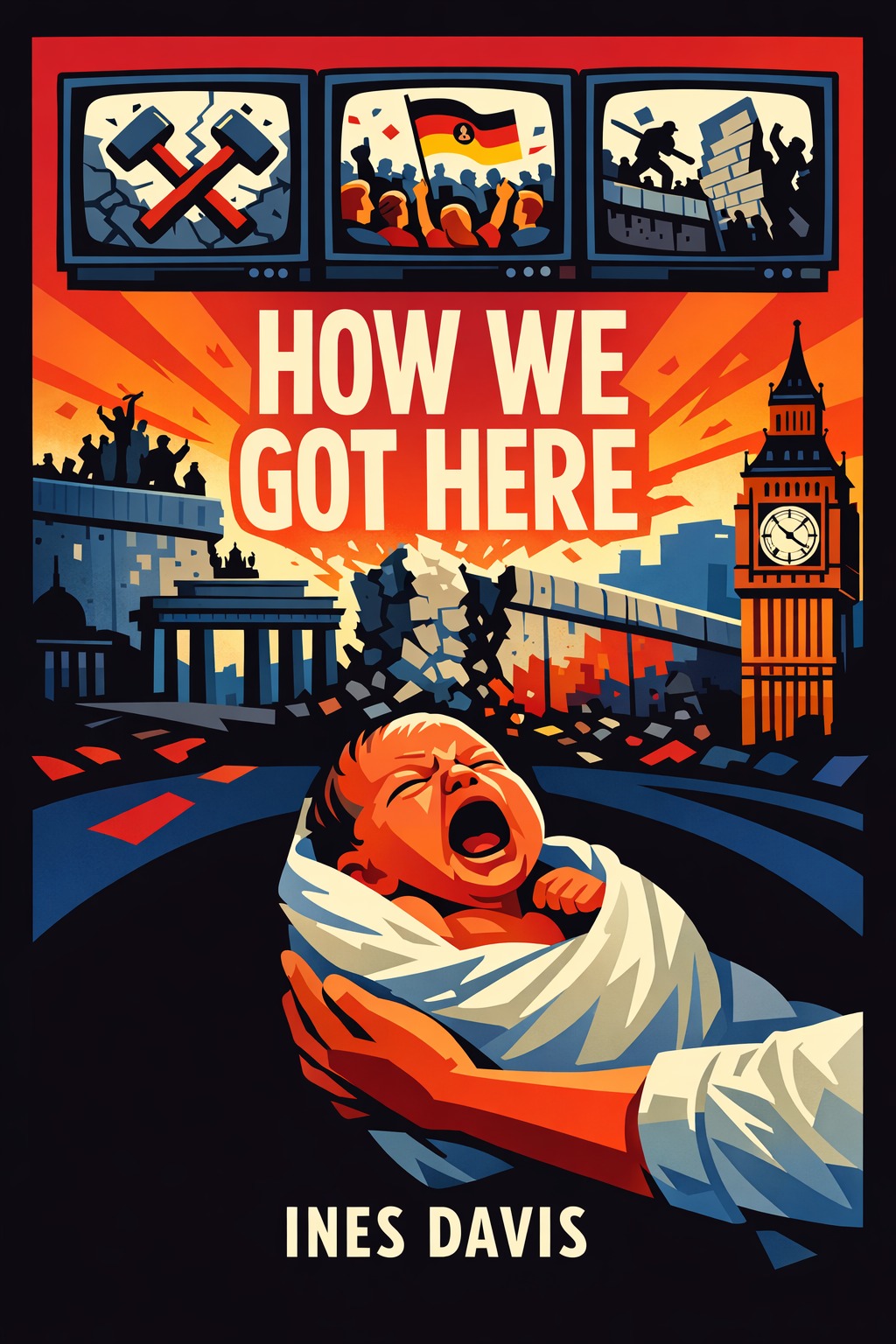
Photo of Ines Davis

Ines Davis is a British novelist and former archivist whose work explores memory, migration, and the quiet dramas of civic life. Born in Nottingham in 1986 and raised in South London, she studied history at University College London before completing an MSt in Modern British History at the University of Oxford. She later worked at the Imperial War Museum and the London Metropolitan Archives, where she developed a fascination with everyday documents that outlast grand narratives.

Davis is the author of Paper Atlas and The Harbor's Edge, the latter shortlisted for the Ondaatje Prize for its evocative sense of place. Her essays and reviews have appeared in the Guardian, the White Review, and Granta. She lives near Brockwell Park with her partner and an unruly herb garden, and teaches part-time on community storytelling and archival practice.

Ratings & Reviews

Hannah Beale
2026-02-28

Recommended primarily for readers who savor urban history braided with family memory and who are comfortable when plot yields to reflection. Museum professionals and students of postwar Britain may find the background rewarding.

Notes for classes and book groups include displacement, surveillance files, union disputes, and marital distance, presented without graphic scenes. The corporate-museum framework and iterative design meetings dampen momentum, so general-fiction readers seeking urgency may struggle.

Colin Adeyemi
2025-12-11

A meticulous concept that left me oddly detached.

  • Slow middle third
  • Repeated archive scenes
  • Glossy museum segments feel generic
  • Limited tension around the commission
Aneta Kowalska
2025-09-05

W warstwie świata i miejsca ta powieść działa najlepiej, bo Woolwich, prom, zburzone bloki Ferrier i czytelnie stają się pejzażem pamięci, choć momentami rozbudowane opisy przytępiają tempo.

Livia Romero
2025-06-20

Elena is a compelling study in divided loyalties; her scholar's caution keeps pace with the kid who traced Woolwich on the wall, and that tension animates every choice. Marta and Peter emerge through gestures and work-worn routines rather than speeches, while Marco's presence complicates without overpowering. Dialogue moves from clipped, wary union talk to the steam-soft cadences of kitchens, and those shifts feel true.

The choice between the museum gloss and the messier record feels earned and humane.

Gareth Long
2025-04-02

The structure alternates archives and memory: a braid that sometimes frays. Chapters set in sleek meetings perch beside dense research scenes, and the juxtaposition can flatten momentum. The prose is exact and quietly lyrical, but a reliance on object-cataloging drifts into mannerism. I admired the control and the cartographic clarity, even as I wished for more impulse and fewer committee notes.

Marina Okafor
2025-03-16

From the first pages, the Woolwich birth rings like a tremor from Berlin, and the ground of the story seems to tilt beneath Elena's cot. The novel lets that echo ripple through decades without losing sight of chipped enamel, bus routes, and the unphotographed corners where memory waits.

I loved how family archives become portals rather than trophies. A red passport, a bent ring, a letter that never arrives: each object opens a room where voices argue, forgive, and persist. Elena curates not just history, but consequence.

The Ferrier Estate haunts these chapters with laundry lines and demolished stairwells, while a glass office eyes the Thames and asks for a glossier tale. Hartwell's commission glitters, then glints cold, and Elena's refusal to sand the edges felt brave and necessary.

At stake is "what lasts of love, duty, and ambition," and the book answers by mapping city and self in the same careful hand. It treats a mother's hush and a union hall's chant as coordinates on one map.

I closed the final pages blinking hard, grateful for a story that believes in unruly truth and in the historian who risks her own narrative to honor it. Brava!

Generated on 2026-04-21 12:03 UTC