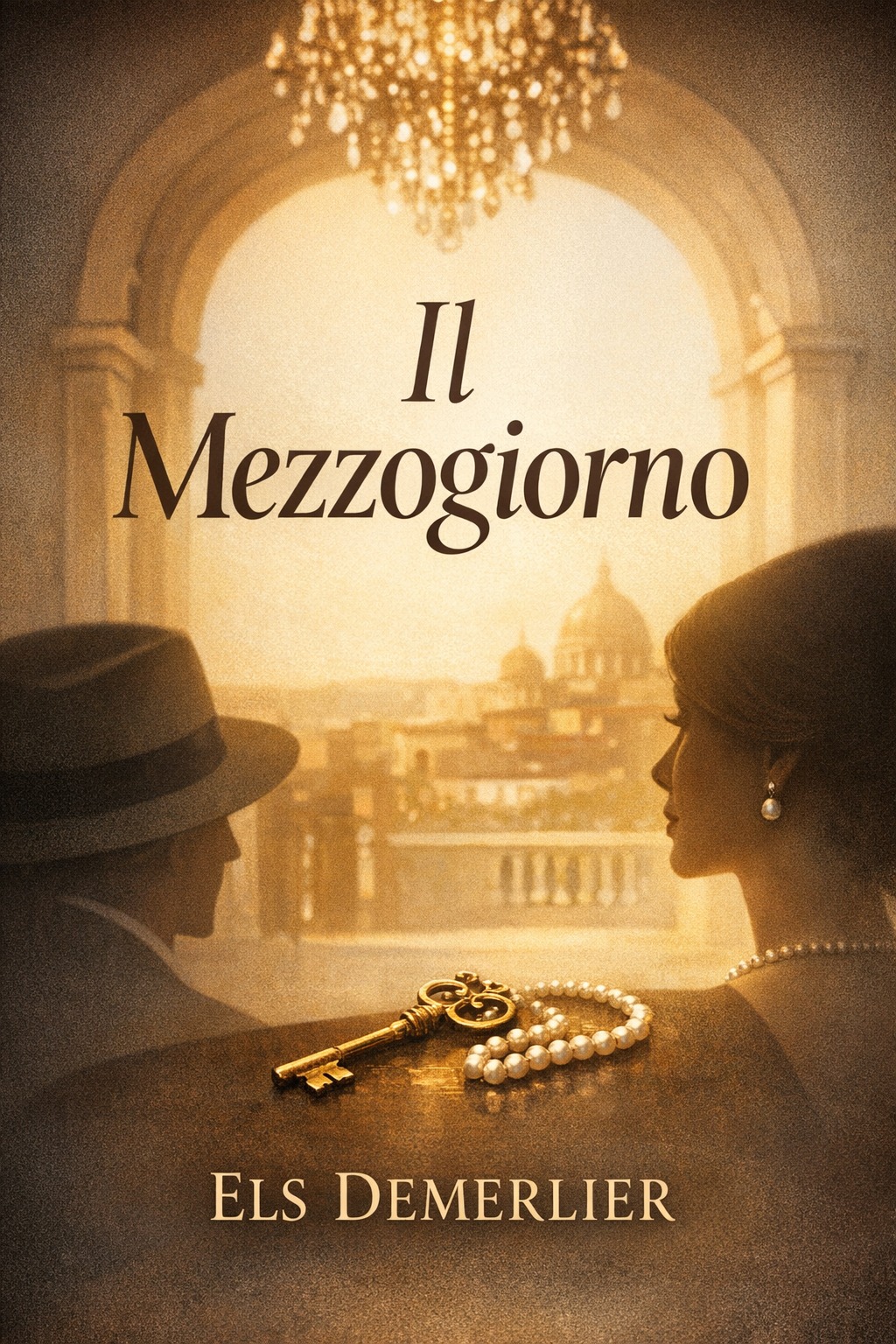
She is exactly what he's sworn to find. He is precisely what she's spent her life pretending to be. In the white-hot south they call Il Mezzogiorno, only the incandescent few are welcomed into the salons of the Circolo d'Oro—patrons, collectors, restorers whose surnames hang above doorways like bronze knockers. The rest press their faces to the glass. After the lean years when shutters stayed closed at noon and fortunes rearranged themselves, a new nobility of provenance took power. Those without a crest on their letterhead, without a story fit for a catalog—ordinary hands—were told to keep out of the light.
Giada Novello knows better than anyone how to live in the shade. Trained by her father, a quiet calligrapher who taught her to hear the lies in paper and paint, she forges histories with a steadiness born of hunger. To the circles of Lecce and Bari she is a conservator with a gift for seeing beneath varnish; to the brokers in back rooms she is the unknown signature, the rumor they call L'Altra Mano. It keeps her fed. It keeps her free.
Luca Romani has chased that rumor across archives and olive mills, as relentless as the noon sun. A cultural-crimes investigator on loan to the Carabinieri TPC, he wears his family's wine estate like a well-cut suit: elegantly, and only when he must. He believes in provenance the way others believe in saints. He is not prepared for the woman who touches a cracked copy of Caravaggio in Santa Lucia and, with a single intake of breath, saves him from a ceiling that would have shattered them both.
Gratitude becomes invitation. Overnight Giada is drawn onto the gilded stage of Le Prove del Mezzogiorno, a televised restoration showcase held at the Palazzo d'Aurora, where contestants rebuild terracotta amphorae blindfolded, coax pigments back from silence, and swear oaths over silver reliquaries. Winning means contracts and safety. Losing means exposure. Luca is assigned to guard the collection—and the woman who has begun to question the neat distance he keeps from desire.
If rivals with perfect pedigrees don't unmask her first, the man whose mouth tastes like late-harvest primitivo will, when he learns the truth carved into the ledger she forged. In the hours when the piazzas empty and the sea keeps its promises, Giada must decide whether to step into the sun with nothing but her own name, or keep loving Luca from the shadow where fakes look most like miracles.