Cover of Almanac: An Inventory

Almanac: An Inventory

Cookbooks · 368 pages · Published 2025-10-22 · Avg 2.8★ (6 reviews)

Food fills our feeds, hums from test kitchens, and sneaks into group chats. But when the noise fades and you are face to face with a dull Tuesday pantry, what do you actually cook? In Almanac: An Inventory, Bristol pastry chef and flavor obsessive Oliver Stanley offers a year mapped not by trends but by cupboards, hedgerows, and markets. Think ledger meets larder: a seasonal manual that teaches you to stock, swap, and stir with confidence, whether you are combing St Nicholas Market for quince in October or raiding an Asda aisle at 9 p.m. for tinned chickpeas and a lemon.

Arranged month by month, this cookbook assembles the practicalities that make food feel inevitable: the short list of fats and acids to keep on hand; the sweeteners that behave like personalities; the ways a Microplane, a Benriner, and a battered sheet pan can transform a weeknight. It is an inventory of place too, tracing supply chains from a Lyon boulangerie bench to a Copenhagen fermentation lab, and closer to home from the Bristol Harbourside to the North Devon shoreline where sea buckthorn stains fingertips an unruly orange. Between recipes are pocket essays on reading supermarket labels without getting spun, choosing flour for the temperamental British climate, and why a simple custard can be a better party trick than a 38-layer showstopper from the Bake Off tent.

Expect recipes built as resilient templates rather than one-off performances: January marmalade galette with bergamot and bay; March forced-rhubarb and ginger pudding with a rye crumble; April nettle and ricotta rotolo rolled on a tea towel; June strawberry and Stichelton salad with malt vinegar shards; July gooseberry and elderflower sorbet that tastes like rain on warm pavement; September brown-butter sea buckthorn tart foraged from blustery dunes; November sticky toffee pudding lacquered with treacle miso. Savory anchors sit alongside sweets: roasted brassicas with anchovy-brown butter breadcrumbs; a pantry cacio e pepe that leans on pink pepper and pecorino rinds; a cider-braised pork shoulder that becomes next-day hand pies.

Stanley folds in the why behind the how: emulsions as trust exercises, lamination as controlled impatience, tempering chocolate without tears, brining by gut feel and grams, and how the Maillard reaction can be sweetly persuasive in caramelized white chocolate. He interrogates the culture that shapes what we crave, from TikTok croissant cubes to the return of the dinner party, and suggests small, workable ethics for anyone who cooks: reuse syrup from poached pears for spritzes, save vegetable tops for a panch phoron pickle, and give leftovers a second life that is not penance but pleasure. There are shopping maps to Wing Yip and corner shops in St Pauls, notes on Billingsgate at dawn, and a quiet defense of the plain Tesco trifle.

Almanac: An Inventory is not a sprint to the next craze. It is a pocket companion to the year, a conversation at the bench about the ingredients you can actually find and the dishes that will not fail you. With bench notes, swap suggestions, and flavor wheels you can dog-ear, it invites you to cook like a person rather than a persona: curious, thrifty, and a little bit joyous.

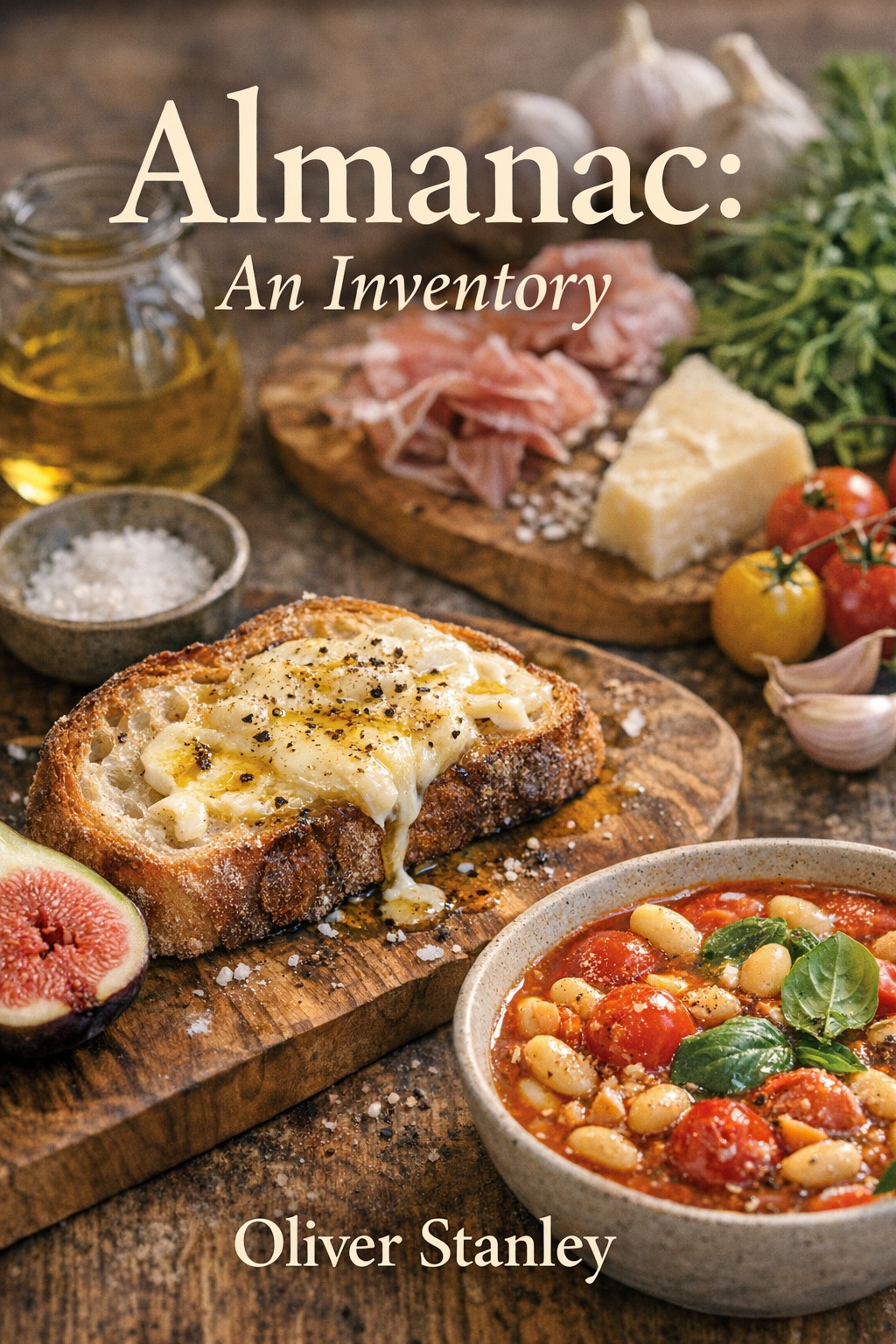
Photo of Oliver Stanley

Oliver Stanley is a British pastry chef, recipe developer, and food-science tinkerer based in Bristol. Trained at Westminster Kingsway College, he staged in Lyon and Copenhagen before leading R and D for a small bean-to-bar chocolate studio in Shoreditch, where he learned to coax big character out of small ingredients.

His desserts have appeared on menus at neighborhood bistros and pop-ups across the UK, and his writing has been published in The Observer Food Monthly and Olive. Since 2019, he has taught flavor balancing and sensory basics for home cooks and hospitality students, pairing rigorous technique with unbuttoned humor. As an author, Oliver blends instruction with cultural observation, writing sensory-forward cookbooks and essays that explore how taste is shaped by season, supply chain, and everyday habit. His first cookbook, Bitter or Sweet: A Twist on Your Palate, introduced readers to playful palate training and pastry logic; his later work expands that approach into seasonal inventories, resilient templates, and kitchen anthropology.

When not whisking, he forages sea buckthorn on the North Devon coast, makes test-batch caramels at unreasonable hours, and compulsively maps where to find the best quinces between Bristol and Bath.

Ratings & Reviews

Lila O'Rourke
2026-04-12

Clever templates, but the UK-specific sourcing sinks it for me. Forced rhubarb, sea buckthorn, Stichelton and malt vinegar shards are not Tuesday-night ingredients where I live.

Hannah Keel
2026-03-05

I cook for a tiny flat and a crowded week.

This hits a sweet spot between community-centre recipe booklets and Nordic fermentation manuals: friendly, seasonal, and surprisingly flexible. The nettle-and-ricotta rotolo rolled on a tea towel worked first try, the pantry cacio e pepe was dinner in 15 minutes, and the sticky toffee with treacle miso turned into a minor legend at our house. The gear chat about a Microplane and a Benriner is practical rather than precious, and the flavor wheels encouraged me to swap in what I had.

Pavel Morozov
2026-01-22

What resonated was the small, workable ethics. Reusing syrup from poached pears for spritzes, saving tops for a panch phoron pickle, and treating leftovers as pleasure rather than penance feel humane. The book keeps nudging you to "cook like a person rather than a persona", which is a tonic after social media noise. I did wish for more budget-aware examples when the advice veers into specialty cheese or sea buckthorn, but the intent is generous.

Sofía Delgado
2025-12-09

El mapa de abastecimiento es lo mejor. Del banco de panadería en Lyon al laboratorio de fermentación en Copenhague, y de Harbourside a la costa de North Devon, el libro teje un sentido de lugar que huele a harina y salmuera.

Sin embargo, la mirada es muy británica; varios ingredientes, como el espino amarillo y el ruibarbo forzado, son raros fuera de ese ecosistema. Aun así, las notas sobre mercados, el repaso a Billingsgate al amanecer y las rutas a Wing Yip ayudan a aterrizar las recetas en realidades concretas.

Tariq Noor
2025-11-15

Stanley writes like a pastry chef who annotates everything, brisk and nerdy and sometimes too pleased with the metaphor. The month-by-month structure is tidy, and the inventories up front keep you oriented, especially the short list of fats and acids and the notes on sweeteners-as-personalities.

Between recipes, the pocket essays on labels, flour choices, and custard technique are punchy. Still, a few intros drift into manifesto mode and the headnotes occasionally bury key ratios in chatter, which slows a cook who is mid-spill.

Erin Mayfield
2025-10-27

I opened this hoping it would calm Tuesday-night chaos, but it wound me up instead. The month-by-month rules feel strict, and the voice can be smug when you just need dinner now!

  • Gorgeous ideas, fussy sourcing
  • Too many UK-only cues
  • Tools list feels pricey
  • Templates need clearer ratios

Sea buckthorn from windy dunes? St Nicholas Market quince on a deadline? A dawn trip to Billingsgate before work? Come on. The shopping maps to Wing Yip and corner shops are great in theory, but a lot of this assumes a Bristol postcode and endless weekends.

The so-called resilient templates wobble. That pantry cacio e pepe leans on pink pepper and pecorino rinds, then suddenly pivots to gut feel just when I want grams. Marmalade galette with bergamot and bay sounds blissful, yet the swaps are vague and the Benriner and Microplane reads like a shopping list I cannot afford.

I am annoyed because the bones are clever, but the book keeps scolding my pantry. Weeknights need mercy, not romance about treacle miso and hand pies. Two stars, and I am cooking eggs.

Generated on 2026-04-17 12:03 UTC