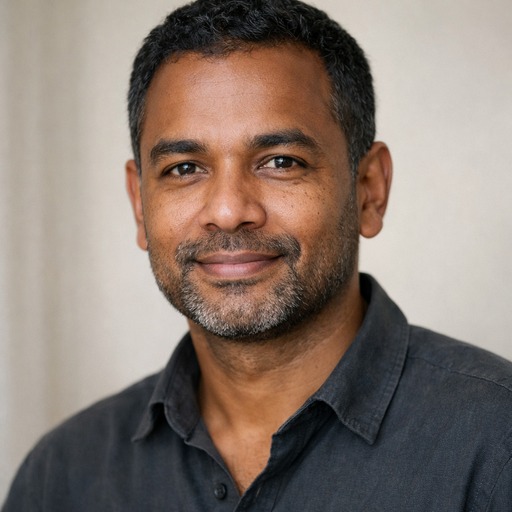
Cover of Loose Cannons

Loose Cannons

History · 432 pages · Published 2021-10-12 · Avg 2.5★ (6 reviews)

On a January morning in 1879, off Constantinople, the forward turret of HMS Thunderer blew apart during trials in the Sea of Marmara, heaving steel plating into the water and painting the waves with oil and cordite smoke. Amid the wreckage, a stunned gunner clawed over the blistered rim of the casemate and fell against the breech, alive. From that violent episode grew a trail of memoranda, court-martials, and experiments that would reshape the way empires aimed, fired, and feared their own artillery. Loose Cannons follows the hidden history of misfires and mavericks, the accidents that taught navies to think, and the stubborn individuals who refused to be ruled by doctrine.

From Percy Scott drilling crews to impossible precision at Devonport and on HMS Terrible, to Admiral Zinovy Rozhestvensky lurching through the Dogger Bank panic in 1904, to Admiral Togo Heihachiro at Tsushima reading the wind, the shell splashes, and the psychology of a doomed fleet, the book traces the precarious line between machine and man. In the Dardanelles, Corporal Seyit of the Ottoman coastal battery at Rumeli Mecidiye heaved a 276-kilogram shell into a Krupp gun when the hoist failed and struck the British battleship Ocean; at Petrograd, the cruiser Aurora fired a blank that set a city moving. Between their acts lie dockyards at Woolwich and Yokosuka, Barr & Stroud rangefinders fogging with breath, Dreyer fire-control tables clacking, and the unglamorous labor of keeping powder dry.

Drawing on letters in the National Archives at Kew, notebooks from the Istanbul Naval Museum, and gunnery logs from Sasebo and Simonstown, Ravi Mbeki reconstructs episodes where an error or an act of defiance bent the course of modern history: the mutiny aboard Potemkin, the powder-room blaze on the French battleship Iena at Toulon, the Halifax explosion of 1917, the first salvos off Santiago de Cuba. Across storms, misread flags, and orders scrawled in pencil on a conning tower door, commanders and stokers alike answer calamity with invention, hierarchy with mutiny, and routine with audacity. Their fate, whether decorated or disgraced, turns on the narrow tolerances of steel, salt, and will.

Photo of Ravi Mbeki

Ravi Mbeki is a South African historian of technology and empire whose work explores how machines, materials, and human judgment collide at sea and on land. Raised in Durban and educated at the University of Cape Town and the University of Oxford, he has taught modern history at the University of the Western Cape and served as a research fellow with the Centre for Maritime Studies in Cape Town.

Ravi Mbeki is the author of Tides of Iron: Gunnery and Empire, 1850–1918 and numerous essays in the Journal of Military History and The Mariner's Mirror. His research has taken him from the National Archives at Kew to the Istanbul Naval Museum and dockyards in Simon's Town and Yokosuka. He has consulted for museum exhibitions and radio documentaries, and his work was awarded the Society for Nautical Research Anderson Medal and shortlisted for the Sunday Times Alan Paton Award. He lives in Cape Town with his partner and two dogs.

Ratings & Reviews

Samir Chowdhury
2026-01-08

A rangy, detail-rich tour of naval misfires from Thunderer to Tsushima that coheres into a meditation on how institutions learn, with enough smoke, salt, and stubborn personalities to keep curiosity firing.

Luca Darling
2025-03-22

Mbeki assembles a cast that should crackle — Percy Scott, Rozhestvensky, Togo, Corporal Seyit, the men around Aurora — yet their voices feel distant. Letters from Kew and notebooks from Istanbul appear in brief flashes, but interiority never quite arrives, replaced by technical context that keeps people at the margin. The result is a pattern of tantalizing glimpses: a drillmaster obsessed with precision, a commander reading wind and splash, a stoker facing the powder room, all framed by hardware. I wanted more time in the heads that made the calls and fewer pages in the rooms where the shells were measured.

Marta Kovacs
2024-05-01

The material culture of naval gunnery comes alive here: damp casemates, fogged rangefinder glass, the clack of a Dreyer table, the smell of cordite working into canvas. The dockyards at Yokosuka and Woolwich are rendered with a mechanic's patience, and the Sea of Marmara trial of Thunderer is both eerie and precise. I wanted more diagrams and maps to anchor the many shifts between ships and straits; without them, the geography and machinery sometimes blur. Still, as a tour of steel meeting salt and will, it earns its keep.

Kenji Moro
2023-07-18

As history, this is impressively sourced; as narrative, it stumbles. Chapters spool out like case files, with long digressions on apparatus and procurement that break momentum. The timeline zigzags between the Sea of Marmara and Tsushima and back to Woolwich, leaving transitions to do too much heavy lifting. Mbeki's sentences often stack clauses until the core point goes fuzzy, and the habit of summarizing letters instead of letting them speak drains color. There are sharp passages — the Barr & Stroud fiascoes ring — but the structure rarely gives them room to resonate.

Asha Menon
2022-01-15

I picked up Loose Cannons expecting a clear argument about how accidents reshape doctrine, but by the third chapter my patience was ablaze.

The book promises "accidents that forced navies to think" and then refuses to confront what that thinking cost. We get memoranda, court-martials, and committee minutes, but the human stakes blur until they are just shadows behind blast diagrams.

Whole sections read like a manual. Pages on rangefinders and the Dreyer table smother the stories of crews who breathed powder dust and salt; I was grinding my teeth waiting for the author to stop lecturing and start reckoning. The Thunderer catastrophe should feel like a reckoning, not a lab report.

Even the most arresting episodes — Dogger Bank panic, Tsushima, the blank from Aurora — arrive oddly muted, as if the narrative is afraid to let anyone speak above a murmur. I kept yelling at the page for a spine, for an argument that does more than tut at procedure.

By the time we reach the Dardanelles and Halifax, the throughline is lost, and what remains is a stack of fascinating notes welded into a wobbly thesis. It is infuriating to see so much research avoid the question of responsibility and consequence.

Ellie Duarte
2021-12-03

For readers already comfortable with naval jargon and late-19th to early-20th century conflicts, this will scratch a very specific itch. It suits students of maritime history, wargamers curious about pre-dreadnought fire control, and anyone who wants archival grit rather than hero worship.

Content notes: recurring descriptions of explosions, severe burns, and catastrophic ship damage; brief mentions of mutiny and courts-martial; technical detail that may overwhelm newcomers. The index is solid, the endnotes are extensive, and there are vivid moments with Percy Scott and Admiral Togo, but newcomers may want a primer before diving in.

Generated on 2026-04-14 12:03 UTC