
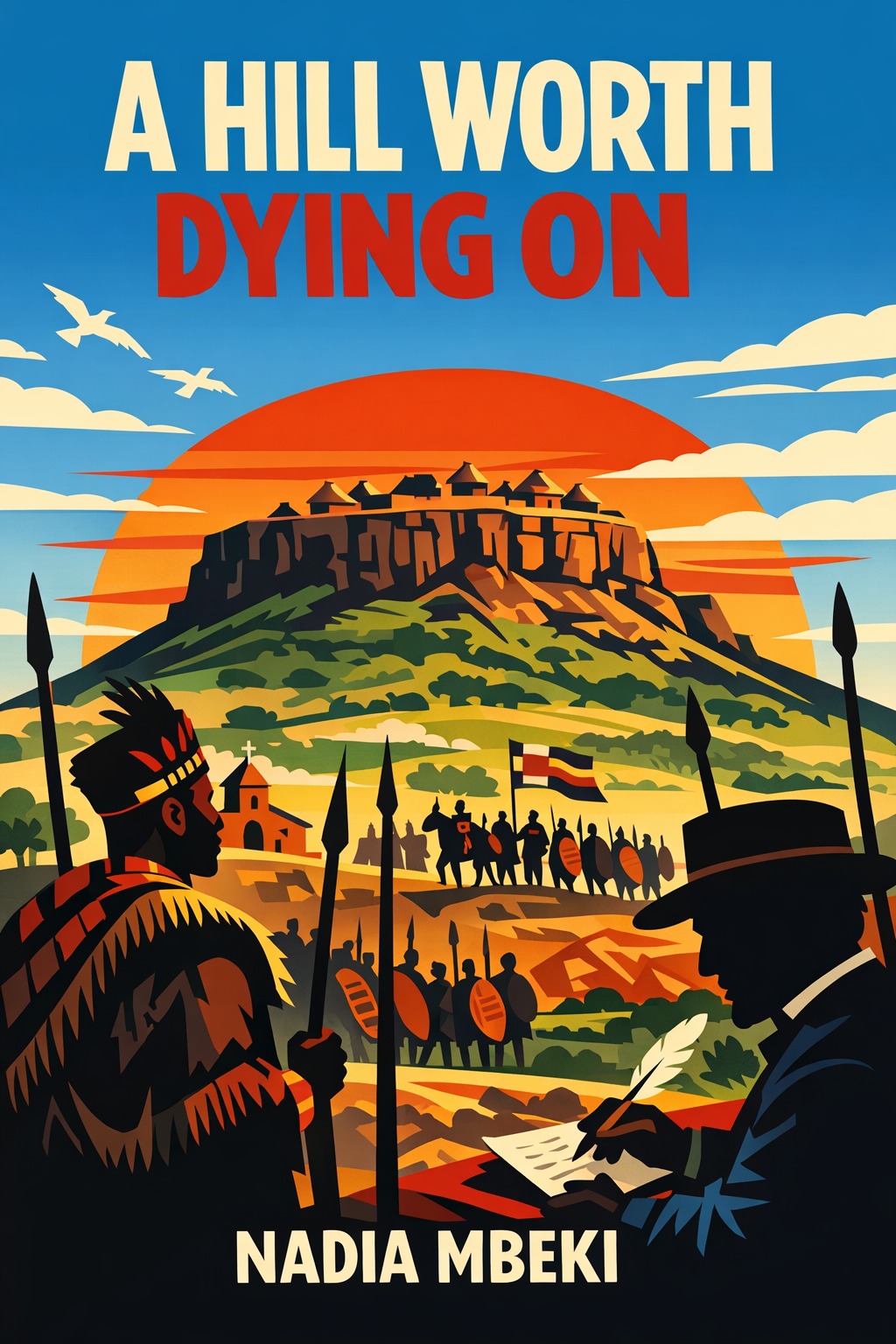
Cover of A Hill Worth Dying On

A Hill Worth Dying On

History · 352 pages · Published 2024-10-08 · Avg 2.5★ (6 reviews)

In A Hill Worth Dying On, historian Nadia Mbeki reconstructs Thaba Bosiu's rise from basalt plateau to national sanctuary under King Moshoeshoe I. Drawing on French missionary Eugène Casalis's letters, Orange Free State field reports, and Basotho praise-poems, she narrates successive sieges culminating in Commandant Louw Wepener's fatal 1865 assault. Fort lines, waterholes, and cattle paths are mapped alongside cairns, powder horns, and clay beer pots recovered on the slopes. The hill becomes a working machine of survival, where diplomacy, ecology, and stonework held off hunger, bullets, and treaties drafted in Bloemfontein.

Mbeki then follows Thaba Bosiu into the present, through court archives, tourism brochures, and interviews in Ha-Mohale, Maseru, and Ladybrand. She shows how a battlefield turned archive structures modern claims to land, language, and security along the Lesotho–South Africa border. With annotated maps and original GIS overlays, the book ties rock shelters and footpaths to school syllabi, museum labels, and family graves, asking who gets to stand on the summit and speak for it.

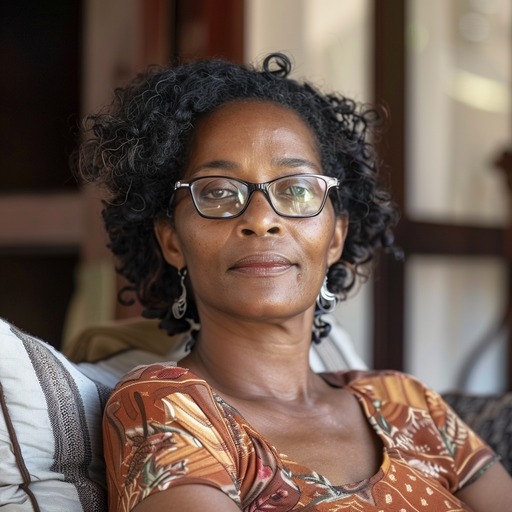
Photo of Nadia Mbeki

Nadia Mbeki (b. 1984, Ladybrand, Free State) is a South African historian of borderlands and memory. She earned a BA from the University of the Witwatersrand, an MA from the University of Cape Town, and a DPhil in African history from the University of Oxford, focusing on mountain fortifications in the southern African interior. Since 2016 she has lectured at the University of the Free State, where she directs a field lab on historical GIS and oral archives. Her articles have appeared in the Journal of Southern African Studies, Kronos, and African Studies Review, and she has consulted on heritage mapping projects in Lesotho and the Eastern Free State.

Ratings & Reviews

Sipho Nkosi
2026-03-27

Best for advanced undergraduates and researchers in southern African history, border studies, and heritage management. General readers looking for a flowing battlefield narrative may find the notes and cartography heavy, but classrooms will appreciate the way maps, reports, and praise-poems are set side by side.

Content notes: siege warfare, colonial violence, death in battle, and blunt language in period documents. Pair with a field trip or virtual map exercise; expect to scaffold the GIS sections for less experienced readers.

Maya Du Plessis
2026-01-18

The strongest idea is also the most elusive: Thaba Bosiu as "a battlefield turned archive," a place where stones argue about land, language, and security across the Lesotho-South Africa border. Yet the thematic thread frays whenever the book slides into procedural detail, and the questions of who speaks for the summit feel posed rather than pursued.

Naledi Pheko
2025-10-09

This hill should feel like a living engine of survival, yet the sense of place keeps slipping away.

Waterholes, cattle paths, fort lines, all cataloged with precision, and somehow the ground goes flat. The GIS talk turns the plateau into a spreadsheet grid, and the wind never quite gets onto the page.

I wanted mud, cold, smoke, the scramble between boulders. Instead I got labels and layers that told me where to stand without letting me look. I kept waiting for the summit to arrive!

The present-day scenes in Maseru and Ladybrand ought to widen the frame, but they read like appendices. Tourism brochures and museum labels march by, and the border feels abstract when it should bite.

There is knowledge here, no question. But the hill that guarded people for generations never rises to meet the reader, and that gap made me restless.

Luca Moretti
2025-06-30

Mbeki draws real people out of the record, especially Moshoeshoe I, who comes across as both strategist and caretaker. Casalis becomes a prism rather than a hero, his letters revealing as much about European anxieties as Basotho diplomacy, while Wepener is glimpsed at the edge of that final assault rather than mythologized. The book keeps inner life at arm's length, but the praise-poems and present-day voices give flashes of personality that kept me reading.

Thandi Mokoena
2025-02-14

I wanted a history that breathes; instead I got an index that constantly stepped between me and the hill.

Chapters ping from Casalis's letters to court archives to interviews, yet the handoff is fumbled. Every transition pauses for a detour through methodology, and the narrative slumps while the author clears her throat again.

The annotated maps and GIS overlays promise clarity, but they crowd the eye. I kept flipping back to legends while the story cooled, tracing lines that felt more like homework than orientation.

Prose tone swerves from warm to bureaucratic in a page. Quotations are dropped in like stones, without enough framing to make them sing, and the footnotes swell until they feel like a second book muttering alongside the first.

Yes, the research is deep. But the rhythm is choppy, the momentum forever rerouted by apparatus, and the result is a hike that should have been bracing but left me winded for the wrong reasons. I was exasperated by the stop-start grind!

Asher Patel
2024-11-02

A meticulous, sometimes static history that turns Thaba Bosiu into a map you can walk, and occasionally a maze you must endure.

Generated on 2026-04-13 13:47 UTC