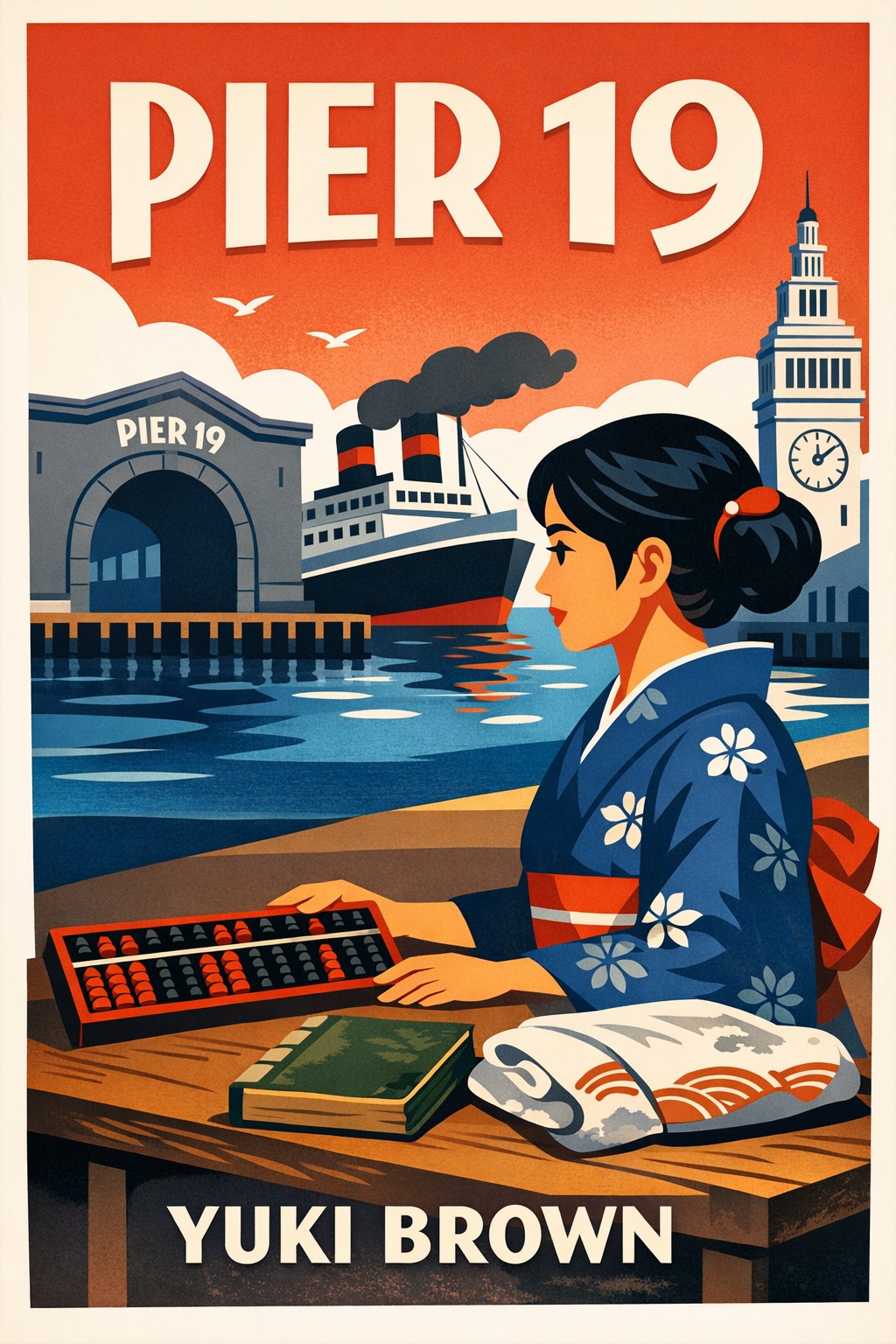
On San Francisco's Embarcadero in 1919, sixteen-year-old Aiko Tanaka helps at a tea stall beside Pier 19, translating ship manifests for her half-blind father, a carpenter injured in the quake. When a trunk from Yokohama arrives with a red-lacquered abacus, a salt-stained kimono, and a greenbound ledger stamped Pier 19, Aiko is pulled into the orbits of stevedores, union men, and visiting sailors. She resists an arranged engagement brokered by Mrs. Kameda, a dressmaker tied to a shipping boss, choosing instead an apprenticeship under Lucia Ferretti, an Italian boatbuilder whose son, Marco, hides leaflets for organizers. Raids, influenza rumors, and a midnight fire on the wharf bind Aiko to Mateo Cruz, a Filipino lighterman, in a pact that will ask everything of her as immigration walls rise and war shadows close in.
Spanning from the open-air markets of Chinatown and Japantown to lecture halls at UC Berkeley, from cannery lines in San Pedro to gambling rooms behind bait shops, Pier 19 follows three intertwined families—the Tanakas, Cruzes, and Ferrettis—as letters are burned, names changed, and debts tallied at dockside meetings. During incarceration at Topaz, Aiko fashions kites from rice paper to keep her son Kenji's hope alive; decades later, he studies civil engineering and helps retrofit the waterfront after quakes, while his sister Naomi fights for union protections that nearly cost her marriage. Richly layered and humane, Pier 19 is a story of stubborn women, tender brothers, fathers gripped by compromise, and the sly luck of tides, as they carve belonging against the indifferent heave of history.