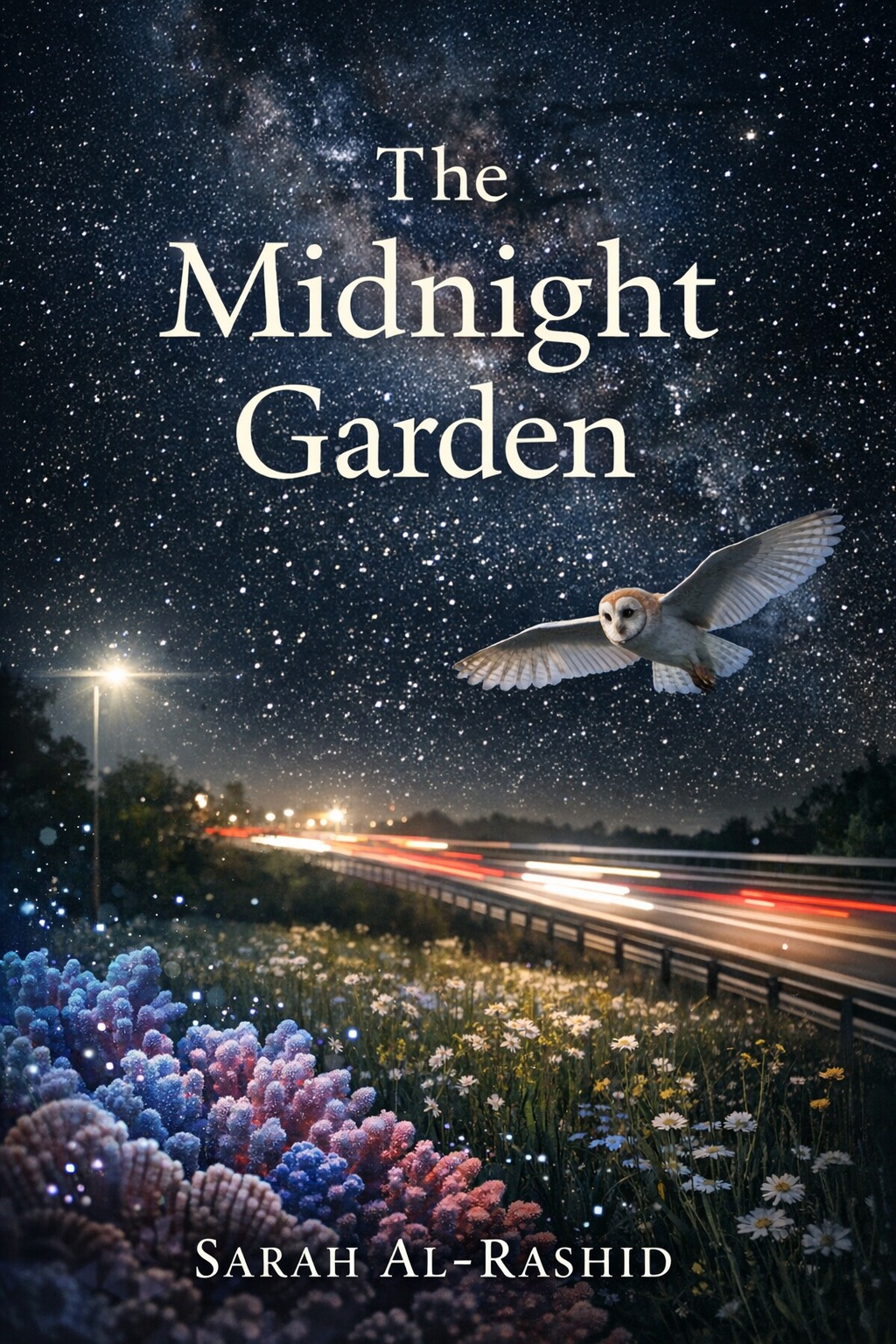
The Midnight Garden: It's not just you—the night feels brighter, thinner, wrong. The darkness that shaped life over billions of years is being unstitched by cheap photons and thoughtless design. From the coral spawning off Ningaloo Reef to barn owls above the A1 in Northumberland, cycles once tuned to lunar phases now drift to the cadence of parking-lot LEDs and backlit billboards. That was no accident, and it won't fix itself. Here's how we can rewild the dark—how we can tend the garden that blooms after sundown.
We are living through the Great Unnightening—a time in which the systems meant to make us safe, productive, and awake are colonizing the hours that biology set aside for repair, courtship, migration, and sleep. It's frustrating for stargazers in Flagstaff, demoralizing for physicians battling teen sleep debt in Seoul, and terrifying for hatchling turtles along Florida's Space Coast. Satellite maps from NOAA's VIIRS and field notebooks from Sulawesi to the Camargue tell the same story: the night is being paved with light.
The once-glorious firmament has been traded for "platforms" of illumination that rose to dominance because they delivered bright, cheap lumens efficiently and reliably. But once cities were locked into fixtures, contracts, and standards, the light bosses turned the dial: bluer spectra, higher color temperatures, intrusive glare. Municipalities that flocked to 4000 K LEDs for budget relief discovered circadian scatter and insect collapse. Once we were all locked in—utilities and users—the vendors stripped out nuance, save the bare minimum needed to stave off lawsuits. Case studies move from Jeddah's Corniche to Wellington's coastal roads, from Potsdam's lamp-swaps to Chicago's alley retrofits; from Nyctalus noctula and Calonectris diomedea to Arabidopsis thaliana in growth chambers humming at 6500 K.
In The Midnight Garden, Sarah Al-Rashid shows where this comes from: not iron laws of progress, but specific policy choices and measurement regimes—CIE 150 glare limits, procurement scorecards that prize wattage over wavelength, zoning that mistakes brightness for safety, glass façades that turn migration routes into traps. These are choices that can be undone. This is a dark-sky disassembly manual, a road map for seizing the means of illumination: shielded luminaires in Tucson, amber phosphor LEDs in Muscat, adaptive dimming in Uppsala, blackout curtains in NICUs, bird-friendly frit patterns, community science via Globe at Night and OpenStreetMap's light surveys. It is a diagnosis, and it is a cure.