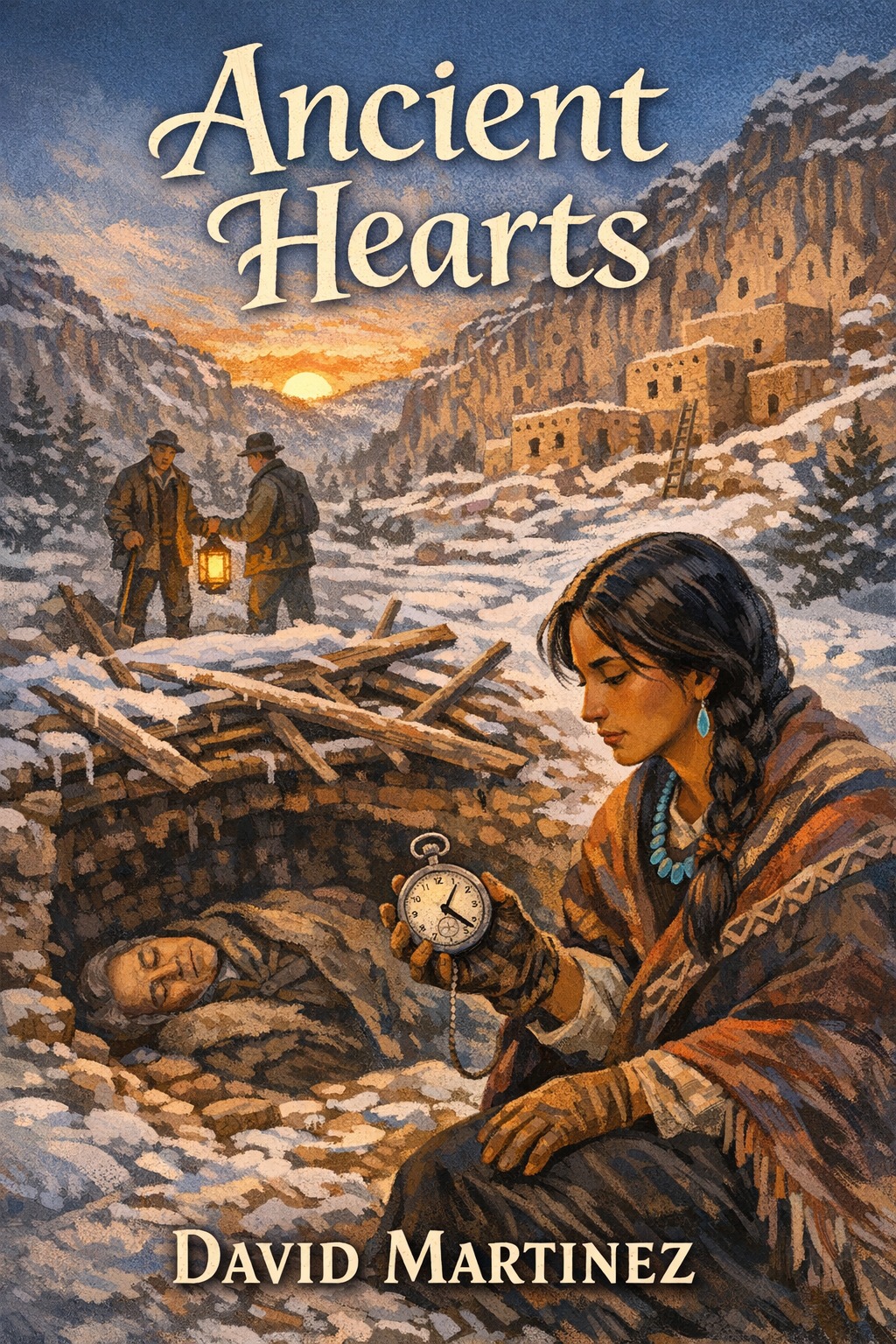
Bandelier, New Mexico, 1936: When heavy snow buckles the cribbing over a partially restored kiva in Frijoles Canyon, workers pry back a wall of new plaster and find the art patron Asa Kellerman sealed inside, his silver pocket watch stopped at dusk. Pilar Naranjo—a Tewa translator, midwife, and the quiet center of a sprawling CCC camp—has been the ear of the excavation: she catalogs each potsherd and cordmark, hears every bargain struck between professors and vecinos, and keeps a ledger in brown ink of births, fevers, and the unspoken treaties fraying between pueblo and museum. From the first strike of a mallet, Pilar knows the chamber rings wrong; with a drum and a borrowed tuning fork, she maps a hollow where no cavity should be. The dead man is a benefactor and a pillar of the Santa Fe art colony, which means men with influence will decide what the canyon says.
Months earlier, in her field notebook—and on a brittle lacquer disc cut with a radio engineer's portable recorder from a Santa Fe station—Pilar documented a violent night when two respected gentlemen cornered a riverside potter after a feast-day dance. One of those men is now entombed. When the county physician calls Kellerman's fate an unlucky collapse and the university's lead archaeologist threatens to seize Pilar's notes as "slander," she is pushed to investigate with the tools she trusts: listening to wind in the piñons, to rumors braided between camps, to the resonances of rooms designed to hold ceremony and keep secrets.
Over the course of one winter, as spring hearings near and whispers harden into factions, loyalties fracture among pueblos, patrons, and the young CCC enrollees whose wages hang in the balance. Pilar's ledger and her crackling recording spin to the center of a scandal that endangers her family, implicates the man she loves—a soft-spoken surveyor who can level sound as well as earth—and forces her to decide where justice ends and kinship begins.
Clever, layered, and subversive, Ancient Hearts listens for the truths museums plastered over, illuminating a season when New Mexico's past was dug up even as its people were told to be quiet. Martinez, David conjures the canyon's acoustics, the politics of salvage and song, and an unsung woman who refused silence and wrote herself into history.