
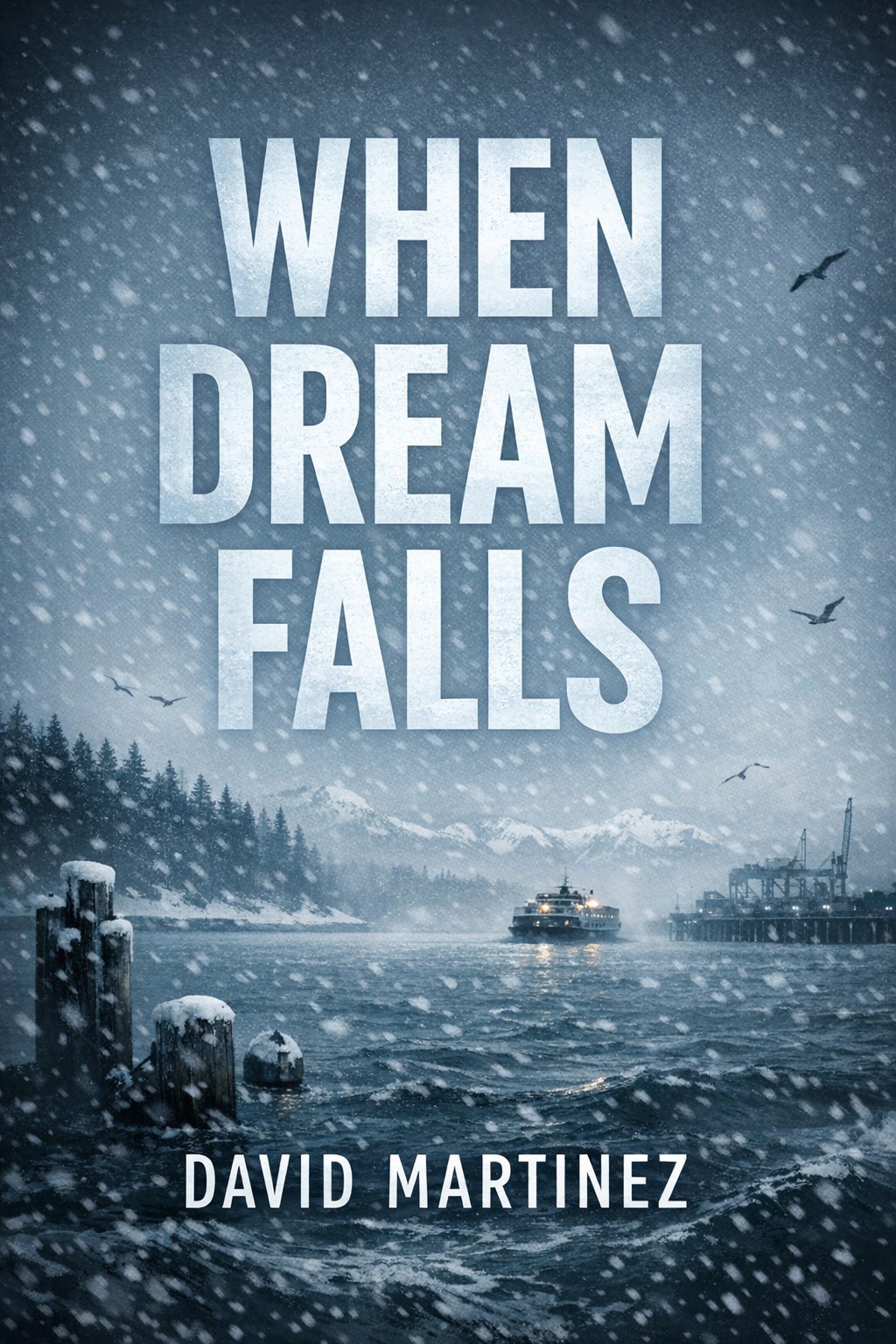
Cover of When Dream Falls

When Dream Falls

Thriller · 312 pages · Published 2025-11-14 · Avg 2.3★ (6 reviews)

Winter on Puget Sound. My name is Raya Ortega, and in a few short hours I'm set to stand in a lecture hall at the Pacific Maritime Institute and prove that my brother Luis didn't drown by accident. In a rented machine bay off Dock Street, my jury-rigged array of hydrophones and salvaged preamps is tuned to the Tacoma Narrows, ready to map the channel like a heartbeat, to pull a pattern out of water that everyone else calls noise. The committee is coming. So is the press. Despite the wreckage of this year, tonight is supposed to be the clean signal, the turn toward daylight.

There's just one problem: someone else has been listening longer than me. The data on my recorder has been spliced, the tides tables swapped, and a ferry deckhand named Lyle keeps showing up two steps ahead. If I run the demo, I'll light up more than a current—I'll ping a predator that knows my name. If I bail, the proof drowns with me and Luis stays a cautionary tale. The water is already moving, the hum under the bridge growing teeth, and if I'm not careful, the Narrows will take me exactly the way they took him.

Martinez, David is an American writer and audio engineer born in 1981 in Las Cruces, New Mexico. A former U.S. Navy sonar technician, he spent six years aboard destroyers mapping underwater soundscapes before earning a B.S. in electrical engineering and a graduate certificate in acoustics from the University of Washington. He has worked as a field recordist for documentary crews in the Sonoran Desert, a maintenance lead in a Seattle maker space, and a consultant designing sound masking systems for hospitals. His short fiction has appeared in regional anthologies and small-press magazines, and he has taught community workshops on speculative worldbuilding and the physics of sound. He lives in Tacoma with his partner and a rotating collection of salvaged synthesizers.

Ratings & Reviews

Jonah Peretz
2026-03-12

Best for readers who enjoy maritime settings and technical detail around audio research, plus a slow burn that favors atmosphere over twists. Content notes include drowning, stalking, data tampering, and professional gaslighting. Older teens and adults could handle it. If you need brisk momentum or a densely clued puzzle, this may feel more static than suspenseful.

Sahana Iyer
2026-03-01

This is really about discernment: what counts as proof in a world that keeps blurring grief with paranoia. I liked how Raya tries to "pull a pattern out of water that everyone else calls noise," and how that mirrors being listened to by forces she cannot see.

Still, the motif leans hard on repetition, and the ending's ethical aftertaste feels softened. The image of the channel turning predatory lingers, though, and that resonance gives the final pages a chill.

Darnell Quinto
2026-02-14

Winter on the Narrows is a strong stage, with the bridge's hum, ferry horns, and brackish cold creating an audible map. The machine bay off Dock Street, the salvaged gear, the swapped tide tables, all feel tactile.

But the water's rules and the surveillance cat's cradle around them stay fuzzy. The book asks us to believe a predator is listening, everywhere, yet the social and maritime networks that could give that threat teeth are sketched rather than built.

Eliza Montrose
2026-01-08

Raya reads as a stubborn, weary mind trying to keep grief from boiling over, and that internal throttle is believable. Luis exists in scraps, notes, and soundscapes, which gives their bond a melancholy afterglow.

Lyle is intriguing in premise but thin in practice, more a shadow at the rail than a person with pressure points. Dialogue has a clipped, working-waterfront cadence that fits, even if several side figures blur into functionaries.

Trevor Ng
2025-12-03

The first person voice promises urgency but keeps circling the same signal vs noise metaphors until the effect is numbing. Jargon around hydrophones and preamps is authentic, though it often lands as lecture rather than texture.

Structurally, the countdown to the Institute demo should tighten the book. Instead the middle stalls as clues repeat and the sabotage beats are telegraphed. The closing sequence finally hums, yet the route there feels padded and fussy.

Marta Valdés
2025-11-20

Buen ambiente frío y salino, pero el ritmo se vuelve irregular y el misterio del audio nunca cuaja, incluso cuando el marinero del ferry acecha y las tablas de mareas se cambian.

Generated on 2026-03-19 12:03 UTC