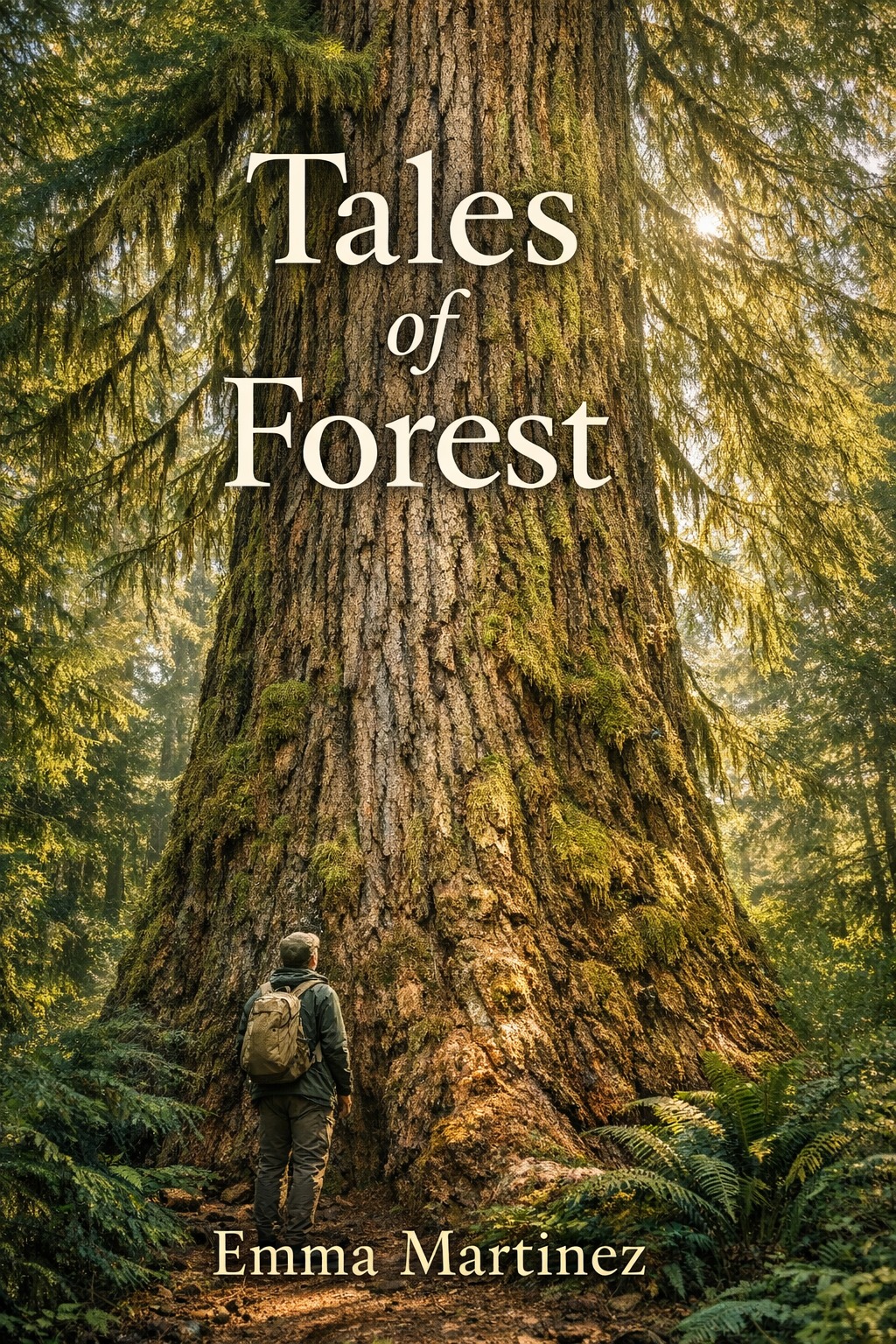
Cover of Tales of Forest

Tales of Forest

Nonfiction · 256 pages · Published 2023-05-16 · Avg 4.0★ (5 reviews)

Most of what the forest measures will outlast you, and that can feel like an insult and a relief at once. Stand beneath a 700-year-old Douglas-fir in Washington's Hoh Rain Forest, consult your color-coded calendar, and realize that your life's tidy boxes vanish against centuries of rings. We keep arriving with GPS watches, hydration packs, trail apps, and a plan to conquer miles before lunch; we collect hacks for faster treks, lighter packs, tidier photos, a wilderness optimized for throughput. But these techniques often sharpen our panic instead, as if the salal and nurse logs were obstacles to efficiency rather than invitations to attention. The more we hurry, the more that glint of meaning—lichen bristling on a cedar snag, a winter wren's spill of notes over the Queets River—slides just out of view. Rarely do we connect our daily crisis of pace to a larger ecological misapprehension: the refusal to live by the forest's tempos, to let limits, seasons, and disturbance set the terms.

Drawing on interviews with botanists in Białowieża, Ojibwe sugarbush keepers near Grand Portage, and coppice workers in Sussex; on the counsel of Aldo Leopold, Robin Wall Kimmerer, and Zen teacher Shunryu Suzuki; and on months of field notes kept with a dirt-stained Rite in the Rain pad, Emma Martinez offers a wry, practical, and quietly radical guide to time in the woods. Instead of promising that you can see everything, she shows how to choose one grove, one path, one hour—then keep returning. She outlines rituals for embracing finitude: a weather log taped to the fridge, a weekly sit-spot under a bigleaf maple, and a volunteer morning with a trail crew that teaches you the patience of a Pulaski. Tales of Forest suggests that our habits around attention are cultural, not destiny; that we could trade conquest for relationship; and that by pacing ourselves to bark, fungus, and floodplain, we might yet learn to belong.

Martinez, Emma (b. 1986) is a Mexican American writer and field ecologist raised in El Paso, Texas. She studied environmental science at the University of New Mexico and earned an M.S. in forest ecosystems from Oregon State University, where she researched post-fire regeneration of Douglas-fir and tanoak. Her essays and reported features have appeared in regional newspapers and small magazines focused on conservation and outdoor culture. She has worked as a seasonal tech for the National Park Service in Olympic National Park and later coordinated community science projects on invasive plants for a nonprofit in Port Angeles, Washington. Martinez teaches nature writing workshops, serves as a volunteer sawyer on trail crews, and speaks on the intersection of attention, culture, and land stewardship. She lives on the Olympic Peninsula with a trail dog named Larch and spends too much time labeling field notebooks.

Ratings & Reviews

Claudia Menendez
2025-09-18

As a librarian, I'd hand this to hikers, naturalists, and land-steward volunteers who crave reflection over gear specs. High school and up; no graphic content, though there is frank talk about burnout and our collective hurry.

Strengths are its grounded rituals and respectful nods to Indigenous practices. Caveat: the counsel can loop back on itself, so skimmers may find repetition. If you expect trail maps or training plans, look elsewhere; if you want a companion for a weekly sit-spot, this will serve.

Ivy Park
2025-04-22

Read as place-writing, the book is a passport between Hoh Rain Forest mist, Białowieża's stubborn old-growth, a Sussex coppice, and the hum of an Ojibwe sugarbush near Grand Portage. You can feel spray from the Queets River and the rasp of lichen on a cedar snag. The stakes are humble yet real: to align our calendars with floodplain, fungus, and bark before panic hardens into culture. I wanted a touch more on climate pressures, but as an immersion in forest tempos it's gorgeous.

Mateo Shah
2024-01-14

As craft, this sings. Martinez braids interviews, field notes scribbled in a Rite in the Rain pad, and practical rituals into clean chapters that never talk down to the reader. The voice is wry and generous, with concrete images that anchor the philosophy. Pacing matches the subject, patient without drifting. I loved how the Pulaski lesson becomes an ethic for editing one's habits.

Nikhil Rao
2023-11-30

Martinez keeps returning to a simple counterculture of attention: choose a grove, pick an hour, come back. The old Douglas-fir becomes a metronome against modern restlessness. She argues that we can "let limits and seasons set the terms" and still find agency. The interviews serve as mirrors more than authorities, which fits the book's humility.

It made me want to calendar fewer goals and more noticing.

Sara Donnelly
2023-06-05

A steady, quietly persuasive field guide to slowing down; Martinez swaps summit fever for a sit-spot under bigleaf maple and a weather log on the fridge. I finished measuring distance less and noticing moss more.

Generated on 2026-03-14 12:02 UTC