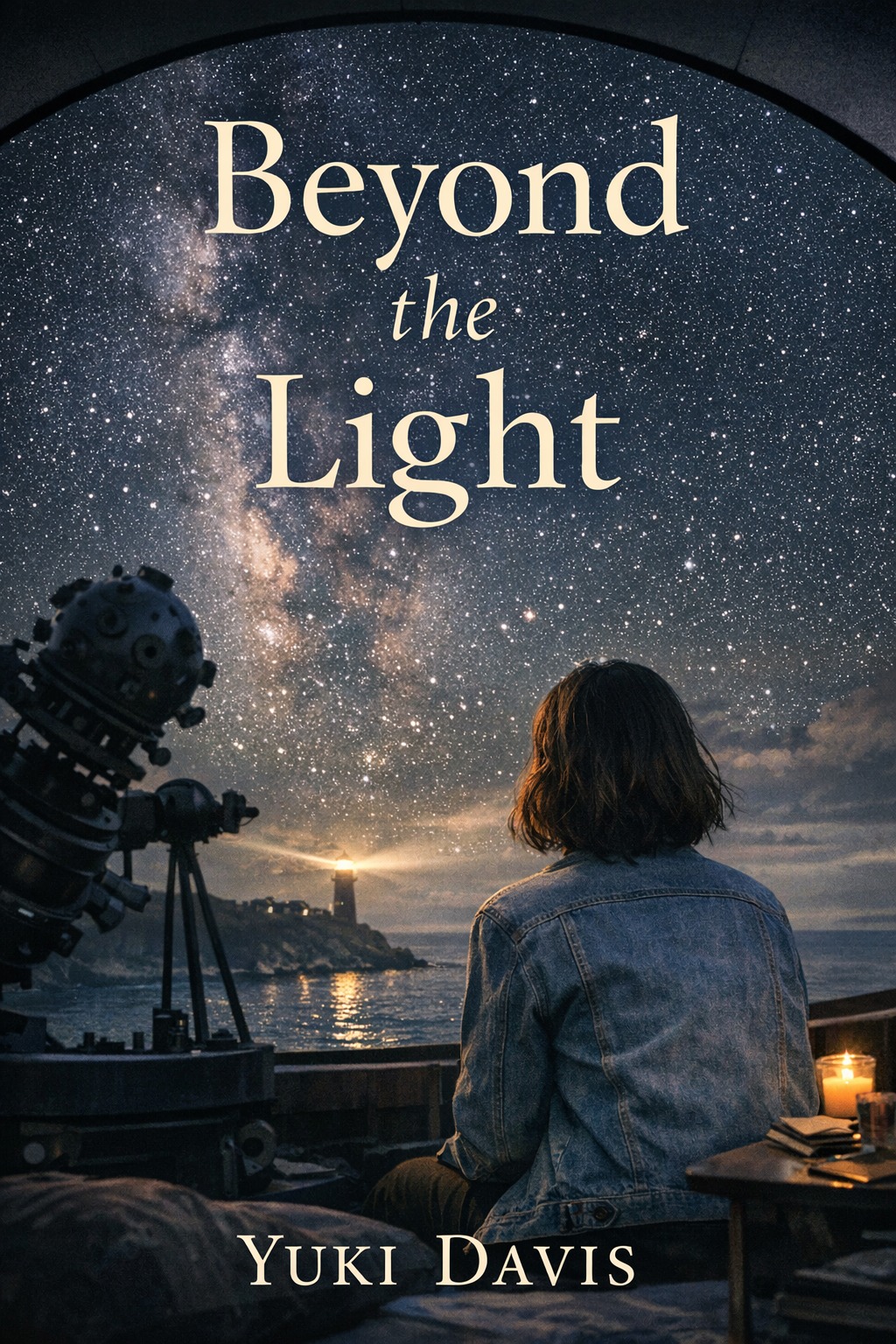
Jenny Offill meets Ling Ma in this luminous, mordantly funny debut about a backstage misfit who turns a shuttered seaside planetarium into a midnight confessional for strangers’ memories—a poignant exploration of grief, forgiveness, and the crooked ways we audition for redemption. Mara Iwata is a thirty-one-year-old lighting technician whose life has been dimmed to the faintest pilot light. She rents a windowless alcove above a vape shop in San Pedro, lives on gas station coffee and microwave tamales, and nurses a relentless hiss of tinnitus from years under hot rigs. Her mother’s memory care facility has issued a final notice; without a balloon payment, they will move her to a county ward across the river. Two years earlier, Mara’s younger brother, Kenji, vanished during a night swim off Cabrillo Beach, leaving behind a cracked phone and a box of color gels. On a fog-thick Tuesday, Mara pries open the rusted doors of the Point Fermin Sea & Sky Dome, a defunct planetarium with a sleeping Zeiss projector and seats upholstered in maroon duct tape. She calls it the Afterimage Project: every midnight for thirteen nights, she will project whatever people bring—thumb drives, VHS cassettes, Super 8 reels, x-rays, baby monitor clips—onto the dome for anyone to witness, a donation jar shaped like a glass jellyfish glowing on the stage.
Mara writes house rules on a chalkboard (“No cruelty. No cops. No faceless brands.”), banishes hecklers with a flashlight, and kludges together a working rig from a borrowed Eiki, a trembling Fresnel, and stripped extension cords. A firefighter’s widow brings footage of a dog chasing ocean foam; a nurse named Mercy Chen arrives with a lightbox of ribs and halos; a teenager called Ori screens an eight-minute eclipse of his father’s last voicemail. As the Dome’s rumor spreads from a lemon-yellow bus bench to an alt-weekly to a TV van idling by Pacific Avenue, donations surge—and so does the risk. A city inspector waves a red tag. An ex-friend, Leif Calder, shows up with a milk crate of gels and a story Mara has dodged for years. A shadowy commenter, NightWarden, posts grainy footage of Kenji at a liquor store hours before the swim and threatens to leak “what the light never hits.” Mara scales the catwalk dizzy with migraines, rewires a sunrise that nearly cooks the dome, and finds herself choosing between the spectacle of being watched and the daylight work of being seen. Told through cue sheets, projector timings, and letters never sent, Beyond the Light is electric and elegiac—a razor-sharp tragicomedy about the economy of memory, the theater of atonement, and the thin wire between illumination and erasure.