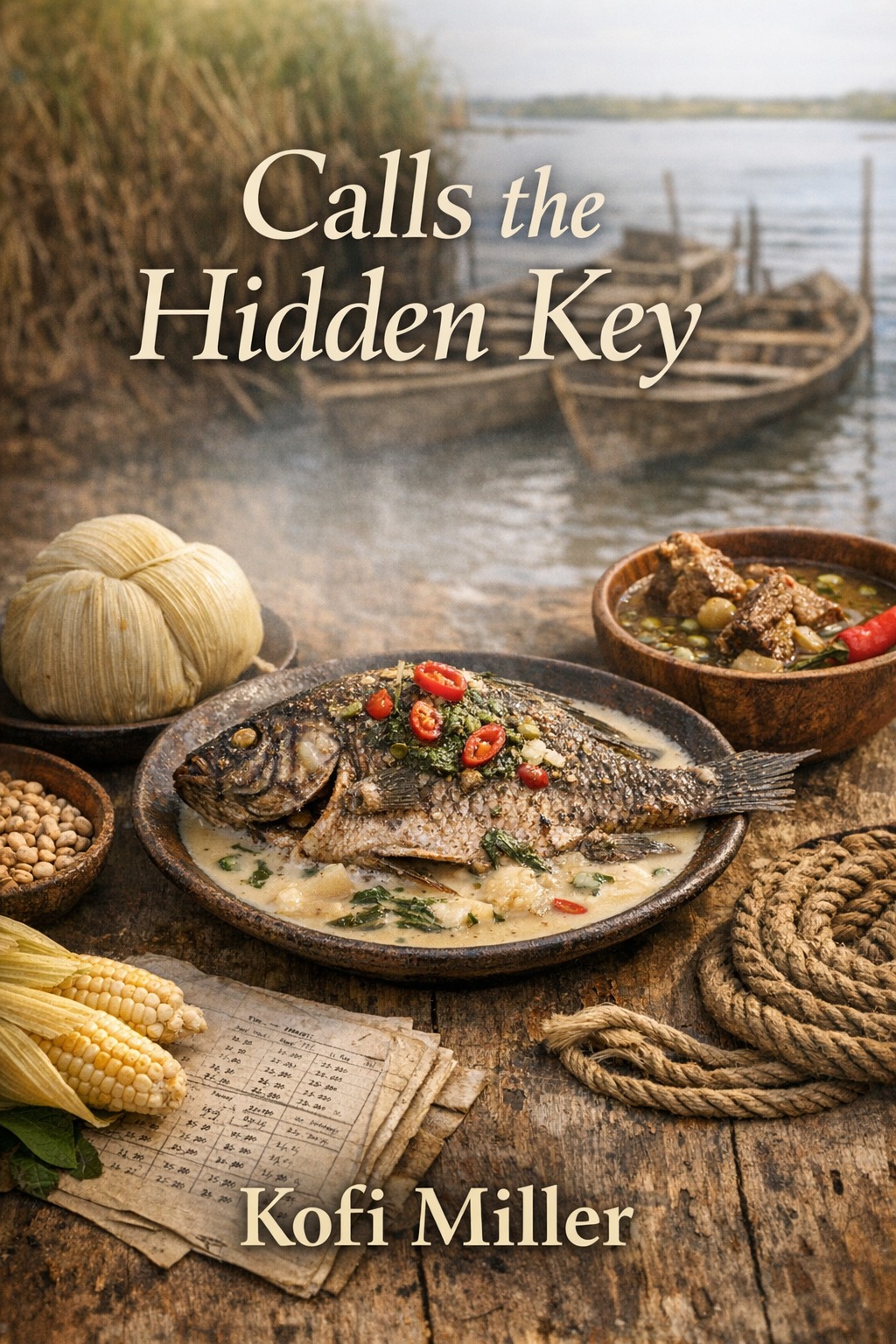
Cover of Calls the Hidden Key

Calls the Hidden Key

Cookbooks · 288 pages · Published 2025-05-20 · Avg 3.7★ (7 reviews)

Calls the Hidden Key is a riverine cookbook and field diary tracing 70 dishes from the Volta Delta to the Mano River. Smoked tilapia poached in atadwe milk, fermented corn dough for kenkey, and pepper soups thickened with agushi appear beside tide tables pencilled from Ada Foah. Each headnote folds ethnographic notes into practical steps, with coalpot timings, calabash ladles, and cane fish traps named like characters. Maps are sketched in the margins, pointing from Bo Waterside to Koidu and back to a Bristol kitchen with an enamel basin on the sill.

Chapters are arranged by current and moon, teaching an intuitive pantry where prekese, dawadawa, and river salt are the hidden key to balance. Shopping lists sit with songs learned on boats, while substitutions guide diaspora cooks toward plantain flour, smoked mackerel, or a Dutch oven in place of an earthenware pot. Field photos and hydrographic charts anchor recipes such as border post groundnut stew, flood tide palm rice, and slack water okra with lime char. Through memory and precise measurements, the book braids taste with crossing, showing how a meal can hold a shoreline together.

Kofi Miller is a Ghanaian-British writer and ethnographer. Born in Kumasi in 1986, he grew up between Accra and Leeds, studied anthropology at SOAS, University of London, and earned an MA in African literature from the University of Manchester. He conducted fieldwork with riverine communities along the Volta and Mano basins, work that informs his interest in tides, memory, and borders. His short fiction has appeared in Wasafiri, Transition, and Omenana, and he was shortlisted for the 2019 Commonwealth Short Story Prize. Miller has taught workshops with the Arvon Foundation and served as a librarian at an Africana archive in Freetown. He lives in Bristol, where he maps tidal flats and brews overly strong coffee.

Ratings & Reviews

Rowan Whitcombe
2026-02-10

A river diary meets kitchen manual; precise, generous, occasionally fussy for weeknights.

Kwadwo Sefa
2026-02-02

As a librarian recommending cookbooks, I'd shelve this for confident beginners to advanced home cooks who enjoy narrative alongside instruction. The hydrographic charts and tide-organized chapters are distinctive, and the substitution notes make it accessible beyond West African markets.

Potential cautions for classrooms and teens: smoking fish, handling hot oil for pepper soups, and references to open-flame coalpots. For pacing, the field notes can slow a fast cook's workflow, but the measurements are careful and the results — especially the agushi-thickened soups and palm rice — are worth the attention.

Marco Villiers
2026-01-08

Comme le modeste Dhow Galley Notes de Nadia Wamunyu et le Coalpot Almanac d'Alastair Redfern, ce livre mêle recettes et rivages avec une voix calme et attentive. Les pièges en canne, nommés comme des personnages, donnent une présence vive aux gestes; on cuisine presque avec une équipe invisible au bord du bateau.

Côté pratique, les substitutions pour la diaspora (farine de plantain, maquereau fumé, cocotte en fonte) sont utiles, mais certaines mesures demandent une balance précise et un peu de patience. J'ai aimé les cartes en marge et les tableaux de marées, même si parfois ils volent de la place aux listes d'ingrédients. Solide, poétique, mais pas toujours rapide pour les soirs de semaine.

Priya Addo
2025-12-15
  • Gorgeous river charts and tide cues
  • Recipes work in a Dutch oven; kenkey notes are clear
  • Some spices and atadwe tough to source outside West African markets
  • Field-diary asides sometimes blur prep order
Lina Okoro
2025-10-09

As a piece of culinary craft, this is beautifully engineered. Organizing chapters by current and moon sounds whimsical, yet on the page it becomes a sturdy matrix for planning: flood tide recipes lean lush and forgiving, slack water dishes are quick and crisp. The headnotes braid ethnographic detail with instruction, and the calls to timing on a coalpot are unusually precise for a field-inflected book.

Occasionally the diary voice lingers longer than my simmer would like, and a few margin maps crowd the ingredient lists, but the measurements and method steps pull things back into focus. The substitution guidance is a standout, steering diaspora cooks toward workable results without flattening the flavors.

Jules Mensah
2025-07-22

The through-line here is balance — not just seasoning, but belonging.

Each chapter moves by current and moon, and that choice keeps looping back to a quiet thesis: the pantry is a tide. Prekese threads through soups like a memory; dawadawa provides the depth you want when the shoreline feels far. Even the shopping lists arrive with boat songs, not as garnish, but as rhythm.

I kept returning to the book's trust in attention. Coalpot timings are given like heartbeat counts. The maps are sketched, not sanitized, which invites you to pencil your own route from Bo Waterside to whatever counter you're working on. Substitutions are not compromises; they are invitations to cook where you stand.

Most of all, the book proves its claim that "a meal can hold a shoreline together". You taste it in the atadwe milk that rounds smoked tilapia without muting it, and in the way river salt pinches the final bowl until it tastes like home returned.

I'm grateful for its tenderness and its rigor. It is a hymn to crossings, plated.

Ama Boateng
2025-06-03

This book feels like stepping onto a low canoe at dawn and letting the channel decide. The margin maps, the pencilled tide tables from Ada Foah, the quiet note to check the moon before starting palm rice — it all crackles with life and place!

I love how tools are treated with dignity. The calabash ladle, the coalpot, the cane fish traps named like companions all gather around the enamel basin in that Bristol kitchen and somehow the Volta and the Mano are both present. The field photos and hydrographic charts do not decorate; they instruct.

Then the cooking lands clean. Smoked tilapia in atadwe milk is measured, kind, exact. The pepper soups thickened with agushi show you balance with prekese, dawadawa, and river salt like a chord struck true. Diaspora swaps are generous without apology: plantain flour for kenkey practice, smoked mackerel when tilapia is pale and sad, a Dutch oven standing in for clay.

I kept hearing the boat songs in the headnotes and the recipes kept time with them. Border post groundnut stew carried a smoky hush; slack water okra with lime char snapped bright and green. When the flood tide palm rice hit that shine, I cheered at my stove.

It is more than a cookbook. It is a way to navigate kitchens and crossings, to remember where the salt came from, and to season for return. Five stars, and a standing ovation for a river held together by taste!

Generated on 2026-02-11 12:03 UTC