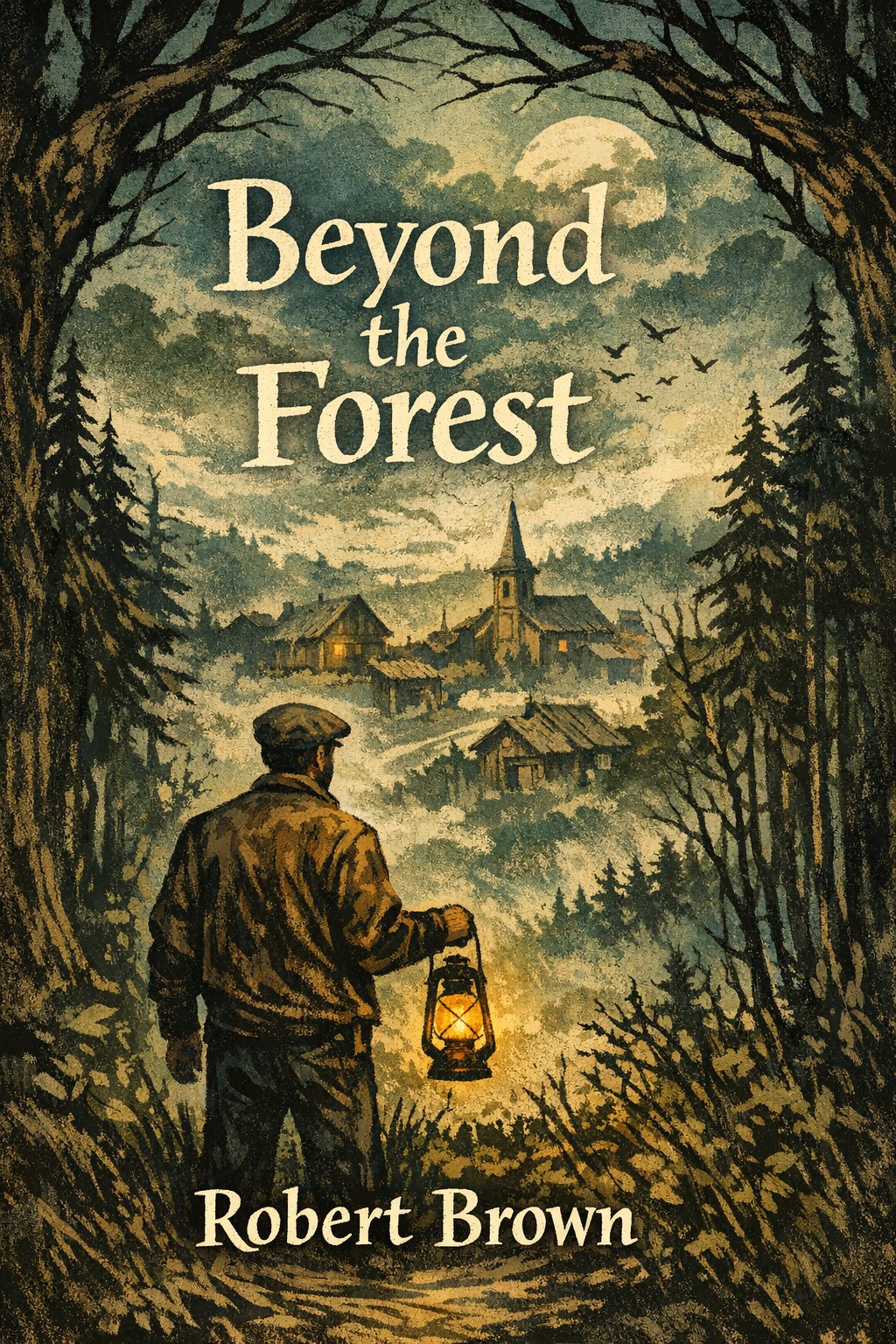
NATIONAL BESTSELLERA Frontline Review Best Book of 2024"A work of flinty, spectral beauty—part elegy, part investigation, part torch held to the dark edges of memory. Readers of narrative history and literary biography will be spellbound." —Mara Kline, author of "The Iron Flock""Brown writes with the reporter's ear and the novelist's eye. He has found the pulse of a life lived under watchtowers and winter skies, and he makes it beat on the page." —Dorian Vesa, The Danube Dispatch
On the thirty-fifth anniversary of the Romanian Revolution, award-winning journalist Robert Brown tells the definitive life story of Ioana Mureșan, a forester's daughter from the Apuseni Mountains who became one of Transylvania's quiet resisters—and an emblem of the region whose very name, Ardeal, means "beyond the forest." From a one-room cottage outside Sălciua to the lecture halls of the forestry institute in Brașov, from clandestine leaflets in Cluj-Napoca to the barricades in December 1989, Ioana's path mirrors a country crossing a ravine at night.
For four decades after the Second World War, the Carpathians were laced with roads built by timber quotas and guarded by men in leather coats. Factories in Turda and Târgu Mureș belched steam while the narrow-gauge Mocănița train threaded spruce valleys, carrying stacked beech and men with carbide lamps. The shelves were bare and the bread lines long, but life endured in sheepfolds and parish halls, in smoky kitchens where Carpați cigarettes smoldered over enamel basins, and in the herbarium drawers where Ioana pressed the names of plants that had outlived empires.
On December 21, 1989—the night the wind knifed down from the Feleacu ridge—Ionana stood on Bulevardul Eroilor with a Russian-built Quartz-2 camera tucked under an army coat. Tear gas drifted through the Linden trees. Securitate agents in gray caps cut the crowd like icebreakers while church bells shuddered across Piața Unirii. By midnight the city shook with gunfire. By morning, posters of Ceaușescu hung in tatters above the tram lines, and the streets were slick with thaw. Somewhere between those hours, Ioana made a choice that would cost her years.
In Beyond the Forest, Brown presents the most complete account of Mureșan's life to date, drawing on more than 120 interviews with her relatives, colleagues, former classmates, and those who watched her—knowingly or not—from office windows and unmarked cars. He pores over case files released by the Consiliul Național pentru Studierea Arhivelor Securității (CNSAS), hospital registers from Spitalul Clinic Județean Cluj, the parish book at Râmeț Monastery, and the notebooks found in an attic chest in Rimetea, their pages rippled by cold and time.
Brown explores the vital role the forests played in Transylvania's economy and imagination, the dangerous parallel markets that grew along logging roads and border trails, and the improvised networks of samizdat and care packages that fed both bodies and ideas. He examines the turning points in Ioana's life: why she jotted coordinates on matchbox liners, how a wooden icon disappeared from a trail chapel and reappeared in a police photograph, and what happened during the missing months of 1990 when her name was chalked on a board outside the morgue and then crossed out.
Focused on the people who lived inside the rings of her life—the carpenters of Câmpeni, the students who printed leaflets on a rattling Gestetner in Mănăștur, the radio engineer at the Feleacu transmitter who tuned rebel broadcasts, and the mother who kept a pair of boots by the door in case someone knocked at midnight—Beyond the Forest is at once an emotional tribute and a restless, propulsive narrative. It is a story of a woman, a region, and the long, cold corridor between fear and freedom.