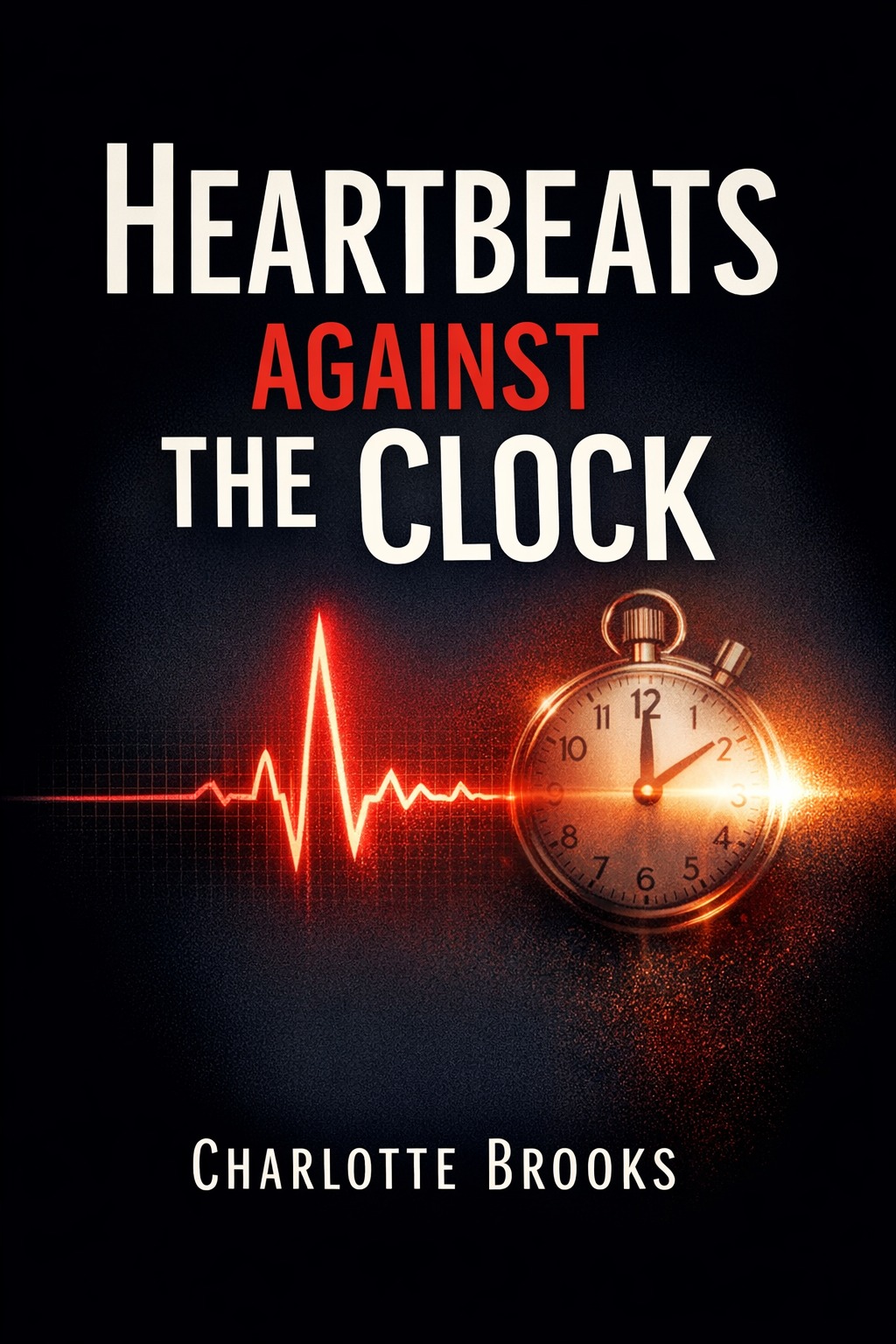
Cover of Heartbeats Against the Clock

Heartbeats Against the Clock

Biography · 448 pages · Published 2024-05-14 · Avg 3.2★ (6 reviews)

Charlotte Brooks delivers a propulsive portrait of Dr. Cassia Noor, the paramedic-turned-inventor whose race with mortality reshaped how the world answers a stopped heart. Drawing on more than eighty interviews conducted across three continents—with Noor over two years, and with family, fellow medics, rivals, regulators, coders, and factory-line technicians—Brooks reconstructs a roller-coaster life driven by a refusal to surrender a single second. From a grimy Detroit ambulance bay to a late-night lab in Pittsburgh lit by oscilloscopes, from Reykjavík rooftops where drones thread sleet to deliver defibrillators to Nairobi markets mapped into a real-time aid grid, Noor's career fused field grit with uncompromising design. Her ventures—"BeaconHeart" community beacons, "Skylark" AED drones, the "QuartzBand" wearable, and the "PulseGrid" dispatch network—helped rewire six domains: emergency medicine, wearables, drone logistics, public procurement, medical AI, and citizen training. Brooks captures the frictions: bruising battles with city councils, a standoff with aviation authorities, walkouts by engineers over data ethics, and a rivalry with Syntrix Health's Kaito Morimoto that played out from conference corridors in Rotterdam to testing sites in Juárez. The details are concrete and unsparing: Noor tossing a whole production run for the wrong LED hue; a handle redesigned seventeen times; a stopwatch taped to her wrist until the adhesive scarred.

At a moment when public health seeks resilience, Noor's arc shows how value emerges at the seam of empathy and engineering. She participated yet demanded no veto, urging friends and foes to speak plainly. In turn, colleagues, competitors, and former partners offer an unfiltered view of obsession, craftsmanship, control, and the stubborn hope that seconds can be won back from fate. Heartbeats Against the Clock is both instruction and warning—about innovation, leadership, character, and the costs of believing that design can defy time itself.

Charlotte Brooks (b. 1983) is an American journalist and narrative nonfiction writer focused on technology, medicine, and public policy. Raised in Toledo, Ohio, she studied journalism at Northwestern University and began her career covering municipal health services for the Detroit Free Press. She later reported long-form features for regional magazines and investigative nonprofits, earning state press awards for her reporting on hospital consolidation and emergency response outcomes. Brooks has taught feature writing workshops at community colleges in Pennsylvania and served as a visiting fellow at a health-tech policy lab in Pittsburgh. She lives in Philadelphia, where she mentors first-generation journalists and volunteers as a CPR instructor.

Ratings & Reviews

Svitlana Moroz
2025-10-03

Brooks keeps returning to one proposition: "seconds can be won back." The book's strongest throughline is how compassion and systems thinking collide, though the moral questions around data linger unresolved in the margins.

Imani Okeke
2025-06-21

The global canvas should be a strength, yet the leaps from Pittsburgh labs to Nairobi markets feel stitched rather than patterned. We hear about drones threading sleet over Reykjavík, but local systems and power dynamics mostly sit offstage.

Without that scaffolding, the stakes blur, and the result is a biography that tracks one brilliant operator while the cities she touches stay faint.

Daryl Whitcomb
2025-02-10

From an EMS vantage, the book left me uneasy.

  • Occasional crystalline scenes from ride-alongs
  • Useful overview of AED logistics
  • Thin on citations for medical claims
  • Ethics section light on opposing voices
Farah Qureshi
2024-11-29

What lingers is Cassia Noor's presence. Brooks recreates debates with engineers, chin-to-chest huddles after bad calls, and the flinty rivalry with Kaito Morimoto in a way that feels intimate without hagiography.

The dialogue clips with urgency and small humor, and the interior beats, from the LED fussing to the taped stopwatch, reveal a mind tuned to microseconds. I left admiring how the book treats competence as character.

Mateo Granger
2024-08-17

Brooks builds a mosaic from the interviews and archival notes, and the prose often reads like lab shorthand stitched to street-corner reportage. The structure alternates present-tense scenes with retrospective analysis, which keeps momentum but also creates echoes that blur a few milestones.

The tactile stuff sings, from the wrong LED hue killing a batch to a handle revised seventeen times and the stopwatch imprint on skin. Still, some chapters lean into meeting minutes; I wanted tighter signposts when the story loops through procurement fights.

Mira Parikh
2024-06-02

A taut, time-obsessed biography that moves briskly from Detroit bays to Reykjavík rooftops and lands its scenes with enough clarity to make Noor's battles feel immediate.

Generated on 2025-12-18 12:02 UTC