Microbes Among Us: Unseen Allies

Microbes Among Us: Unseen Allies

Science · 312 pages · Published 2024-05-14 · Avg 4.6★ (5 reviews)

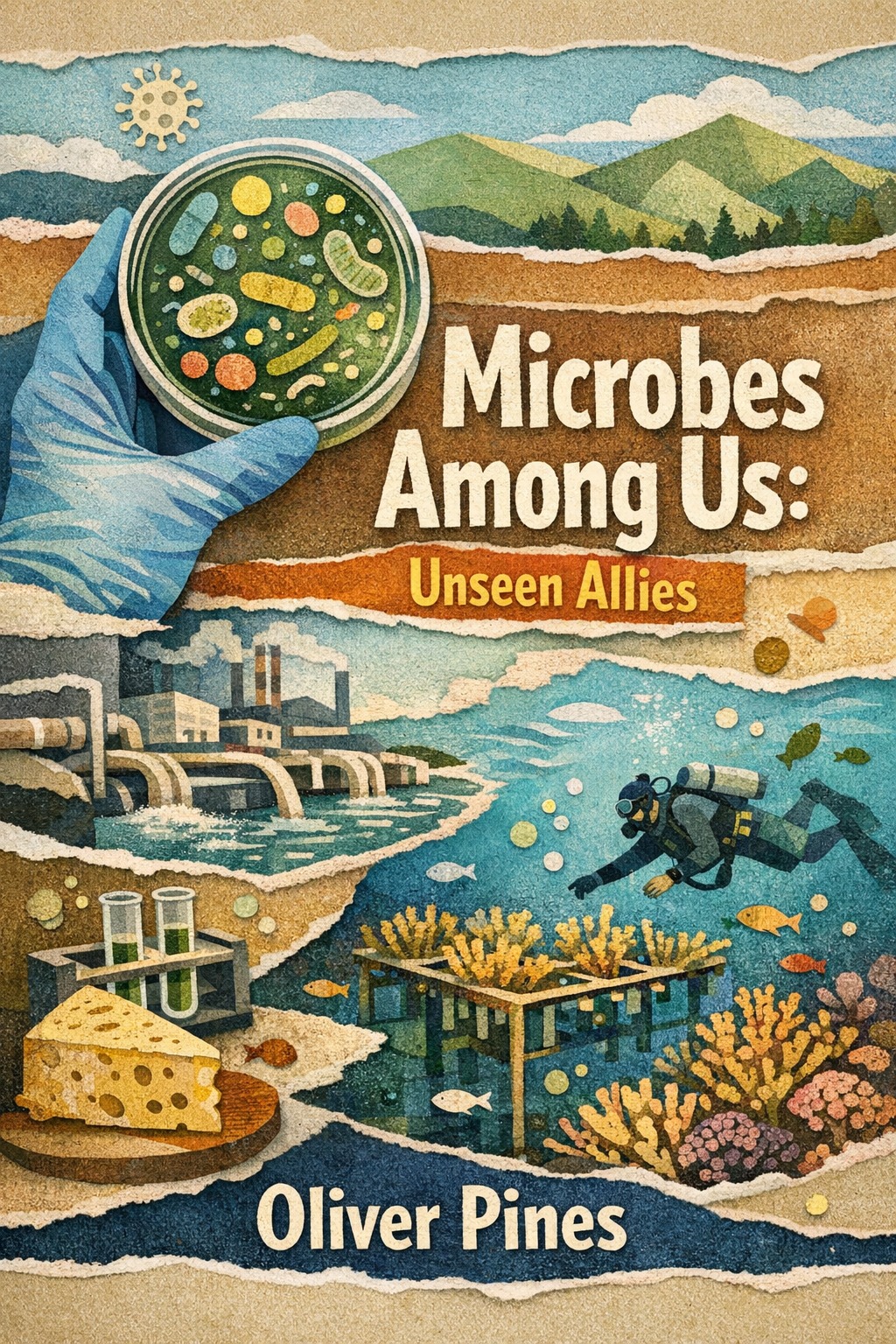
Microbes Among Us: Unseen Allies is a book about the benefit of doubt in biology, and about how we can get better at embracing the invisible and the joy of revising what we think we know about germs. Evidence from the cheese caves of the Jura, a wastewater lab in São Paulo, and reef nurseries in Palau shows that breakthroughs come when researchers drop single identities and rethink roles, and that hospital leaders who admit they do not know and invite critical sampling and feedback build safer, more innovative teams.New evidence shows us that as a mindset and a skillset, microbial literacy can be taught, and Pines lays out field-tested ways to cultivate it. Section 1 explores why we struggle to befriend microbes and how we can learn to do it as individuals, arguing that 'sterility' alone can be counterproductive. Section 2 shows how to help others think again through experiment literacy, from a Boise kindergarten to an ICU in Nairobi. And the final section looks at how schools, businesses, and governments miss chances to partner with microbes, from composting rules in Oakland to subway cleaning in Tokyo.In the end, learning to rethink with microbes may be the quiet edge in a world changing faster than ever, and in a biosphere run by lives too small to see.

Oliver Pines is a microbial ecologist and science communicator. Born in 1983 in Halifax, Nova Scotia, he earned a BSc in microbiology from McGill University, completed his PhD at the University of Wisconsin–Madison in 2012, and held a postdoctoral fellowship at the Max Planck Institute for Marine Microbiology in Bremen. Since 2018, he has served as an associate professor at the University of Oregon, where his lab studies plant root microbiomes and the microbes of buildings. He has led citizen science projects such as Sidewalk Swabs in Portland, collaborated with public health teams in Lagos and São Paulo, and published essays in Scientific American and Orion. He lives in Eugene, Oregon, where he tends native ferns and an unruly sourdough culture.

Ratings & Reviews

Savita Raman
2025-10-27

Think Rob Dunn's Never Home Alone crossed with Rose George's The Big Necessity; the pacing is brisk and the stakes feel local and planetary at once. Pines balances wonder with method, alternating field scenes and checklists so smoothly that the throughline (how to build cultures of not-knowing) stays taut without ever scolding.

Eliot Han
2025-05-22

As a hospital educator, I was looking for takeaways, and this delivered.

  • Memorable field scenes that demystify microbes
  • Clear explanations of sampling and iteration
  • Practical classroom and ICU examples
  • Occasional overreach from niche cases
  • A bit of jargon in the policy chapter
Nadia Whitcomb
2025-01-17

Beneath the travelogue sits a quiet argument for epistemic humility, microbial literacy as a civic skill. Pines shows how leaders in hospitals and classrooms grow safer teams by inviting sampling, feedback, and doubt, and she returns to the notion that "sterility by itself can backfire" with examples that feel both human and actionable. I left thinking less about germs as enemies and more about roles that shift as contexts change.

Gustavo Pereira
2024-09-05

Pines structures the book in three clear movements, from unlearning reflexive fear to teaching experiment literacy and then scaling those habits into institutions. The prose is crisp and lightly playful, and the case studies snap into place with just enough context to keep non-specialists oriented. I did notice repetition around the central mantra of humility and sampling, and a few chapter openings lean on similar anecdotal beats, but the overall architecture guides you from personal habit to systemic change with uncommon clarity.

Maya Leland
2024-06-18

From Jura cheese caves to Palau reef nurseries and a São Paulo wastewater lab, Pines makes a luminous, practical case for partnering with the microbial world.

Generated on 2025-10-31 12:02 UTC